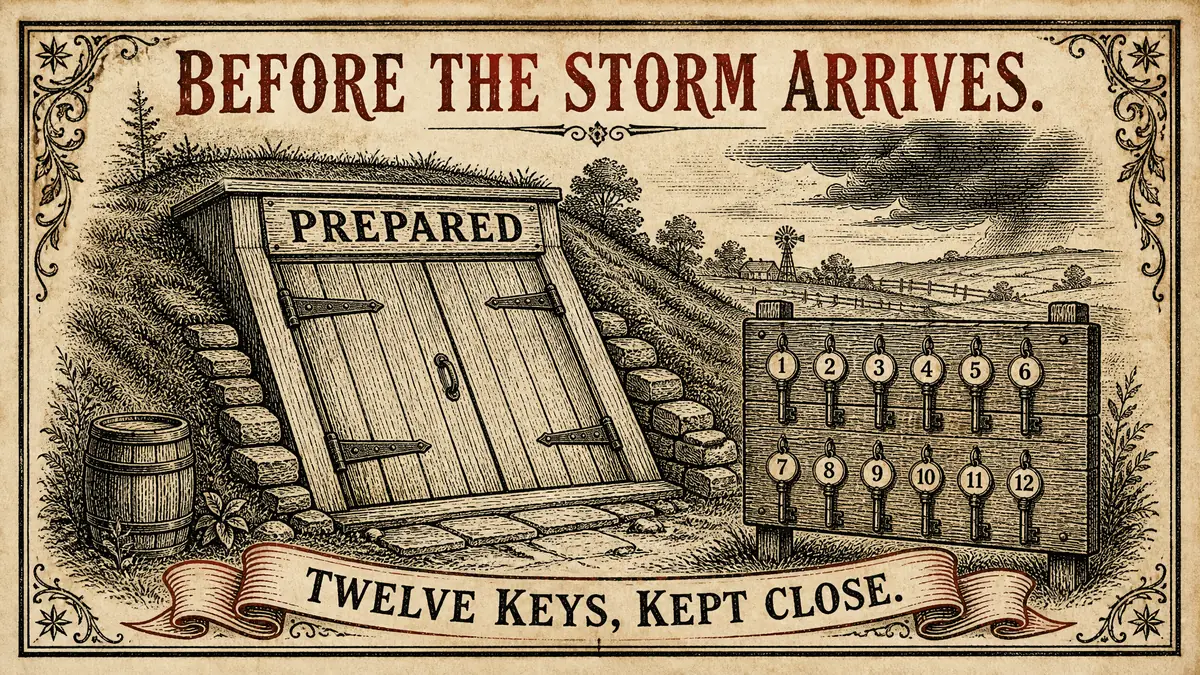
Recession prep has a branding problem. It sounds like canned beans, bunker podcasts, and a man yelling into a ring light about how the economy is seconds from exploding. Very subtle. Very hydrated.
Real pre-recession positioning is quieter. It looks like cash you can reach, debt that cannot ambush you, insurance that is not held together with vibes, and a job-search plan you made before panic gave it jazz hands.
The current backdrop is mixed, which is exactly why guessing is a bad hobby. The Federal Reserve raised the federal funds target range to 3.75% to 4.00% on September 16, 2026, while saying economic activity was expanding at a solid pace and inflation remained elevated. The BLS reported September payrolls up 29,000 and unemployment at 4.2%. The BLS JOLTS report put August job openings at 7.1 million. The Conference Board said consumer confidence fell to 81.9 in September, and NerdWallet found 61% of surveyed Americans expected a recession in the next 12 months. Meanwhile, the 10-year minus 2-year Treasury spread was 0.44 percentage points on October 9, 2026, according to FRED.
That is not a prediction. That is weather. You still check the tires before a long drive.

TL;DR
- Build six months of cash, a pink-slip budget, an insurance audit, and a 30% income-drop stress test.
- Refinance only if the math works, crush variable-rate debt, set a HELOC before trouble, and update beneficiaries.
- Keep skills current, diversify income, bank raises before creep, and keep investing without market-timing theatrics.
Why Calm Is The Window
The NBER does not define a recession as two bad vibes in a trench coat. Its business cycle committee looks for a significant decline in activity that spreads across the economy and lasts more than a few months.
That matters because your household does not get a formal memo on day one. The official dating usually comes later. By then, lenders are pickier, hiring managers have gone quiet, and your future self is trying to remember the password to an old 401(k) portal from 2018. A beautiful little circus.
The forbidden move is not pretending you can predict the cycle. It is refusing to wait for the cycle to make basic choices for you.
The 12-Move Table
| Move | When to do it | Time required | Payoff |
|---|---|---|---|
| Six-month emergency fund | Now | Ongoing | Runway |
| Mortgage refi watch | If rates drop | 2 hours | Lower fixed cost |
| Pink-slip plan | Before job stress | 1 evening | Fast triage |
| Insurance audit | Before renewal | 2 hours | Fewer gaps |
| Variable-rate debt payoff | Immediately | Monthly | Less rate pain |
| 90-day resume | Quarterly | 45 minutes | Job readiness |
| Income diversification | While employed | Monthly | More options |
| Raise capture | On payday | 15 minutes | No creep |
| Stay invested | Through volatility | Automatic | Compounding |
| HELOC setup | Only when stable | Few weeks | Flexibility |
| Beneficiary review | Annually | 30 minutes | Clean transfer |
| 30% stress test | Before trouble | 1 hour | Reality check |
Cash Comes First
1. Grow the Emergency Fund Toward Six Months
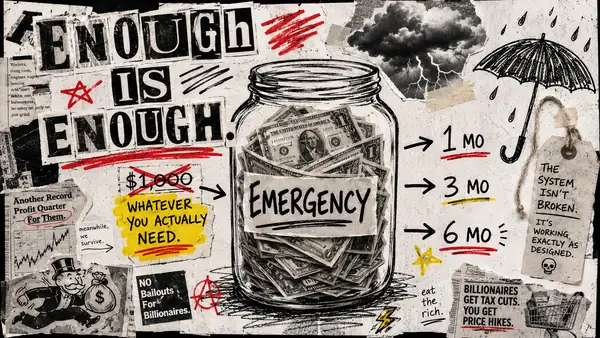
Start with the boring pile of money. The CFPB describes an emergency fund as cash set aside for unplanned expenses or financial emergencies, including loss of income. Your recession version should aim for six months of essential expenses, not six months of your current personality. Rent, food, utilities, insurance, minimum debt payments, prescriptions. Not artisanal candles that smell like a haunted bookstore.
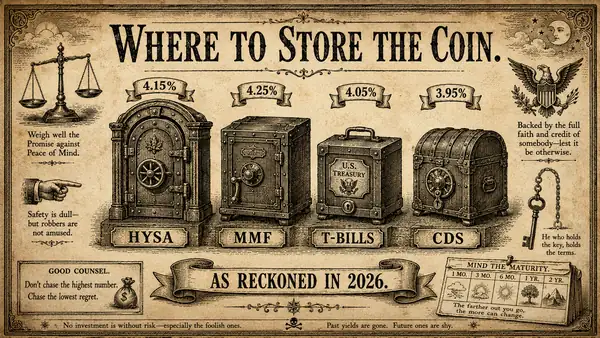
If six months sounds absurd, build in layers: one month, three months, then six. The best emergency fund is not morally pure. It is there. For where to hold it, pair this with Where to Park Cash in 2026: HYSA vs. Money Market vs. T-Bills vs. CDs.
Do this: Calculate six months of essential expenses and automate one transfer toward the gap every payday.
2. Lock In Mortgage Refis If Rates Drop
A lower mortgage rate is useful only if the full math works. The CFPB notes that refinancing usually comes with closing costs and fees, and a lower payment can come from a lower rate, a longer term, or both. Translation: do not accept a smaller monthly payment like it is a gift basket. Read the tag.
Your trigger should be a break-even calculation: total refi costs divided by monthly savings. If you will likely sell before the break-even month, congratulations, you found a shiny waste of paperwork.
Do this: Ask two lenders for no-pressure refi estimates and write down the rate, fees, new term, and break-even month.
3. Build a Pink-Slip Plan
This is your 60-day household-survival budget. Not your forever budget. Not your identity. A survival budget is what happens if income stops and you need the household to keep breathing while you line up work, benefits, severance, unemployment, or contract income.
List what gets paid first, what gets paused, what gets canceled, and who gets called. If you need a friendlier budgeting structure before you go full emergency-mode spreadsheet, start with Which Budgeting Method Is Right for You?. The correct method is the one you will actually run under stress. Fancy collapses beautifully. Simple survives.
Do this: Create a 60-day budget with three columns: must pay, can pause, can cut today.
Fix The Fragile Stuff
4. Audit Insurance for Correct Coverage Levels
Insurance is annoying until it is the only reason a bad week does not become a bad decade. Review health, auto, home or renters, disability, life, and umbrella coverage. The point is not to buy every policy known to civilization. The point is to stop discovering gaps after the kitchen ceiling starts raining indoors.
Check deductibles against your emergency fund. Confirm replacement cost, liability limits, disability waiting periods, life insurance beneficiaries, and whether your current household actually matches the paperwork. Babies, moves, marriages, divorces, new cars, old roofs. Life updates faster than insurance portals, because portals were designed by people who hate joy.
Do this: Pull declarations pages for every policy and flag deductibles, coverage limits, exclusions, and renewal dates.
5. Reduce Variable-Rate Debt Aggressively
Variable-rate debt is the debt equivalent of a thermostat controlled by someone else. Credit cards, adjustable loans, private student loans, and some lines of credit can get uglier when rates rise. The Federal Reserve moved its policy range higher in September 2026, which is a useful reminder that rate-sensitive debt deserves attention before you are forced to care.
Pick your payoff style. Avalanche is mathematically sharp. Snowball is psychologically useful. Hybrid is allowed because this is 403 Finance, not a monastery. For the long middle where debt payoff gets boring, read The ‘Boring Middle’ of Debt Payoff — and How to Stay in the Game.
Do this: Rank variable-rate debts by interest rate and send extra cash to the highest-rate balance first.
Make Your Income Less Brittle
6. Build a 90-Day Rolling Job-Skills Resume
Do not wait until a layoff to remember what you do for a living. Every 90 days, update a working resume with projects, numbers, tools, certifications, wins, and people who can vouch for you. The BLS reported that long-term unemployed workers were 27.1% of all unemployed people in September 2026, which is not a reason to panic. It is a reason to keep your receipts.
This is not performative career theater. It is memory insurance. Your brain will forget the project you rescued in April. Your notes will not.
Do this: Add three recent wins, two measurable outcomes, and one newly relevant skill to a living resume file.

7. Diversify Income Streams
A second income stream does not have to become a grindset shrine. It can be boring: freelance overflow, weekend shifts, tutoring, resale, seasonal work, a tiny product, consulting, or one client you could scale if needed. The goal is not to become a sleep-deprived empire. The goal is to prove you can bring in money from more than one door.
Build it while employed, because desperation is a terrible business partner. Track side income cleanly so it does not vanish into takeout and mystery charges. Side money is still money, even when it arrives wearing sweatpants.
Do this: Pick one realistic income stream and run a 30-day test with a simple revenue target.
8. Avoid Lifestyle Creep on Raises
A raise is not a personality transplant. Before the first bigger paycheck lands, decide how much goes to emergency cash, debt, investing, and actual life improvement. Yes, life improvement counts. If a $5 coffee is the small joy that keeps you from buying a $900 stress cart at midnight, the budget can hold the coffee.
The trap is letting every raise dissolve into subscriptions, nicer groceries, and a car payment that looks innocent until it starts eating your future. For a full containment plan, read Lifestyle Creep Is Real. Here’s How to Catch It Before It Catches You..
Do this: Pre-commit at least half of any raise to savings, debt payoff, or investing before it hits checking.
Let The Portfolio Be Boring
9. Keep Investing Through Volatility
Market-timing is the finance version of leaving the checkout line because the other line looks faster. Suddenly yours moves. Then the other one stalls. Now you are standing behind a coupon dispute and questioning civilization.
If your emergency fund is funded and your timeline is long, keep investing according to plan. Fidelity notes that missing even a few of the market’s best days can seriously undermine performance, and that selling during downturns can leave investors on the sidelines during recoveries. This does not mean ignore risk. It means match risk to timeline before volatility starts doing jump scares.
Do this: Confirm your allocation still fits your timeline, then automate contributions so headlines do not get a vote.
Keep Optionality Without Treating Your House Like An ATM
10. Lock In a HELOC for Flexibility, Only When Not Under Stress
A HELOC can be useful backup liquidity if you own a home, have stable income, and can qualify on good terms. It is not free money. It is not emergency cash with crown molding. The CFPB says a HELOC lets you borrow repeatedly against home equity during the draw period, and usually has a variable interest rate, meaning payments can change.
The timing matters. Apply when your income, credit, and home value look boring. If you wait until after a job loss, the bank may suddenly develop standards and a clipboard. Also, do not use a HELOC to fund lifestyle drift. That is how a couch becomes a lien.
Do this: If you are stable and have equity, compare HELOC terms now, but treat the line as backup, not spending money.
Paperwork, Stress, And The Unsexy Finish
11. Review Beneficiaries on Every Account
Beneficiary forms are tiny pieces of paperwork with main-character energy. The IRS says retirement plan and IRA beneficiaries are the people or entities designated under plan procedures to receive account benefits after death. Old forms can send money where your current life would absolutely not approve.
Check retirement accounts, brokerage accounts with transfer-on-death options, bank accounts with payable-on-death options, life insurance, HSAs, and workplace benefits. Add contingent beneficiaries where allowed. Save confirmations. This is not morbid. It is administrative kindness.
Do this: Log into every major account and confirm primary and contingent beneficiaries match your current wishes.
12. Run a Household Stress Test
Now make the plan sweat a little. What happens if income drops 30% for three months? Which bills get paid? Which savings pause? Which expenses get cut without a family meeting that turns into an emotional documentary? The NerdWallet resilience survey found 35% of Americans expected to rely on credit for at least some expenses in the month surveyed, while 63% had enough cash for an unexpected $1,000 expense. Your household test tells you which side of that line you are drifting toward.
Use real numbers. Not your ideal grocery budget. Your actual one, including the emergency cheese and the flowers that begin dying immediately.
Do this: Reduce take-home income by 30% on paper and write the exact 90-day survival sequence.

Build Accordingly
The point of this playbook is not to become recession-proof. That phrase belongs in the same drawer as guaranteed returns and meal plans that assume you enjoy eating wet leaves.
The point is to make fewer rushed decisions under worse conditions. Build cash. Lower fragile debt. Keep your skills visible. Keep investing with a plan. Update the paperwork. Test the household before life does it for you.
Recessions don’t make you. They reveal you. Build accordingly.
 Forbidden Finance