(Spoiler: It’s Probably Not the One Your Coworker Won’t Shut Up About)
Budgeting advice has a deeply annoying habit of sounding religious. One person discovers envelopes, another discovers zero-based budgeting, and suddenly they’re speaking in the tone of someone who has seen the light and would like you to color-code your groceries. The truth is less dramatic: the “best” budgeting method is usually the one you’ll actually keep using.
Some methods are better for structure. Some are better for flexibility. Some are basically therapy with math. And some are for people who looked at mainstream budgeting advice and said, “Absolutely forbidden.”

First: stop looking for the “correct” budget
A budget is just a decision-making framework for your money. It is not a moral report card, a personality test you can fail, or a monthly shame ritual hosted by your bank app. The real job is simple: help you cover essentials, make progress on goals, and spend on purpose instead of by accident.
That means the right method depends on things like income stability, how much detail you can tolerate, whether variable spending is your problem, and whether your brain loves rules or immediately tries to escape them. So let’s rank eight popular budgeting methods by usefulness, realism, and how likely they are to make you resent money as a concept.
The quick comparison
| Method | Best for | Effort level | Structure level | Main risk |
|---|---|---|---|---|
| 50/30/20 Rule | Beginners who want a simple rule | Low | Medium | Percentages may not fit real life |
| Pay Yourself First | People who hate tracking categories | Very low | Low | Easy to ignore spending leaks |
| Zero-Based Budget | Detail-oriented planners | High | Very high | Can become exhausting |
| Envelope Budget | Overspenders who need hard limits | Medium | High | Can feel rigid or inconvenient |
| Kakeibo | Reflective, mindful spenders | Medium | Medium | Too manual for some people |
| FIRE Budget | Aggressive savers chasing freedom | Medium | High | Can turn life into a spreadsheet prison |
| Values-Based Budget | People who want flexibility with intention | Medium | Medium | Needs honest self-awareness |
| Custom Budget | Anyone who has outgrown generic advice | Medium | Whatever you want | You can overcomplicate it |
The short version: simple rules work well when your finances are mostly under control and you just need guardrails. More detailed systems help when money keeps “mysteriously disappearing,” which is finance-speak for “my card kept tapping itself.”
1) 50/30/20 Rule
The classic “please just give me one simple rule” budget
The 50/30/20 Rule splits after-tax income into three buckets: 50% for needs, 30% for wants, and 20% for savings or debt payoff. It was popularized by Elizabeth Warren and Amelia Warren Tyagi in All Your Worth, where they framed money around must-haves, wants, and saving for the future.
This method is popular because it is easy to understand and hard to overthink. You do not need 17 categories, a spreadsheet degree, or the emotional stamina to assign a job to every £4.12 coffee-and-snack combo.
Best for: beginners, busy people, and anyone who wants a big-picture framework without tracking every transaction. It works especially well if your income is steady and your essential costs are not wildly out of line.
Pros: simple, fast to set up, easy to remember, and flexible enough to survive normal life. It also nudges savings into the plan instead of making “whatever is left over” your retirement strategy.
Cons: the percentages can feel laughably unrealistic in high-cost areas, especially if rent is doing its best supervillain impression. If your “needs” already eat 70% of income, this method can make you feel broken when the math is the actual problem.
Try this if... you want budgeting to feel like a rule of thumb, not a second job.
2) Pay Yourself First (Anti-Budget / 80/20 Rule)
The budget for people who would rather not “budget,” thanks
Pay Yourself First flips the usual order: save first, spend second, and stop obsessing over categories. In practice, that usually means automating a set amount or percentage into savings, retirement, or debt payoff, then living on the rest.
This is why people call it the anti-budget or reverse budget. Instead of policing every spending category, you make the important decision first and let the rest of your money breathe a little.
Best for: people with decent spending habits, stable income, and a deep spiritual resistance to category tracking. It is also great for anyone trying to build savings through automation instead of willpower.
Pros: low effort, easy to maintain, and surprisingly effective because automation removes the “I’ll save whatever is left” fantasy. It keeps attention on goals rather than endless micro-decisions.
Cons: it can hide spending problems if your leftover money vanishes into food delivery, impulse shopping, or subscriptions you forgot existed in 2023. If you are regularly overdrafting or carrying expensive debt, “vibes plus automation” may not be enough.
Try this if... your main problem is not saving enough, not understanding where every last pound went.
3) Zero-Based Budget
For people who want every dollar to have papers
Zero-based budgeting assigns every dollar of take-home pay a job so that income minus planned spending equals zero. That does not mean spending everything; it means every pound is deliberately allocated to bills, groceries, sinking funds, debt, savings, or fun before the month starts.
This method is beloved by detail-oriented budgeters because it creates total visibility. It is also beloved by the kind of person who names their spreadsheet tabs.
Best for: hands-on planners, debt payoff mode, irregular spending, and anyone who needs tighter control over cash flow. It is especially good when you are trying to stop “miscellaneous” from becoming your largest category.
Pros: precise, intentional, and excellent for catching waste. It helps you plan ahead for non-monthly costs instead of acting shocked every time an annual bill arrives like it has never happened before.
Cons: this one asks a lot of you. If you are already stressed, busy, or easily irritated by admin, zero-based budgeting can start as empowerment and end as unpaid bookkeeping.
Try this if... you want maximum control and do not mind managing your money in detail.
4) Envelope Budget
The spending-limit method with actual teeth
The envelope system sets fixed amounts for categories and treats those amounts as hard limits. Traditionally that meant physical cash in labeled envelopes, but digital versions do the same thing by ring-fencing money for groceries, eating out, transport, and other variable categories.
The philosophy is beautifully blunt: when the envelope is empty, you are done. Not “done unless it’s on sale.” Not “done unless this week has been hard.” Done.
Best for: people who overspend in a few repeat categories, especially discretionary ones. It is ideal when your issue is not knowing the budget, but ignoring it in the moment.
Pros: clear limits, immediate feedback, and fewer opportunities to pretend future-you will sort it out. It also works well for couples because the rules are visible and concrete.
Cons: it can feel rigid, and cash-based versions are inconvenient in an economy where everything wants to be tapped, scanned, subscribed, or invisibly billed. It also focuses mostly on variable spending, so it is not a complete system by itself unless you pair it with a broader plan.
Try this if... you keep overspending in the same places and need a hard stop, not another motivational quote.
5) Kakeibo
The mindful journal budget for people who want less automation and more awareness
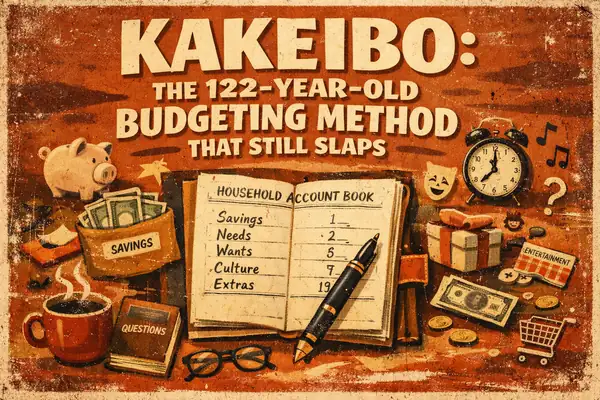
Kakeibo is a Japanese budgeting method developed by journalist Hani Motoko in 1904. It centers on writing spending down by hand, setting a savings goal, reviewing weekly, and sorting purchases into four categories: needs, wants, culture, and unexpected extras.
What makes Kakeibo different is that it treats budgeting as reflection, not just classification. It asks you to notice your habits, question purchases, and build awareness instead of outsourcing all thinking to an app that sends you pastel push notifications.
Best for: reflective people, journalers, and anyone who wants to be more intentional with money instead of more “optimized.” It is particularly appealing if normal budgeting feels too mechanical or cold.
Pros: mindful, simple in structure, and often surprisingly effective because manual tracking creates friction before dumb purchases multiply. The extra “culture” category is also refreshingly human, since not all non-essential spending is equally pointless.
Cons: it is manual on purpose, which means some people will abandon it the second life gets busy. If you want automatic imports, real-time dashboards, and zero effort, Kakeibo will feel like budgeting by candlelight.
Try this if... you want your budget to change your behavior, not just document it.
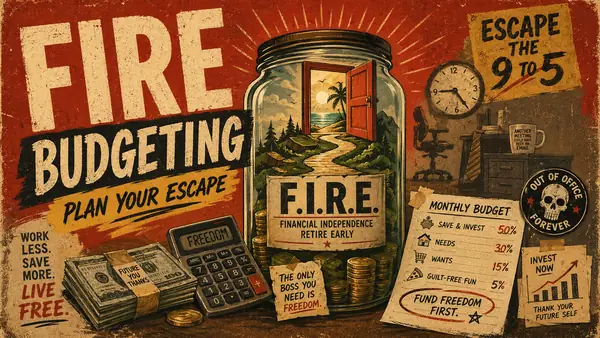
6) FIRE Budget
The “save aggressively now, buy your freedom later” budget
FIRE stands for Financial Independence, Retire Early. The budgeting logic is simple: keep living costs as low as is reasonable, push as much as possible into investing, and build a portfolio large enough to support work-optional life sooner than traditional retirement. Savings rate is the main event here.
A lot of FIRE planning revolves around long-term investing and withdrawal assumptions, including the famous 4% rule. But even then, the big idea is the same: spend intentionally now so future-you has far more freedom later.
Best for: high savers, high earners, people motivated by autonomy, and anyone willing to trade lifestyle inflation for optionality. It can also appeal to people who do not actually want to retire early but do want more leverage over work.
Pros: clear goal, strong focus on wealth-building, and excellent for cutting through vague “I should save more” thinking. It pushes money toward assets, not just expense management.
Cons: FIRE communities can drift into extremism, where joy becomes a rounding error and spending £3 on coffee feels like a moral collapse. The math can also depend on assumptions about market returns, spending flexibility, and retirement length that may not hold perfectly in real life.
Try this if... freedom matters to you more than keeping up appearances.
7) Values-Based Budget
The “spend less on what you do not care about, more on what you do” budget
Values-based budgeting allocates money according to what matters most to you rather than forcing your life into generic category rules. The core idea is that spending should reflect priorities like family, health, travel, security, convenience, creativity, generosity, or whatever else genuinely matters to you.
This approach is less about “cut everything fun” and more about “stop accidentally funding a life you do not even want.” Which, honestly, is a strong concept.
Best for: people who hate rigid budgeting but still want intention. It is great for those whose spending is not necessarily too high overall, just misaligned with the life they say they want.
Pros: flexible, personal, and emotionally sustainable. It tends to reduce resentment because the point is not arbitrary restriction; the point is spending more deliberately on the things you actually care about.
Cons: it requires honesty. A lot of honesty. If your “core values” magically include every convenience, every impulse purchase, and every online cart, then congratulations: you have invented expensive self-deception.
Try this if... you want your budget to feel aligned, not punitive.
8) Custom Budget
The grown-up answer for people who tried the templates and said “nope”
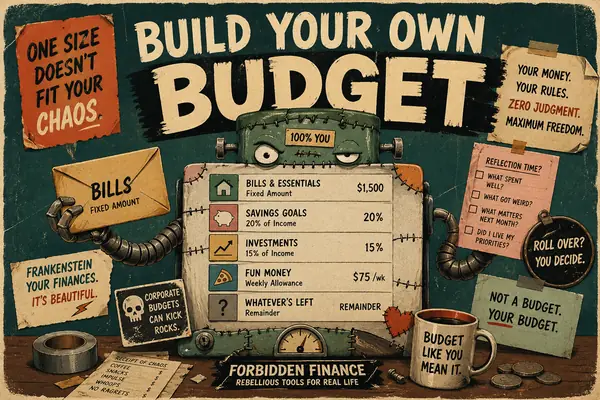
A custom budget is exactly what it sounds like: you build your own system by stealing the useful parts from other methods and ignoring the dogma. Maybe you use 50/30/20 for broad targets, envelopes for eating out, zero-based planning for bills, and a values-based check for discretionary spending. That is not cheating. That is called having a functioning brain.
Most people do not need a pure budgeting religion. They need a money system that fits their income, stress tolerance, goals, and actual life.
Best for: experienced budgeters, people with unusual finances, couples blending styles, freelancers, and anyone who has learned that generic advice only gets you so far. It is often the best long-term option because it can evolve with you.
Pros: flexible, realistic, and easier to stick with because you are designing around your life instead of forcing your life into a template. It also lets you simplify where possible and add detail only where needed.
Cons: you can absolutely overengineer this and produce a budgeting system so beautiful and complicated that you never use it. The goal is “custom enough to help,” not “personal ERP platform.”
Try this if... every off-the-shelf budgeting method has at least one part that makes you roll your eyes.
So which one should you actually choose?
If you want simple and low-maintenance, start with 50/30/20 or Pay Yourself First. Those work best when your finances are reasonably stable and you mainly need a framework, not a forensic investigation.
If you need tighter control, go with Zero-Based or Envelope. These are better when overspending keeps happening in plain sight and politely asking your money to behave has not worked.
If you want a budget with more intention and reflection, look at Kakeibo or Values-Based Budgeting. They are less about rigid compliance and more about building awareness around your spending habits and priorities.
If your main goal is freedom through aggressive saving and investing, the FIRE Budget makes sense. And if your reaction to all of this is “parts of several sound right, but none of them completely,” then yes, you are probably a Custom Budget person.
A better question than “What’s the best budget?”
Ask this instead: Which budgeting method helps me make good decisions with the least ongoing friction? That is the real game. A “perfect” budget that annoys you into quitting is worse than a simpler one you actually stick with for a year.
Because that is the dirty little secret of personal finance: consistency beats money theater. Every time.
One last thing
Forbidden Finance supports all eight of these methods in one app, which is handy if your budgeting personality evolves every six months or gets replaced after one spicy podcast episode. Your transaction history stays the same; you are just viewing the same money data through a different budgeting lens. That means you can experiment without nuking your entire setup and starting over like a finance amnesiac.
 Forbidden Finance