The holiday budget usually dies in a very specific way.
Not from one huge, dramatic purchase. Not from a diamond bracelet or a surprise ski trip or a Victorian goose large enough to require financing. It dies from twelve tiny decisions made while your browser has seven tabs open and every retailer on earth is screaming that this price is illegal.
The latest full-season holiday forecast I could verify from NRF was for 2025, when it projected November and December retail sales of $1.01 trillion to $1.02 trillion and said consumers planned to spend $890.49 per person on gifts, food, decorations, and seasonal items. Deloitte’s 2025 Holiday Retail Survey found shoppers expected to spend $1,595 on average, down 10% from 2024, while 77% expected higher holiday prices. Translation: the deal industrial complex is loud, prices are rude, and vibes are not a budget.
So build a defensive one.

TL;DR
- Start with what you actually spent last year, not what you meant to spend.
- Split the season into gifts, travel, hosting, and random before Black Friday starts yelling.
- Shop from a written recipient list, use one card, and make every deal survive a pause.
Start With Last Year’s Actual Spend
Last year’s intention is a fairy tale in spreadsheet clothing.
Last year’s actual spend is the crime scene.
Open your card statements, bank transactions, shopping accounts, payment apps, and anywhere else money quietly escaped wearing a Santa hat. Search November, December, and the first week of January. January matters because returns, delayed charges, and that one gift card reload love arriving after the emotional damage.
The BLS reported average annual expenditures of $78,535 per consumer unit in 2024, with housing, transportation, and food taking the largest shares. That is the real backdrop. Your holiday budget is not floating in glitter space. It is landing on top of rent, insurance, groceries, and the car making a suspicious noise.
Pull the ugly number. Gifts. Flights. Gas. Groceries. Decor. Wrapping. Office stuff. Teacher gifts. Tips. Shipping. Matching pajamas for people who did not request matching pajamas.
If you want the larger annual version of this exercise, read The ‘Ugly Number’: How to Calculate What You Actually Spend in a Year. For this job, you only need the holiday ugly number. Ugly is useful. Pretty lies.
Split the Budget Into Four Buckets
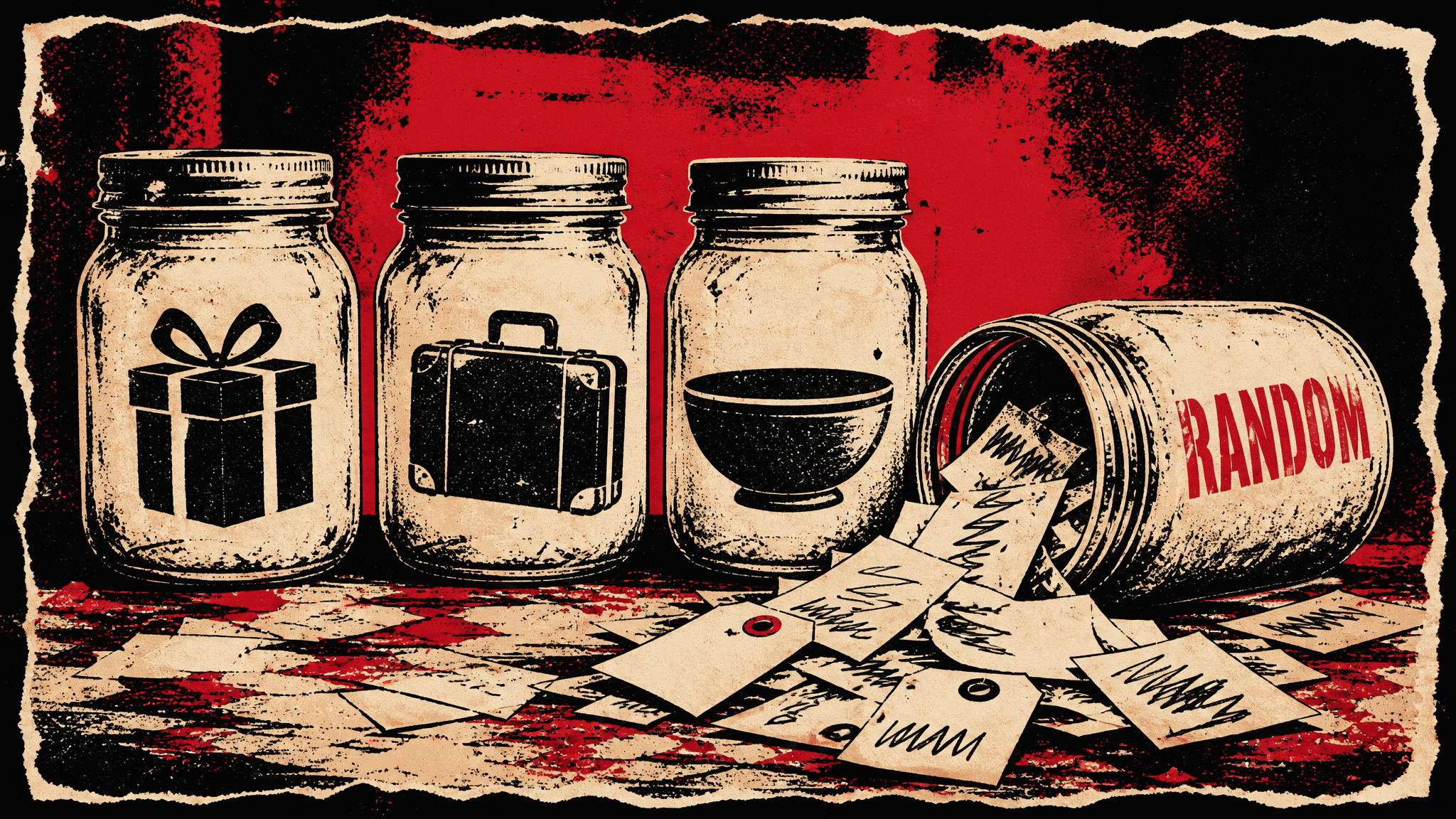
Your holiday budget needs four buckets: gifts, travel, hosting, and random.
The fourth bucket is where budgets go to become ghosts.
Random is not a failure category. It is reality with a little tinsel on it. Extra tape. Airport snacks. A forgotten cousin. A hostess gift. Surge pricing. Parking. Batteries. Flowers that begin dying immediately. The $18 ornament bought during a sentimental moment near a cash register. Random is not suspicious. Random is guaranteed.
Use last year’s actuals to set this year’s plan:
| Bucket | Last year (actual) | This year (plan) | Notes |
|---|---|---|---|
| Gifts | $860 | $750 | Names first, carts later. |
| Travel | $640 | $500 | Flights, gas, bags, rides, parking. |
| Hosting | $320 | $300 | Food, drinks, decor, serving panic. |
| Random | $410 | $200 | The chaos line. Protect it. |
| Total | $2,230 | $1,750 | Adjust before shopping, not after. |
Build the Gift List Before the Internet Finds You
The internet is not a neutral shopping environment. It is a casino with free shipping.
Before you go near a website, write the names. Every person. Partner, kids, parents, siblings, friends, teachers, coworkers, neighbors, party hosts, the dog if your household has accepted this level of nonsense.
Then write the dollar amount next to each name.
Not the item. The amount.
This is the per-recipient method, and it works because it turns gift shopping from a vibe hunt into a constraint. You are not asking, “What would make me feel like a thoughtful person at 11:42 p.m.?” You are asking, “What fits the amount I already chose while my brain was still wearing pants?”
After that, shop inside the number. If you find something perfect for less, wonderful. Do not immediately reassign the savings to a fancier candle because the budget looked at you funny. Let savings remain savings. Forbidden concept, apparently.
Use One Card So the Total Cannot Hide
Holiday spending gets slippery when it is spread across three cards, two payment apps, cash, store credit, and a PayPal balance you forgot existed.
Use one card for holiday spending if you can do it without carrying debt. One card does not mean “buy everything on credit and deal with it later.” It means one visible running total. One place to check. One statement that cannot hide behind festive fog.
Make a note in your budget: all holiday purchases go on this card, and the card gets paid from the holiday money. If the card balance outruns the plan, you know while there is still time to switch from “premium gift tower” to “nice coffee and human warmth.”
A debit card works too. So does a separate checking account. The tool matters less than the visibility. The right budget is the one you will actually look at before January starts clearing its throat.
Set Black Friday Rules of Engagement
Deloitte’s 2025 Black Friday-Cyber Monday Survey found 82% of surveyed consumers planned to shop during that period, with average expected spending of $622, down 4% year over year. It also found 76% planned to use deals that start earlier in November, and 60% had already put items in carts to buy during BFCM.
That is not a sale weekend. That is a month-long obstacle course wearing a coupon hat.
Here are the rules.
-
Make a deal calendar. Write the dates you will check prices, the categories you are allowed to buy, and the names already on your list. If it is not on the calendar or the list, it is not a deal. It is marketing wearing a bow tie.
-
Use a cooling-off rule. For anything not pre-approved, wait 24 hours. For expensive items, wait 48. If the deal expires, let it expire with dignity. A discount on something you did not plan to buy is not savings. It is spending in a costume.
-
Try the cart-abandon trick. Log in, add the item, then close the tab. Some retailers send a reminder or offer. Some do not. Either way, you created a pause, and the pause is the point.
-
Compare against your recipient amount, not the fake original price. “Was $129, now $79” is irrelevant if your budget for that person is $40. The forbidden math is still math.
-
Keep a no-buy list. Write the categories you are not buying this season: gadgets, decor, backup gifts, novelty pajamas, emotional support throw blankets. Especially the blankets. They know what they did.
If impulse buying is your seasonal boss battle, pair this with The 24-Hour Rule, the 30-Day List, and the $100 Test: Three Anti-Impulse-Buy Frameworks.
If You Started a Sinking Fund in January, Enjoy Being Annoying
A holiday sinking fund is very boring, which is how you know it works.
If you saved $150 a month from January through October, you are not having a spiritual crisis over gift wrap. You are allocating money you already set aside. This does not make you morally superior. It makes future-you slightly less sweaty.
If you did not start in January, fine. Start now with whatever runway exists. November money is still money. December money is late, but not useless. January is when you build the next one.
For the full setup, read Sinking Funds Explained: The One Habit That Makes ‘Surprise’ Expenses Disappear. The holiday version is simple: pick next year’s target, divide by the months available, automate it somewhere visible, and do not raid it for tacos in May unless the tacos are somehow legally Christmas.
What to Do When the Budget Gets Hit Anyway
A defensive budget is not a purity test. It is a shock absorber.
If travel jumps, do not declare the whole thing ruined and buy everyone a luxury hoodie in despair. Move money on purpose. Maybe hosting gets simpler. Maybe gifts get tighter. Maybe random gets frozen until the smoke clears. The budget is allowed to change because life keeps doing improv.
What you do not do is spend blindly because the first number broke. That is how a $200 miss becomes an $800 crater.
Check the total twice a week from mid-November through Cyber Monday. Ten minutes. Card balance, bucket totals, recipient list, random category. Make one decision before the next shopping window opens.
That is the whole trick. Not perfection. Contact.
The holidays don’t ruin your year. November 27 ruins your year.
 Forbidden Finance