TL;DR: Price the whole trip before you start booking, save $2,400 over 90 days, lock the big stuff at 60 days, and put the spendable food-and-fun money somewhere separate before you leave.
The Trip Is Not the Problem. The Hangover Is.
A summer trip can start as a beach photo and end as a September credit-card statement quietly judging you from the kitchen counter.
The problem is not wanting a vacation. You are allowed to leave your zip code. The problem is funding a trip with vibes, panic, and a rewards card you opened because a man on the internet said the lounge snacks were life-changing.
Bankrate's 2025 Summer Travel Survey found that only 46 percent of U.S. adults planned to travel that summer, and 29 percent of prospective travelers planned to take on debt to book trips. That is the credit-card hangover: the trip ends, but the minimum payment gets a souvenir magnet.
So we are doing the forbidden thing. We are making the trip boring before we make it fun.
This is a sinking fund with sunscreen. If that concept is new, read Sinking Funds Explained: The One Habit That Makes 'Surprise' Expenses Disappear. Same idea, fewer emergency tire invoices, more tacos near water.
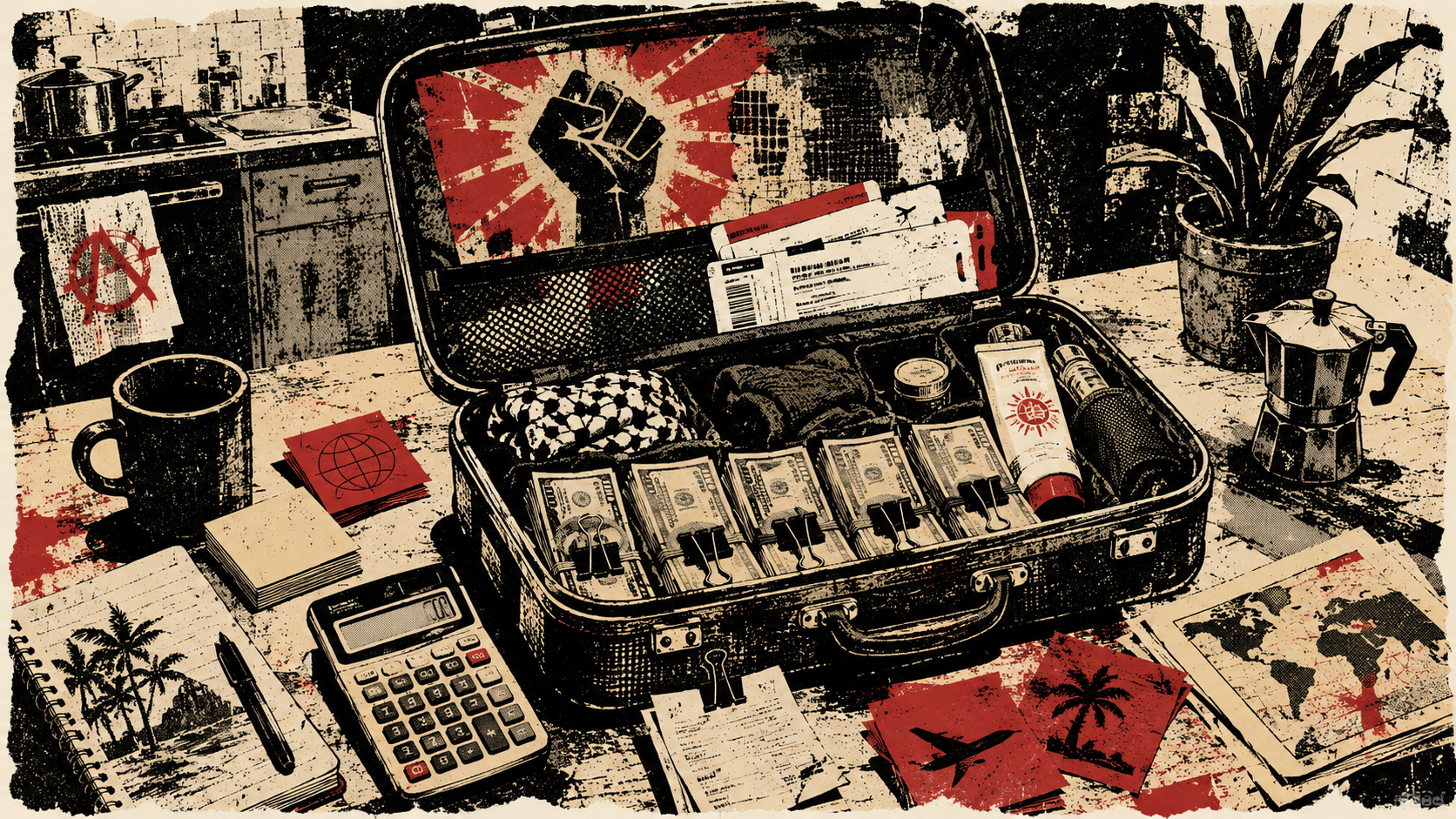
The $2,400 Example Budget Breakdown
Start by reverse-engineering the trip. Not the Instagram version. The actual version, where airports sell $18 sandwiches and your hotel room somehow has lighting designed by a haunted dentist.
NerdWallet's 2026 Summer Travel Report found that 2026 summer travelers expected to spend $3,940 on average for flights and lodging. Our example trip is leaner at $2,400 total, but still real enough to need a plan.
The BLS 2024 Consumer Expenditure release also shows why travel budgets need categories instead of one giant bucket: households spent real money across food away from home, other lodging, transportation, and entertainment. Translation: the hotel is not the only villain.
| Trip Category | Budget | Why It Exists |
|---|---|---|
| Flights | $700 | The cost of entering the sky tube. |
| Lodging | $900 | The bed, shower, and tiny bottles you pretend not to care about. |
| Food | $400 | Meals, snacks, coffee, airport survival pastry. |
| Activities | $250 | Museums, tours, rentals, tickets, things you will actually remember. |
| Stupid-tax buffer | $150 | Forgotten sunscreen, surge pricing, one deeply unnecessary beach hat. |
| Total | $2,400 | The number we fund before the trip. |
The stupid-tax buffer is not a moral failure category. It is an honesty category. Life charges fees for being alive while distracted.
The 90/60/30 Funding Plan
At 90 days out, the trip gets fully priced. Flights, lodging, food, activities, ground transport, pet sitting, parking, checked bags, the whole little circus.
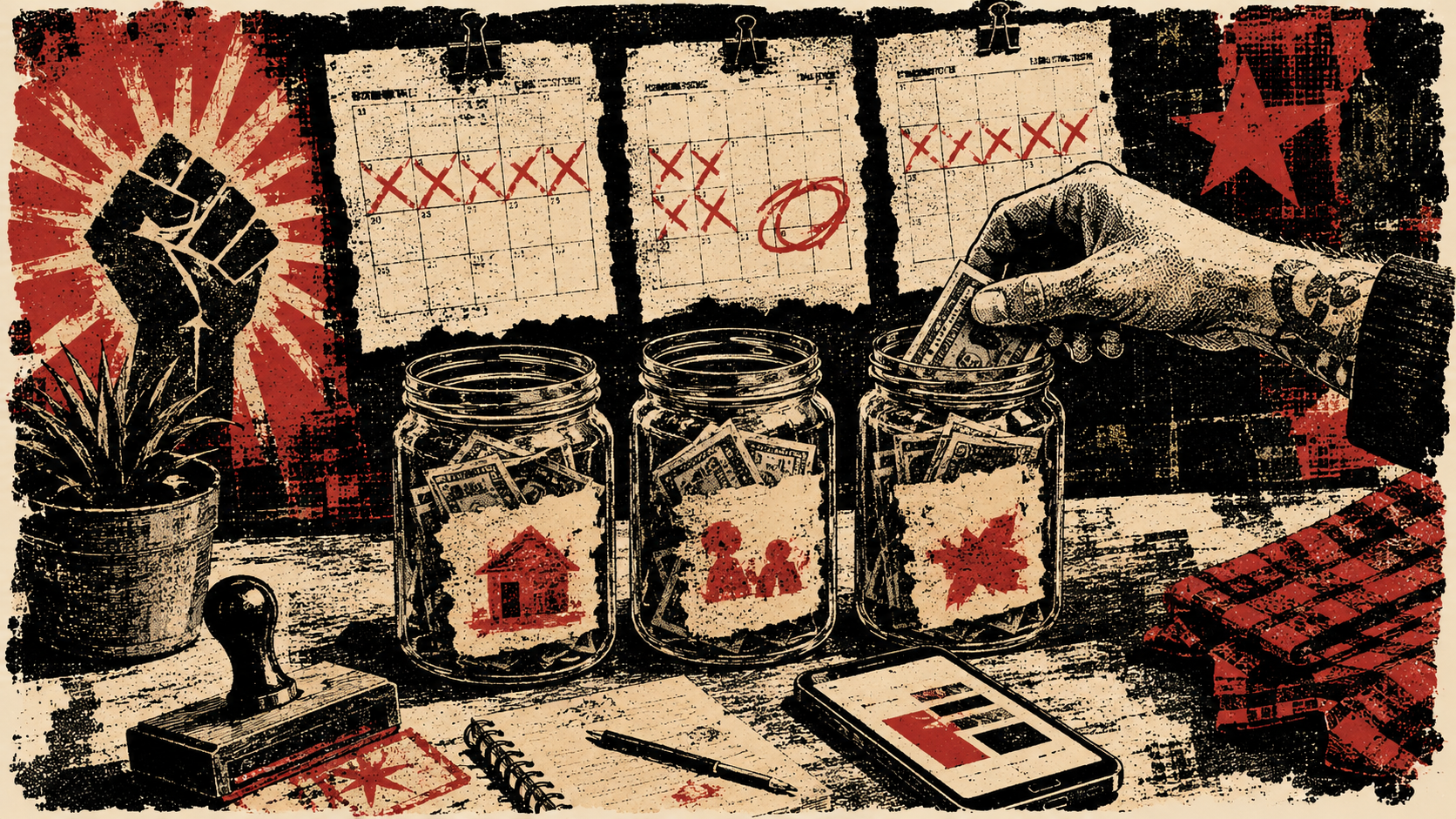
Then you create a dedicated travel sinking fund as a named budget category: Summer Trip 2026, July Beach Week, Chicago Long Weekend, whatever your brain will recognize when payday hits. Do not call it Miscellaneous. Miscellaneous is where good intentions go to become Target receipts.
If you want a build-your-own setup instead of copying someone else's money religion, Custom Budgeting: For People Who Read All 7 Methods and Said "Nah" is the house style here.
90 Days Out: Price It, Name It, Fund It
The monthly version is clean: $2,400 divided by three months is $800/month.
If your cash flow works better in weekly chunks and you want the fund done across nine deposit weeks, use $267/week. If you truly have 13 full weeks, the softer math is about $185/week. Pick the version your paychecks can survive. The rule depends. Forbidden, apparently.
Set the transfer on payday. Not after bills, groceries, three emotional coffees, and one late-night cart called vacation outfits. Payday.
60 Days Out: Lock Flights and Lodging
At 60 days, the two biggest line items get booked: $700 flights and $900 lodging. That is $1,600 locked.
Now the trip has a skeleton. You know the dates, where you sleep, and roughly how much money is left for being a person in public.
Keep the remaining $800 visible: $400 food, $250 activities, $150 stupid-tax buffer. This is where a lot of budgets start lying. They say, sure, food will be normal. Then vacation brain orders appetizers because the table is wooden and the menu has one word in Italian.
30 Days Out: Separate the Spendable Money
At 30 days, pre-load the food and activity budget into a separate debit card or checking sub-account. Put $650 there: $400 food plus $250 activities.
Keep the $150 buffer in the travel sinking fund until you need it. That keeps the buffer from becoming the first margarita.
The point is simple: the card has $650 on it, that's what's there. Very ancient. Very envelope-budgeting-without-the-paper-cuts. For the full digital version, see Envelope Budgeting: Your Grandma Was Right (But You Don't Need Actual Envelopes).
Use Cash-Back Cards Without Becoming a Points Goblin
Credit cards are tools. They are also tiny plastic trapdoors if you start treating rewards like a side hustle.
NerdWallet's 2026 Summer Travel Report found that 84 percent of 2026 summer travelers planned to use credit cards for at least some vacation costs. It also found that 61 percent said they would use a card and pay it off with the first statement, while 23 percent planned to charge travel and not pay it off right away. Same rectangle. Very different outcomes.
Use one anchor cash-back card for the trip. One. Not a rotating cast of airport-lounge auditions.
Set your categories before spending starts. Maybe the card gets flights, lodging, and rental car holds. Maybe it gets restaurants because your card earns better there. Fine. Write it down.
Then pay the card from the sinking fund as charges post. The reward is a rebate on money you already had, not permission to cosplay as a hedge fund in flip-flops.
The rule: cash-back is dessert. It is not the meal plan.
No churning for this trip. No opening three cards, manufacturing urgency, and pretending you enjoy spreadsheet tabs named redemption scenarios. If points are your hobby, go in peace. If points are your personality, maybe drink water.
The Pre-Trip Money Checklist
This is the packing list for your money. Socks are your business.
If you are driving, price the road honestly. AAA estimated the 2025 cost of owning and operating a new vehicle at $11,577 per year, with fuel at 13 cents per mile in its study. Your vacation spreadsheet does not need a dissertation, but it should include gas, parking, tolls, and the mysterious snack gravity of road trips.
- Notify card issuers. Many banks no longer require travel notices, but check your app anyway. Better two taps now than a declined card in a rental car lobby.
- Set travel alerts. Turn on purchase notifications for your anchor card and debit card. Fraud is less cute in another time zone.
- Pre-book ground transport. Airport parking, train tickets, shuttle, rideshare estimate, rental car, toll pass. The ground is where budgets get nicked to death.
- Screenshot confirmations into one trip folder. Flights, lodging, activities, insurance, parking, rental car, restaurant deposits. One folder named trip. Revolutionary technology: finding things.
- Set a daily spend cap. For a $650 food-and-activities card over five days, that is $130/day. Spend $90 one day, roll $40 forward. Spend $180 one day, tomorrow gets quieter. Math, but with sandals.
- Keep the buffer separate. The $150 stupid-tax fund is for actual weirdness, not upgrading every normal decision into a premium experience.
- Schedule the post-trip payoff. If the anchor card gets used, schedule payment from the travel fund before you leave or the day you get back. Future you will be unpacking. Future you is tired.
Close the Tab Before You Open the Suitcase
A good travel budget is not a punishment. It is how you buy the trip twice: once with planning, once with money. Then you get to enjoy it without a bill stalking you into fall.
The right system is the one you will actually use. Some people need a strict category for every dollar. Some people need one sinking fund and a debit card. Some people need a spreadsheet named DO NOT TOUCH in all caps because their inner raccoon is powerful. Fine. Use what works for this trip, this income, this season of life.
The forbidden finance move is not skipping the vacation. It is refusing to let the bank finance your sunscreen.
Spend the trip money on the trip — that's what it's for.
 Forbidden Finance