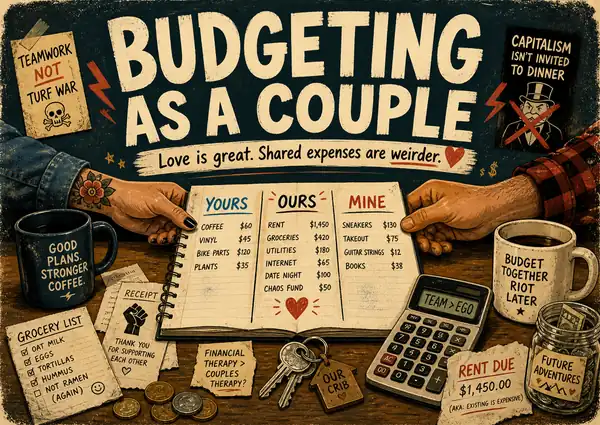
The $78 takeout order lands on the counter. The noodles are still hot when your partner asks, “Again?”
You hear: You can’t be trusted.
They mean: I thought we were protecting our future.
Congratulations. Dinner now has opening statements.
You can earn similar salaries, agree on retirement, pay your bills, and still fight about purchases you can afford. A spreadsheet can record the transaction. It has no column for “this makes me feel like the only adult here.”
In Fidelity’s 2026 Couples & Money study, 49% avoided money conversations to prevent arguments. Silence might save tonight’s noodles. It leaves tomorrow’s argument marinating.
Financial psychologist Brad Klontz and colleagues, including Sonya Britt, identified four money scripts in their 2011 research: avoidance, worship, status, and vigilance. These are beliefs about what money means, often learned long before you shared a streaming password.
The framework needs some humility. A 2025 study in the Journal of Family and Economic Issues found important limitations in how the revised inventory measured beliefs across racial and ethnic groups. Use these scripts to get curious about yourself, rather than diagnosing your partner over dumplings.
Sometimes the problem really is insufficient income or an unaffordable commitment. Name that plainly. Here, we’re looking at the friction that survives even when the numbers work.

TL;DR
- Money scripts can help explain why affordable purchases still feel threatening.
- Use a scheduled money date, mutual household visibility, and a spending threshold you choose together.
- Leave room for personal autonomy, and ask what each purchase or objection means before debating the amount.
Money avoidance: “I’d rather not look”
Avoidance involves beliefs that money is bad, wanting it is suspect, or you don’t deserve it, as Klontz and colleagues described. Avoiding a conversation can be one expression; disliking spreadsheets alone doesn’t establish a script.
Consider an invented couple, Alex and Jamie. Alex grew up hearing that people with money were selfish. Jamie suggests reviewing their accounts. Alex hears an invitation to become the sort of person their family mocked.
Jamie hears “later” for the fourth Sunday running and feels abandoned with the admin. Alex feels judged before the laptop opens.
The banking app has become a haunted house. Excellent user experience.
Try asking yourself: “What feels uncomfortable about having money, asking for it, or paying attention to it?”
Then give the conversation a small boundary: one account, ten minutes, one next step. If you’ve been handling everything, ask your partner to own a specific task, including remembering it. “Tell me what to do” leaves you managing both the money and your unpaid assistant.
Money worship: “More money will fix this”
In their 2012 research, Brad Klontz and Sonya Britt describe money worship as the belief that more money will bring happiness and solve problems, paired with a sense that there is never enough.
Wanting a raise isn’t a diagnosis. Rent does, regrettably, accept money.
The tension appears when the finish line keeps moving. In another hypothetical household, you reach the income you both once wanted. You suggest taking Friday off together. Your partner accepts another project because relaxing still feels one promotion away.
You feel postponed. They feel you’re asking them to stop building safety.
Ask: “What are we expecting the next income milestone to change?” Be specific. Fewer working hours? A funded trip? The ability to decline weekend shifts?
Give the goal an observable finish line and decide what happens when you reach it. Otherwise, “enough” becomes a destination your household keeps driving past.
Values-Based Budgeting: Spend Money on What Actually Matters offers a useful starting point for deciding what the money is supposed to make possible.
Money status: “What does this say about me?”
Money status links financial standing with self-worth in the original Klontz research. A purchase can become evidence that you’ve made it, belong somewhere, or won’t be embarrassed again.
Imagine you’re replacing a perfectly functional sofa before hosting friends. Your partner sees an unnecessary purchase. You remember being the kid who never invited anyone home.
“It’s just furniture” misses the tender part.
That doesn’t make every expensive sofa a childhood wound. Sometimes you like velvet. Velvet is allowed.
Ask yourself: “Would I still want this if nobody else saw it?” Then tell your partner what the purchase represents, without pretending that meaning settles affordability.
Your partner can respect your history while helping find another way to meet the need. Maybe you save together for the sofa. Maybe you host with warm lighting, good food, and the existing cushions.
The useful discussion is whether your home feels welcoming to you, and what you can comfortably spend making it so. Your friends’ imaginary inspection committee doesn’t get a budget vote.
Money vigilance: “If I stop watching, something will go wrong”
Vigilance includes saving, caution, privacy, and anxiety about money. Klontz and Britt’s 2012 paper describes how these beliefs can protect financial health while excessive worry can make it harder to enjoy that security.
You might have every bill covered and still flinch at your partner’s $35 lunch. To you, checking feels responsible. To them, another question about another sandwich feels like supervision.
The sandwich would like legal representation.
Try: “What specific event am I worried about, and what would reassure me?” Agree on a review schedule and which balances or upcoming obligations you need to see. Aim for a stopping point you can both recognize.
Even two cautious partners can clash. You want cash untouched; your partner wants to replace the leaking washing machine before it ruins the floor. You’re both trying to prevent a problem. You disagree about which problem deserves attention first.
There is evidence that beliefs matter within relationships. The 2025 study Happily Ever Affluence associated greater similarity in couples’ money scripts with better financial communication. That doesn’t mean you need matching personalities.
Use the following as possible translations, not verdicts. These examples are invented; the same argument can have several explanations.
| Surface fight | Likely script | What to address |
|---|---|---|
| “Why won't you open the statements?” | Avoidance | Shame or discomfort around money, plus a manageable way to share responsibility. |
| “Why is another raise never enough?” | Worship | What more money is expected to fix, and when you can enjoy reaching a goal. |
| “Why replace a sofa that works?” | Status | Belonging, embarrassment, and affordable ways to feel comfortable hosting. |
| “Why question every lunch?” | Vigilance | The feared outcome, agreed safeguards, and freedom within the plan. |

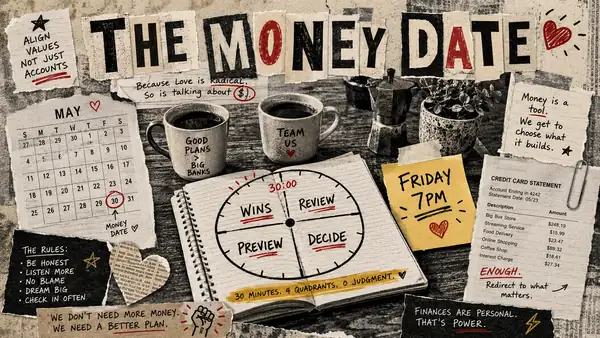
1. Put a money date on the calendar, with a fixed agenda
Start with a repeatable appointment: perhaps 30 minutes every other Sunday. Weekly might fit a household with changing income; monthly might fit one with stable bills. The right cadence is the one you can keep without developing a mysterious Sunday migraine.
AICPA’s 2025 guidance recommends scheduled monthly check-ins. Treat the following agenda as a starting template, not a research-tested prescription.
Use the same five steps:
- Five minutes: arrive. Say how money has felt lately and name one thing you appreciated.
- Ten minutes: review the facts. Check income received, shared spending, upcoming bills, and progress on the plan.
- Five minutes: look ahead. Flag expenses or changes before the next meeting.
- Five minutes: make one decision. Choose the action, owner, and deadline.
- Five minutes: close. Ask whether anything important went unheard. Stop on time.
Put topics in a shared note beforehand. No surprise slides about your partner’s hobbies. If you need a bigger conversation, name it and schedule it.
When voices rise, pause and agree when you’ll return. A break needs a return time; otherwise, it’s avoidance wearing comfortable shoes.
Research published in September 2026 by Johanna Peetz and Matthew Saxey associated higher-quality financial conversations with later relationship satisfaction. Greater frequency didn’t show the same overall benefit. The finding supports paying attention to how the conversation feels, rather than collecting meetings.
For a fuller template, use The ‘Money Date’ Script: 30 Minutes a Week That Will Change Your Marriage. Adjust its cadence to your life. Nobody gets extra relationship points for perfect calendar attendance.
2. Give both partners the full household picture
You should both be able to answer: What came in? What went out? What’s committed? What’s available?
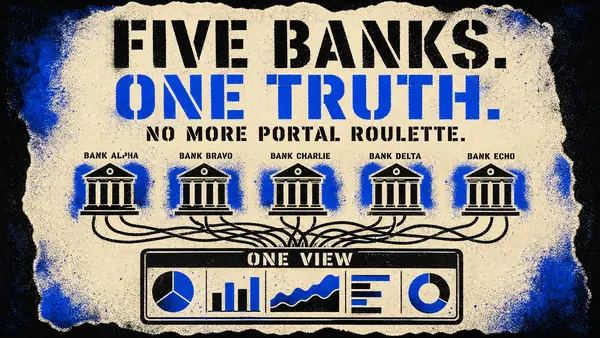
Start with mutual visibility into household spending, balances, obligations, and the plan. If one person keeps the records, both still need access and an explanation they understand. A screenshot accompanied by “it’s handled” isn’t much of a handover.
Agree on where you’ll look: a shared spreadsheet, account statements reviewed together, or an app. Give both people responsibility for keeping the picture accurate. The person who enjoys categories hasn’t volunteered for a lifetime appointment.
Make room for autonomy, too. You can agree to private personal accounts while disclosing their place in the household plan, including contributions and obligations that affect you both. Knowing that each partner has an agreed personal spending pot can be enough; you don’t need matching opinions about every purchase inside it.
Privacy works better when its boundaries are explicit. A private gift purchase and an undisclosed loan affecting shared commitments are different agreements.
If you’re deciding what to combine, start with Couples and Money: How to Have the Conversation Before You Combine Accounts.
Then use the information for planning. Opening a spending view to assemble evidence for the prosecution rather defeats the exercise.
Replace “Why did you buy that?” with “I see we’re using this category faster than planned. What needs changing?” Maybe the category is too small. Maybe shifts changed and cooking became a fantasy hobby. Update the system before assigning character defects.
3. Decide your spending threshold before the next purchase
Everyday purchases need breathing room. Larger purchases need coordination. Decide where your household draws that line while nobody is holding a shopping bag.
For example: “Under $200, no check-in needed. At $200 or more, text first.”
The exact number is yours. You might choose $25, $75, or $400 based on what’s affordable. These are examples, not recommended limits.
Write the agreement clearly:
- Below the threshold, spending within the agreed plan needs no permission.
- At or above it, send a heads-up before buying, without a speech defending why you deserve it.
- Agree how much notice counts and whether a reply is needed for coordination.
- Define what counts as one purchase and when you’ll revisit the rule.
A useful text: “The replacement chair we planned for is $240. I’m ordering tomorrow unless there’s a timing issue.”
No courtroom monologue about lumbar support required.
This works for purchases already covered by your plan. An unaffordable purchase or a new ongoing commitment belongs in joint planning, whatever its price. Five $190 purchases don’t become affordable through creative interpretation of the threshold. You are partners, not procurement loophole enthusiasts.
Decide separately how routine groceries, urgent repairs, and recurring commitments fit. Apply the same autonomy to both partners, regardless of who earns more or handles the bills. Unpaid caregiving doesn’t require submitting a business case for shoes.
After a month, review the number. Did it create room to breathe? Did either of you feel surprised or monitored? Change it when income, family responsibilities, or confidence changes.
If the surrounding budget keeps getting in your way, Which Budgeting Method Is Right for You? can help you choose a structure that suits this season.

Return to that takeout order. Maybe you’re tired and needed dinner handled. Maybe your partner thought you’d agreed to cook because the coming week was expensive. Both experiences deserve a hearing.
You can change the food category and still leave the hurt untouched. Try saying the part underneath: “I needed you to notice how exhausted I was.” Or: “I needed to know our agreement still mattered.”
Listen before opening the calculator.
The conversation isn’t about the spending. It’s about whether you feel seen.
You can’t budget your way out of feeling unseen. But the budget can be the place you start to be.
 Forbidden Finance