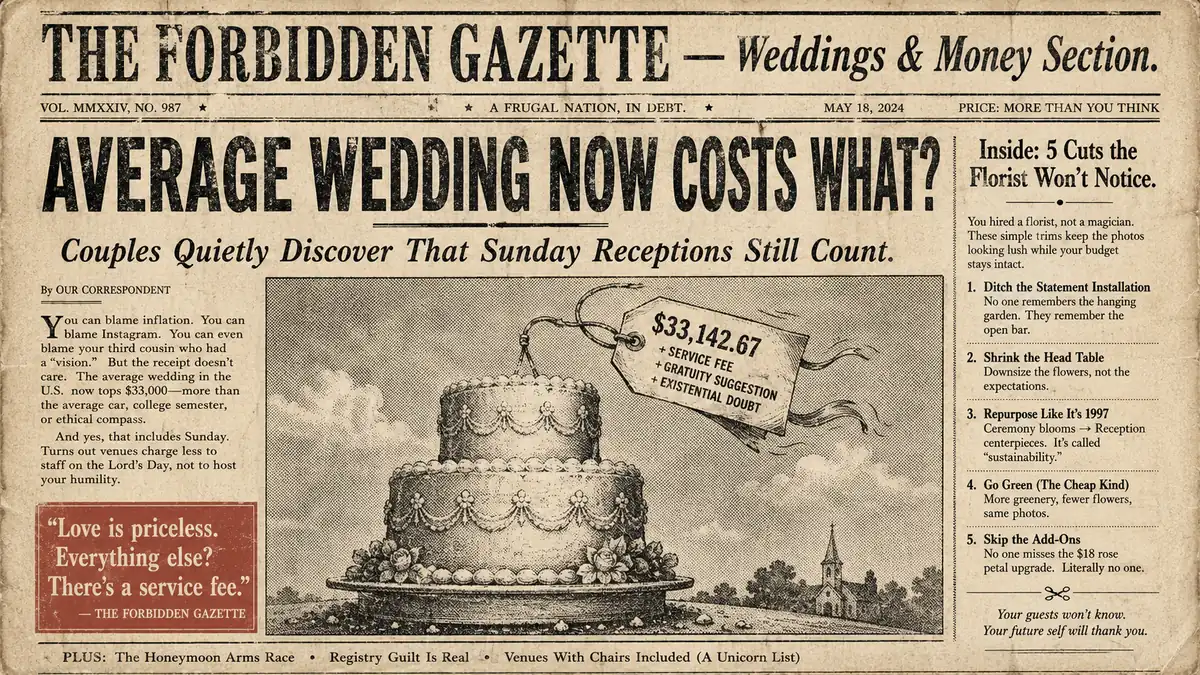
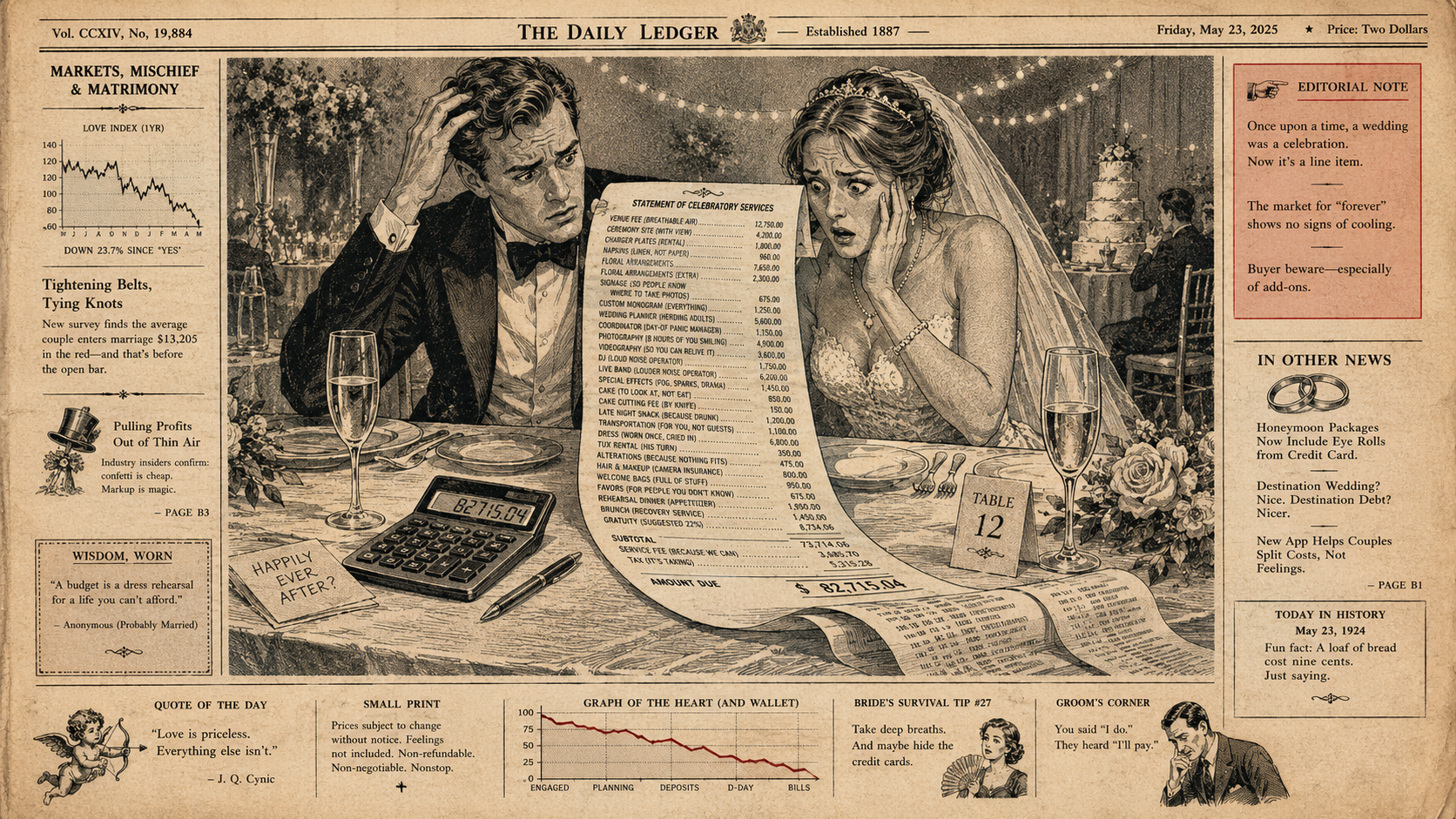
According to Zola, the average U.S. wedding cost in 2026 is holding at $36,000 for the second year in a row.
That is not a typo. That is a compact SUV, a down payment in some markets, or one very emotional spreadsheet wearing chiffon.
Before anyone starts clutching pearls, spending big on a wedding is not a character flaw. If gathering 145 people, feeding them well, hiring the florist of your dreams, and dancing until someone's uncle discovers the floor again is a values choice, fine. Spend the money. Enjoy the thing.
The problem is not spending. The problem is drift.
Drift is the extra $700 in stationery upgrades nobody asked for. The second shooter for ten hours when you mainly need two ceremony angles. The plated dinner chosen because it sounds "nicer," even though guests will remember the pasta station more than the synchronized plate drop. Forbidden truth: most wedding overspending does not come from priorities. It comes from unchallenged defaults.
TL;DR
• The 2026 national-average wedding cost is about $36,000, per Zola.
• The biggest budget eaters are venue, catering, flowers, photography, bar, and video.
• The easiest guest-invisible cuts are date, dinner format, paper, photography coverage, and photo/video bundling.
• A wedding budget should protect the stuff you actually care about, not the stuff tradition quietly smuggled into your cart.
• The best cut is the one nobody notices because it never touched the experience.
The 2026 Average
Zola puts the average 2026 wedding at $36,000, with an average guest count of 145 in its 2026 First Look Report. The same report found 85% of couples still believe the wedding will be worth every penny. Which is romantic. Also expensive. Both can be true.
The broader price backdrop is not helping. The Bureau of Labor Statistics reported that food away from home rose 3.6% over the 12 months ending April 2026, while apparel rose 4.2%. Catering, attire, vendor labor, delivery, setup, and rentals do not live in a magical wedding-only economy where inflation politely waits outside with the valet.
That said, "average" is not a commandment. It is a weather report. Useful, but not a personality.
If your wedding costs $12,000, you are not doing it wrong. If it costs $80,000 and the money is aligned with your priorities, also not wrong. The Forbidden Finance position is annoyingly reasonable: pick the spending that fits your life right now. If you want a bigger framework for that, Values-Based Budgeting: Spend Money on What Actually Matters (Forbidden Concept, We Know) is basically the wedding-budget antidote to "but everyone does it this way."
The Line-Item Breakdown
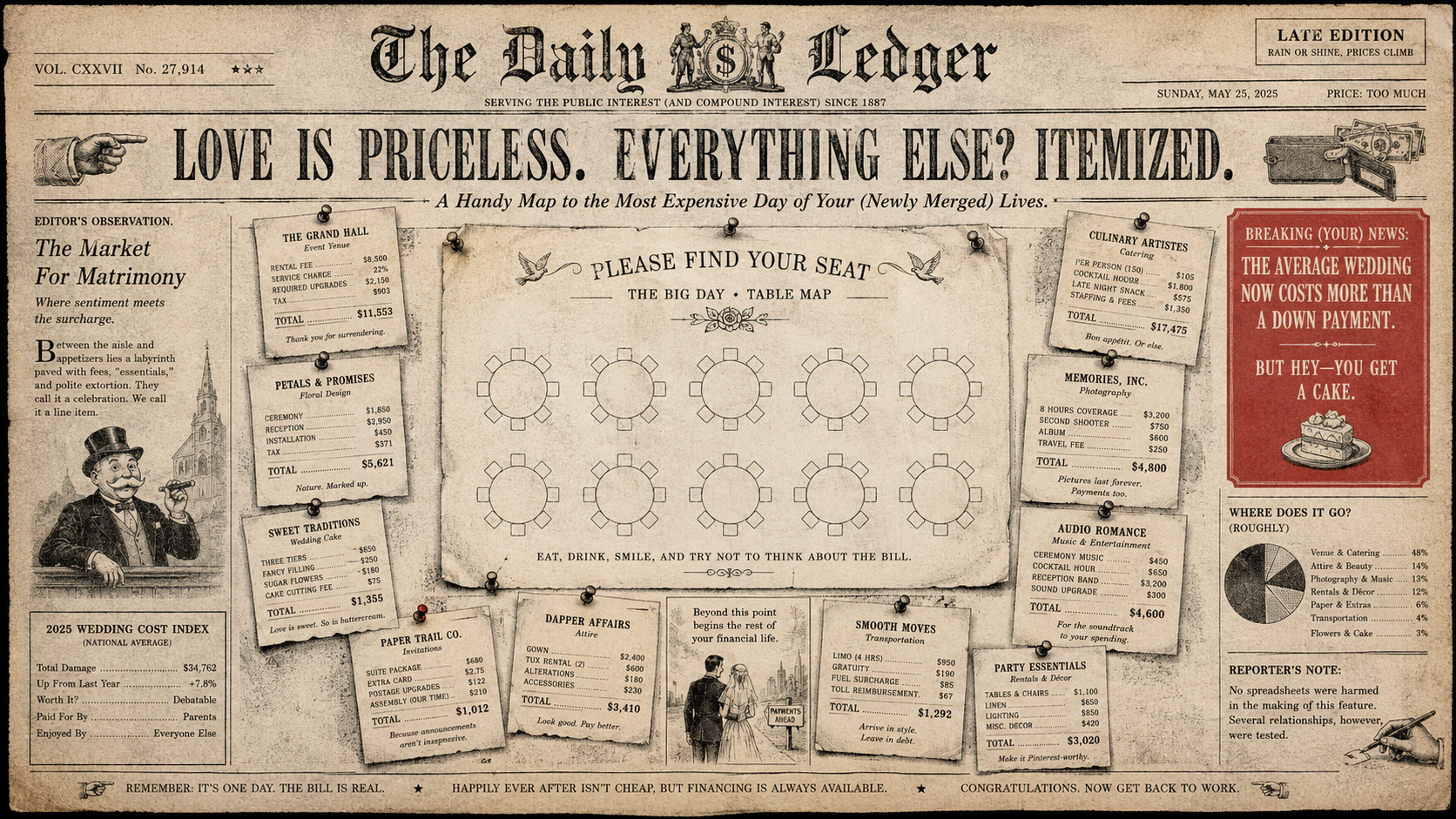
Here is one practical way to map the $36,000 average across the categories couples actually face. Most line items below come from the Zola Wedding Cost Index. For stationery, The Knot reports a similar average of about $510 for invitations and related paper.
| Line Item | Average Cost | What It Usually Includes |
|---|---|---|
| Venue | $8,573 | Site fee, reception space, ceremony space, basic venue access |
| Catering | $6,927 | Dinner, staffing, service equipment, sometimes basic beverages |
| Photography | $4,400 | Main photographer, edited gallery, typical full-day coverage |
| Attire | $2,775 | Wedding dress, alterations, tux rental or suit basics |
| Flowers and Decor | $6,345 | Bouquets, centerpieces, ceremony flowers, installations, floral labor |
| Music and Entertainment | $1,567 | DJ, band, ceremony music, sound support depending on package |
| Stationery | $500 | Invitation suite, save-the-dates, RSVP cards, day-of paper |
| Rings | $1,500 | Wedding bands, not the engagement ring |
| Officiant | $325 | Ceremony officiation, basic prep, sometimes filing support |
| Miscellaneous | $3,314 | Postage, alterations surprises, service charges, signage, licenses, gifts, "how is this another fee?" |
Yes, that total lands slightly above $36,000. Welcome to wedding accounting, where category averages overlap, package inclusions vary, and "miscellaneous" behaves like a raccoon in a pantry. The table is a planning map, not a forensic audit.
Five Cuts Nobody Will Notice
The right wedding cut does not make the day feel smaller. It removes the part nobody was going to remember.
Guests remember whether they felt fed, welcomed, comfortable, and included. They do not remember whether your RSVP card had deckled edges unless your guest list is secretly 40 stationery designers in a trench coat.
| Cut | Typical Savings | No-One-Notices Rationale |
|---|---|---|
| Weekday or Sunday venue | $850-$2,600 on an average venue; sometimes more | Same room, same vows, same dance floor. The calendar square is different, not the wedding. |
| Family-style or buffet instead of plated dinner | $2,000-$6,000 for 100-150 guests | Guests notice hot food, enough food, and short lines. They do not audit the service choreography. |
| Digital RSVP and lean stationery | $300-$700 for most couples | People want the date, address, dress code, and a button that says yes or no. Revolutionary technology: clarity. |
| One photographer, ceremony-only second shooter | $500-$1,500 | You keep the key second angle for vows and processionals without paying for duplicate cocktail-hour coverage. |
| Photo and video bundle from one vendor | $500-$1,700 | One coordinated media team can reduce admin, travel, and package costs while covering the same moments. |
Cut the Date
Saturday evening is the wedding industry's luxury tax. It is convenient, familiar, and priced like it knows both things.
Zola notes that Friday or Sunday events often cost 10-20% less for catering, and off-peak timing can reduce vendor demand pressure. A 10-30% venue discount on Zola's $8,573 average venue cost means roughly $857 to $2,572 saved before you touch flowers, food, or photography.
Why no one will notice: guests are attending your wedding, not performing a compliance review of the Gregorian calendar. A Sunday afternoon reception with a full bar, good food, and a real dance floor still counts. The marriage license does not come stamped "less valid due to brunch."
The catch is guest friction. A Thursday wedding may save more, but it can shift cost to guests through PTO, hotels, and travel. That is not evil. It just belongs in the calculation. If half your people are local and your venue discount is $9,000, Thursday might be rational. If everyone is flying in, maybe Sunday is the cleaner crime.
Cut the Dinner Format
Food is where wedding budgets go to get professionally inflated.
Zola says formal plated dinners typically run $65-$85 per person, buffet service runs $40-$65, and family-style lands around $50-$70. WeddingWire also shows buffet service below plated service in its cost guide. For 125 guests, even a $25 per-head difference is $3,125. That is not a tiny trim. That is honeymoon airfare, a month of rent, or the emergency fund quietly whispering "hello."
Why no one will notice: guests are not emotionally attached to being handed chicken by someone in black pants. They want food that is warm, plentiful, and easy to access. Buffet or family-style can feel generous because people choose what they actually want. Imagine that. Consent, but with potatoes.
The best version is not "cheap buffet." It is intentional buffet. Two proteins, one strong vegetarian option, clear labels, enough staff to keep lines moving, and a layout that does not make Grandma queue behind 37 cousins for salad tongs.
Cut the Paper Trail
Wedding stationery is beautiful. It also begins its life as a keepsake and ends it under a fridge magnet next to an expired dentist reminder.
Zola puts most complete invitation suites around $400-$600, with hidden costs like postage and extras adding 25-40%. The Knot reports couples spend about $510 on invitations and other paper details. Digital RSVPs, a wedding website, and a lean printed invite for relatives who actually want one can save $300-$700 without touching the guest experience.
Why no one will notice: the job of stationery is to communicate. If guests know where to go, when to arrive, what to wear, and whether they can bring their new boyfriend Chad, the system worked. Nobody needs an RSVP envelope to feel loved.
Keep the paper where it creates delight. Maybe one gorgeous invitation. Maybe printed menus if they matter to the table design. But do not let "suite" become a permission slip for $900 in paper rectangles.
Cut the Media Package
Photography is not where you should blindly cheap out. The photos are one of the few things you keep after the flowers begin dying immediately, which is rude but botanically accurate.
The trick is not "hire someone bad." The trick is buy the coverage you need.
WeddingWire says wedding photographers often charge more for second shooters and that only 34% include a second shooter in starting rates. If your quote includes two photographers for the whole day, ask for one lead photographer plus a second shooter for ceremony and portraits only. You still get the two angles that matter most: aisle, vows, reactions, family formals. You do not need two professionals documenting the cheese board from opposing flanks.
Typical savings: $500-$1,500, depending on the photographer's add-on structure and hours removed.
Then look at photo and video together. Zola puts average videography at $3,993 and average photography at $4,400 in its wedding cost data. Booking both separately can push media near $8,400 before albums, overtime, travel, or the "we stayed 42 extra minutes because the sparkler exit was chaos" fee.
A single vendor or studio offering photo plus video may discount the bundle, coordinate timelines better, and avoid two separate teams fighting for the same aisle angle like it is a tiny red carpet. Even a modest package concession can save $500-$1,700.
Sidebar: Couples-Budget Alignment
Wedding planning is often the first time a couple manages a large shared financial project with family opinions, vendor contracts, nonrefundable deposits, and one person suddenly caring very deeply about napkin color. Cute.
This is where visibility matters more than control. You do not need to merge every dollar of your lives to plan a wedding together. You do need one shared source of truth.
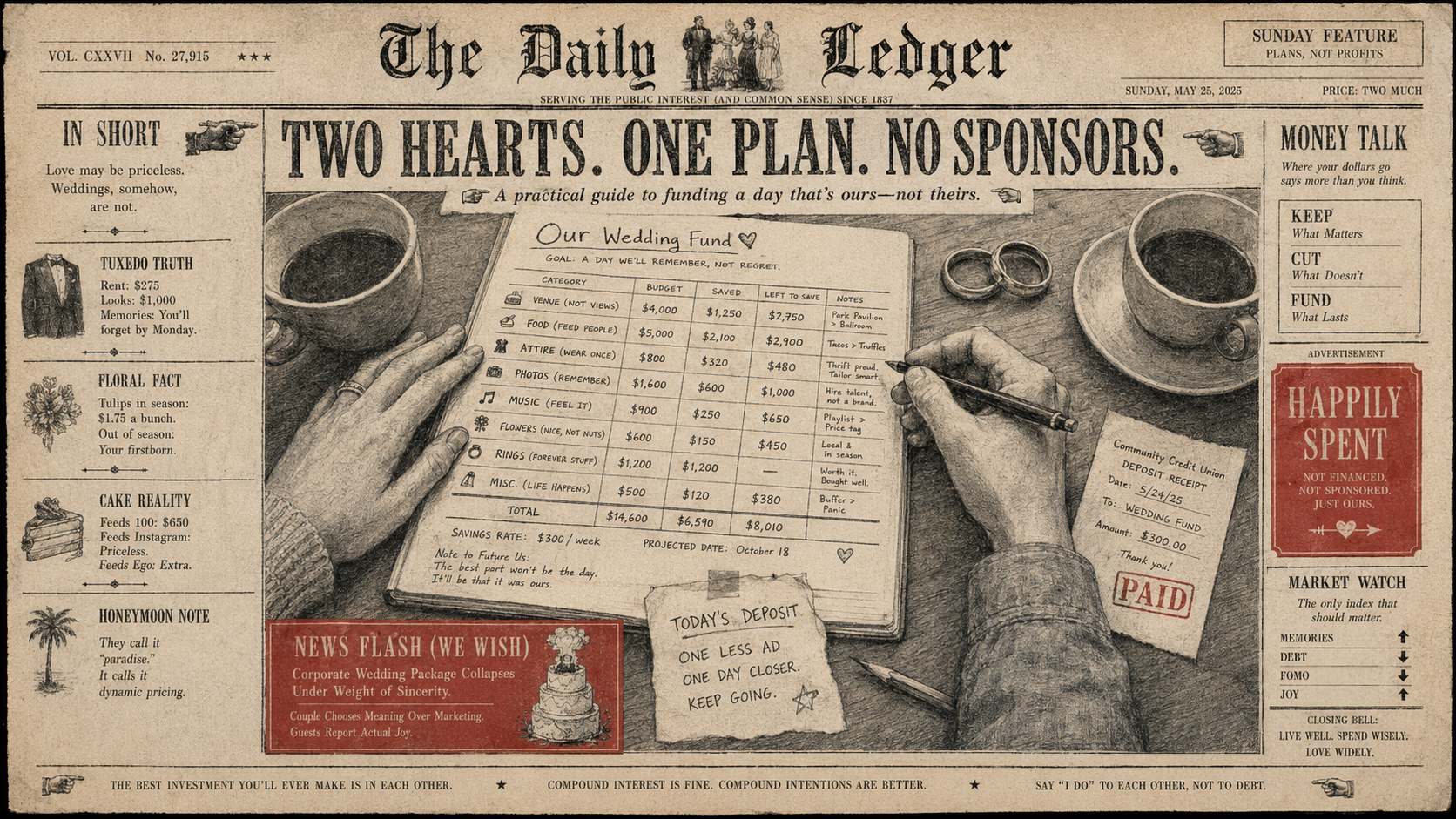
- Create a joint wedding fund with a target amount, current balance, and deposit deadlines.
- Track committed costs separately from estimated costs. A quote is a flirtation. A signed contract is a relationship.
- Label each expense as must-have, nice-to-have, or drift.
- Set a "two yeses" rule for any new cost above a chosen threshold, like $250 or $500.
- Keep a 10% buffer for service charges, postage, alterations, tips, and the miscellaneous goblin hiding behind every invoice.
If talking about this feels loaded, start with the structure, not the feelings. "Here is the fund. Here are the deposits. Here is what is still unknown." You can get to the emotional layer after the math stops throwing chairs.
For the broader conversation, The Forbidden Conversation: How to Talk About Money Without Starting a Fight is the pre-wedding vendor you did not know you needed. And if you are building the fund over months, Sinking Funds Explained: The One Habit That Makes Surprise Expenses Disappear is the least sexy, most useful wedding planning move available.
Before the Deposit Clears
The most expensive wedding choices are not always the flashiest. Sometimes they are the quiet defaults.
Saturday. Plated. Full paper suite. Full-day second shooter. Separate photo and video teams. None of these are wrong. They are just expensive. If they matter to you, keep them. If they do not, cut them and let the money go somewhere with a pulse.
A good wedding budget does not make your day smaller. It makes your priorities louder.
If you want a full budgeting method around the whole thing, not just wedding triage, Which Budgeting Method Is Right for You? can help you pick a system without turning your engagement into a part-time accounting job. And if you are also attending six weddings this year because your friends entered their matrimonial era all at once, Wedding Season Survival: How to Be a Guest Without Going Broke covers the other side of the open bar.
Spend on what matters. Cut what doesn't. Know the difference before the deposit clears.
 Forbidden Finance