The moment before you combine accounts is weirdly intimate.
Not flowers-and-candles intimate. More like opening a laptop at the kitchen table, finding three old 401(k)s, one suspicious store card, two student loans, and the emotional residue of every argument your parents had near a checkbook.
Fun date night? No. Necessary? Very.
The goal is not to interrogate each other until someone confesses to buying concert tickets in 2019. The goal is to decide, together, what level of financial visibility your relationship needs before your money starts sharing plumbing.
And yes, money conversations matter even when the relationship feels solid. Fidelity found that 45% of couples argue about money at least occasionally, and more than a third miss the mark on how much their partner earns. That is not romance dying. That is missing data.
So before you merge checking accounts, split rent, buy a house, marry, cohabit, or start referring to Costco as “our weekend plan,” have these five conversations in order.

TL;DR
• Have five money talks before merging accounts: debt, credit, money history, short-term goals, long-term goals.
• Then pick the architecture — fully joint, fully separate, or yours/mine/ours. None is morally superior.
• The conversation is the asset. The accounts are just plumbing.
The Five Conversations to Have First
1. Full Debt Disclosure
Debt is not a character flaw. It is a balance, an interest rate, a monthly payment, and sometimes a deeply annoying souvenir from a previous chapter.
List every account: credit cards, student loans, car loans, medical debt, buy-now-pay-later balances, personal loans, family loans, tax debt, business debt, collections, and anything you are “handling” by not opening the envelope. Especially that.
NerdWallet reported that 8% of partnered Americans said they had lied to or withheld information from a partner about how much debt they had. The number does not need to be huge to matter. One surprise debt can change the mortgage timeline, the baby timeline, the moving timeline, or the “why are we suddenly eating lentils” timeline.
- Opening line: “Can we make a complete debt list together? No blame, just balances.”
- Follow-up: “What is the interest rate, minimum payment, and payoff status on each one?”
- If the answer is ‘I don’t know’: “That is allowed. Let’s log in, pull statements, and write down what is real today.”
2. Credit-Score Reveal
Pull credit reports together. Not across the table like a courtroom exhibit. Side by side, ideally with snacks.
Use AnnualCreditReport.com, the official site for free credit reports, which says free weekly online reports are available from Equifax, Experian, and TransUnion. Then look for accounts, balances, late payments, collections, and errors. Your score is useful, but the report explains the score’s backstory.
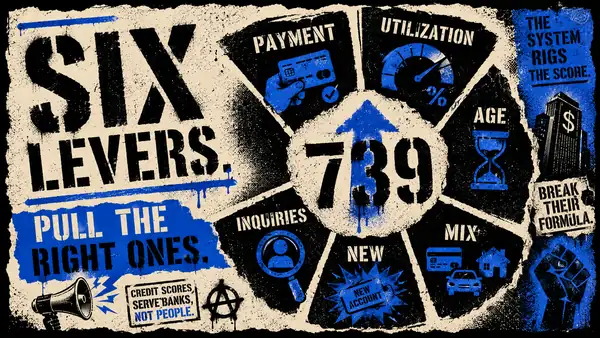
Also, the score is not a personality test. myFICO explains that FICO scores are built from credit report data, including payment history, amounts owed, length of history, credit mix, and new credit. Translation: the number responds to inputs. You can work with inputs.
- Opening line: “Can we pull our reports at the same time and look for anything that affects shared plans?”
- Follow-up: “Are there any late payments, collections, high utilization, or accounts you do not recognize?”
- If the answer is ‘I don’t know’: “Let’s start with the reports, not the score. We can figure out the pattern after we see the data.”
3. Money History
This is the part most budget advice skips because it cannot be solved with a pie chart. Rude of reality.
Ask how each of you grew up around money. Was it scarce? Secret? Loud? Used as control? Used as care? Did one parent hide spending? Did another treat every purchase like a family referendum?
The Journal of Financial Therapy describes “money scripts” as beliefs about money that often develop in childhood, pass through family systems, and drive adult financial behavior. That does not mean your childhood gets to run the relationship. It means you should know what software is running in the background.
- Opening line: “What did money feel like in your house growing up?”
- Follow-up: “What money habit of mine makes more sense if I know your history?”
- If the answer is ‘I don’t know’: “Try finishing this sentence: ‘In my family, money meant…’”
4. Short-Term Goals: The Next 1-3 Years
This is where love meets calendar math. Moving, wedding, car, debt payoff, emergency fund, travel, grad school, fertility care, career change, a dog with better medical insurance than you. Put it all on the table.
Short-term goals are where mismatched assumptions get expensive. One person thinks the next three years are about saving for a down payment. The other thinks they are about quitting a terrible job and taking a pay cut. Both can be valid. They just cannot both be invisible.
If you need a framework for deciding which goals deserve money first, Values-Based Budgeting: Spend Money on What Actually Matters (Forbidden Concept, We Know) pairs nicely with this step because it asks what your money is supposed to support, not just what category it belongs to.
- Opening line: “What do you want our money to make possible in the next three years?”
- Follow-up: “Which goal needs cash first, and which goal can wait without resentment?”
- If the answer is ‘I don’t know’: “Let’s each name one thing we want less stress around by next year.”
5. Long-Term Goals: 10+ Years
This is the big stuff: retirement, kids or no kids, geography, elder care, career flexibility, homeownership, business ownership, financial independence, and whether one of you secretly wants to live near mountains while the other considers elevation a personal attack.
Fidelity says more than half of spouses do not agree on how much they need to save for retirement, and only about half of couples said they planned together for their financial future. That is a lot of people standing in the same house with different maps.
For the long view, this is also where net worth matters more than income flexing. Your Salary Is Not Your Net Worth (And That's the Forbidden Truth) is the companion read here because a high income with no retained wealth is just a very well-dressed treadmill.
- Opening line: “When you imagine us ten years from now, what does life look like?”
- Follow-up: “What are we unwilling to sacrifice to get there?”
- If the answer is ‘I don’t know’: “Let’s choose categories first: kids, location, work, retirement, family obligations, and freedom.”
How to Keep the Tone Human
Do not ambush your partner at 11:47 p.m. because you saw a TikTok about prenups and now your nervous system has become a spreadsheet.
Schedule the conversation. Keep it under an hour. Bring documents. Take breaks. If someone gets flooded, pause. The goal is not to “win” the money talk. If you win and your partner feels judged, congratulations, you have won a very small and useless trophy.
Use this rule: curiosity first, logistics second, decisions third. Reverse the order and you get a fight wearing a cardigan.
Contemporary Family Therapy describes money disagreements as a significant and frequent source of conflict in couple relationships, which is the academic way of saying: yes, this topic has heat. Treat it accordingly.
If the first talk gets messy, that is information. It may mean you need a second conversation, a written inventory, a financial planner, a couples therapist, or just dinner before attempting debt disclosures like responsible adults with blood sugar.
The Three Account Architectures
Once the five conversations are done, then you can choose account architecture. Not before. Picking accounts before disclosure is like choosing a wedding cake before confirming there is a wedding. Bold. Chaotic. Occasionally delicious, but still.
There are three common structures. None is morally superior. Each solves one problem and creates another.
| Architecture | Best For | Watch Out For |
|---|---|---|
| Fully Joint All income flows into shared accounts; bills, savings, and spending come from the same pool. Pros: maximum transparency, simple household planning, clear “we” mentality. Cons: less privacy, more friction around personal spending, higher stakes if trust breaks. |
Couples with high trust, similar spending styles, shared dependents, or one partner doing unpaid labor that should be treated as household work, not financial invisibility. | Personal purchases can become committee business. Also, one partner should not become the unpaid CFO while the other says “you’re just better at it” and vanishes. |
| Fully Separate Each person keeps their own accounts and splits bills by an agreed formula. Pros: autonomy, privacy, clean separation for pre-existing obligations or complex family situations. Cons: harder shared planning, easier blind spots, possible unfairness if incomes differ. |
Couples who are not legally merged, have prior obligations, own businesses, have children from previous relationships, or simply do better with clear personal lanes. | “Separate” cannot mean “secret.” Shared life still needs shared visibility around bills, debt, goals, and risk. |
| Yours/Mine/Ours Each person keeps personal accounts, and both fund a joint account for shared expenses and goals. Pros: balances autonomy with teamwork, easy to adjust, useful for different incomes. Cons: requires a fair contribution formula and regular recalibration. |
Couples who want shared bills and goals funded cleanly while preserving guilt-free personal money. Also great for people who love each other but do not need joint visibility into every burrito. | Fifty-fifty can be unfair when incomes are not equal. Proportional contributions may fit better, but only if both people agree what “fair” means. |
The U.S. account landscape is already more mixed than old-school advice admits. The U.S. Census Bureau reported that 77% of householder married couples with financial-institution assets held at least one joint account in 2023, down from 85% in 1996, while couples using both joint and individual accounts became more common.
That is the useful point: people are adapting the plumbing to their lives. Later marriage, prior assets, kids, debt, different incomes, second marriages, uneven caregiving, and plain old preference all matter.

Visibility Without a Full Merger
Combining accounts is not the only way to build trust. Sometimes the smarter move is shared visibility without shared legal access.
Partner-sharing tools can let both people see spending categories, balances, budgets, or goals while the underlying accounts stay separate. That can be especially useful before marriage, during a trial period, when one person has business accounts, or when a couple wants transparency without turning every account into a joint account.
If you are still deciding which budgeting method fits the household, Which Budgeting Method Is Right for You? is the natural next step. The account setup and the budgeting method are different decisions. Do not let them elope without you.
The Conversation Is the Asset
The account structure can change.
You might start fully separate, then add an ours account. You might go fully joint after having kids. You might keep personal accounts forever because autonomy makes the relationship calmer. You might change systems after a layoff, a move, a business launch, or a baby who arrives with tiny socks and the budget impact of a small moon landing.
That is not failure. That is life updating the spreadsheet without asking permission.
The real win is not finding the one perfect setup. It is building the habit of telling the truth early enough that money becomes a shared operating system instead of a locked room.
Full debt list. Credit reports. Money history. Three-year goals. Ten-year goals. Then architecture.
The conversation is the asset. The accounts are just plumbing.

 Forbidden Finance