The most dangerous place in your financial life is a checking account with vibes.
Paycheck lands. Rent is hiding in there. Groceries are in there. The electric bill is lurking like a tiny bureaucrat. Three subscriptions are also in there, one of which you meant to cancel in 2022. Then your debit card joins the group chat and starts making decisions at the grocery store.
This is the one-bank fantasy: one app, one account, one cheerful sales pitch telling you that simplicity means stuffing every job into the same digital junk drawer. Cute. Also how you end up asking whether the $800 rent payment has already been mentally spent on tacos, gas, and a Target run that began with toothpaste.
Most U.S. households already use the banking system. The FDIC found that nearly 96 percent of U.S. households were banked in 2023, and almost half of banked households used mobile banking as their primary access method. So the problem is usually not access to one account. The problem is asking one account to do five separate jobs while pretending the chaos is minimalist.
Behavioral finance has a name for the thing your brain is already doing. Richard H. Thaler described mental accounting as the way people organize, evaluate, and track financial activity. Money may be mathematically fungible, but your brain does not treat rent money, vacation money, and emergency money the same. It labels. It protects. It panics. Very human. Very inconvenient. Very useful.
The forbidden move is to stop fighting that instinct and build around it.
TL;DR
• Your daily spending account and your bills account should not be the same room.
• Five accounts can be simpler than one if each account has one job.
• Aggregation turns the whole thing from spreadsheet cosplay into a working dashboard.
Here is the architecture in plain English:
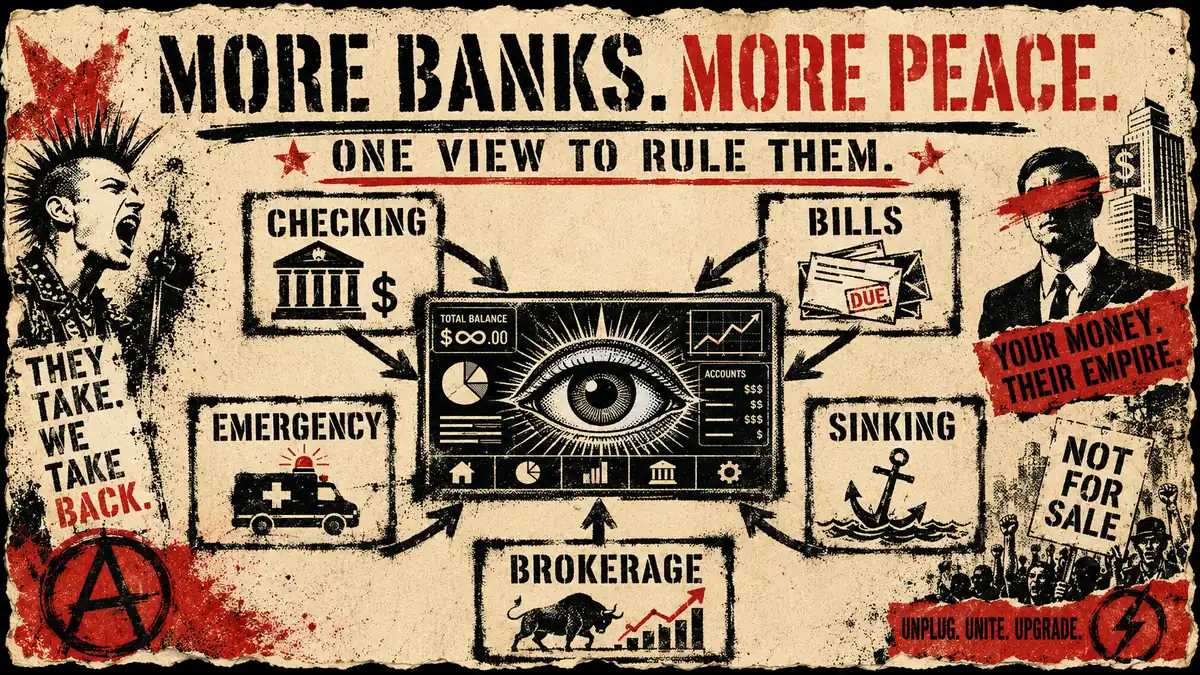
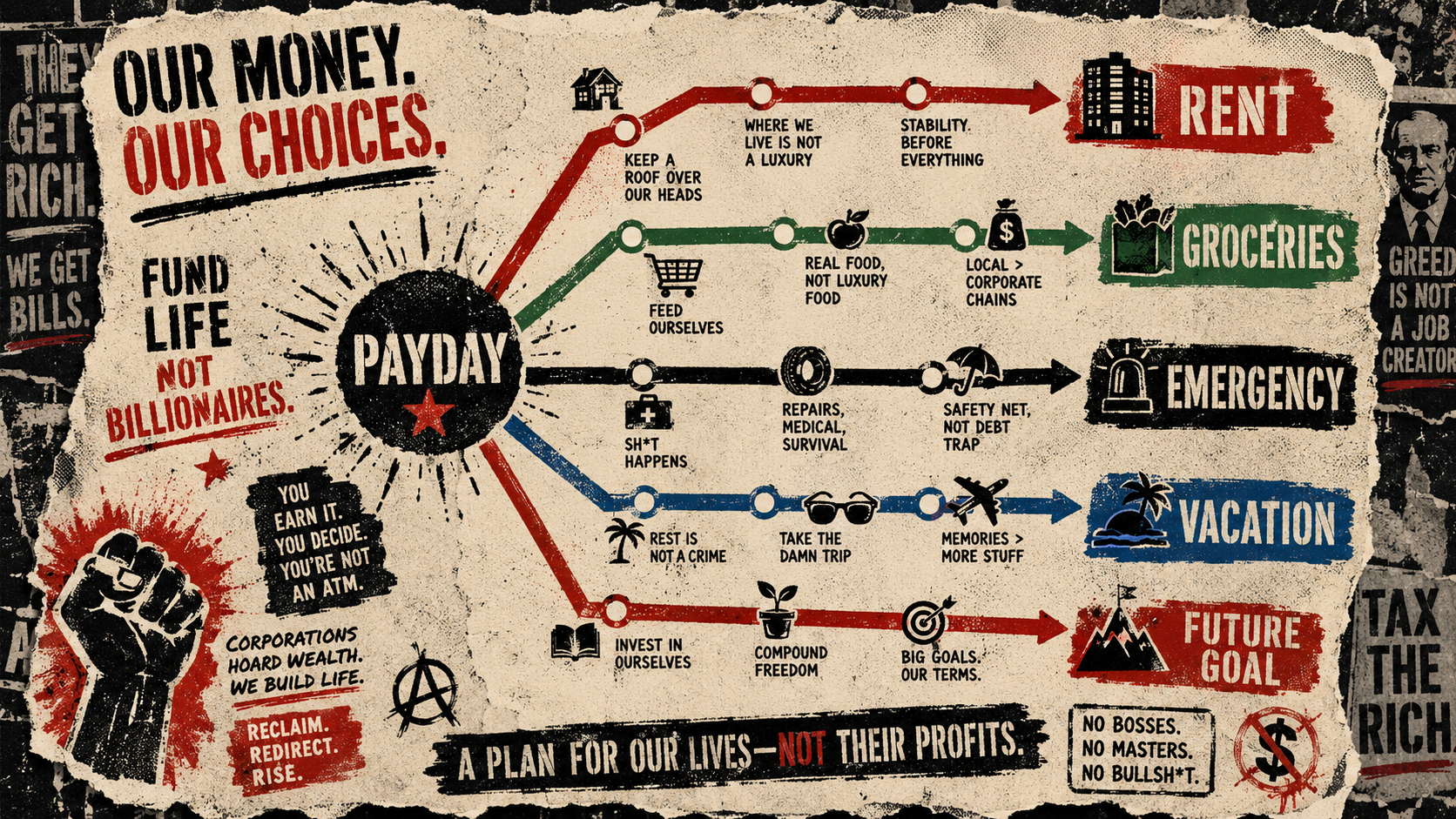
Paycheck -> primary checking -> automatic transfers -> bills checking, emergency HYSA, sinking fund HYSA, brokerage.
Daily spending stays close. Fixed bills move out. Emergency cash moves farther away. Known future expenses get labeled. Medium-term goals get invested only when the timeline can handle market drama.
| Account | Purpose | Where to keep it |
|---|---|---|
| Primary checking | Paychecks land here; debit-card spending lives here. | Your most convenient bank or credit union, with reliable app access and debit features. |
| Bills checking | Fixed autopay bills leave from here, away from daily spending. | Same bank for instant transfers, or a different bank if you want stronger separation. |
| Emergency fund HYSA | Cash for true emergencies, not vibes-based emergencies. | A different insured institution to create psychological friction. |
| Sinking funds HYSA | Known future expenses: travel, car repairs, gifts, annual premiums. | One HYSA with labeled buckets or subaccounts. |
| Brokerage | Medium-term goals that can tolerate market movement. | A brokerage account with investments matched to your timeline and risk. |
1. Primary Checking: The Inbox
Your primary checking account is not your whole financial life. It is the front door.
This is where paychecks land. This is where daily debit-card spending happens if you use debit. Groceries, gas, coffee, pharmacy runs, the $14 sandwich that was somehow $21 by checkout. Fine. Let this account be messy within limits. Life is messy. Your burrito did not request a committee hearing.
The rule is simple: primary checking should handle cash flow, not long-term meaning.
Flow diagram in words: Employer -> primary checking -> daily spending plus scheduled transfers.
Notice what does not stay here: next month’s car insurance, the emergency fund, the vacation fund, and money you promised Future You would not be turned into delivery fees. Those dollars get moved before they are exposed to the emotional weather.
This is why automation matters. If you want the broader philosophy, Pay Yourself First: The Forbidden Art of Not Tracking Every Latte is the same idea wearing a different outfit. You do not need to interrogate every coffee if the important money has already escaped.
Keep a buffer here. Not a giant one. Enough to avoid overdraft nonsense and timing hiccups. Think one week of spending, maybe two if your income is lumpy. The rest needs an assignment.
2. Bills Checking: The Quiet Room
Bills checking is the account that keeps adulthood from jumping out from behind a curtain.
Rent or mortgage. Utilities. Insurance. Internet. Phone. Daycare. Minimum debt payments. Any fixed bill that can be placed on autopay without creating a tiny financial thriller every month.
Flow diagram in words: Primary checking -> bills checking -> autopay bills.
This account should be boring enough to need a wellness check. You calculate the monthly fixed-bill total, add a cushion, and automate transfers into it after each paycheck. If your fixed bills are $2,400 per month and you are paid twice monthly, maybe $1,250 moves into bills checking every payday. The extra $100 is not exciting. That is the point. Excitement is for concerts, not utility drafts.
The magic is decoupling.
When spending money and bill money share one account, every balance number lies a little. A $3,000 checking balance may look rich on the 5th and become a pumpkin on the 12th when rent, insurance, and the card payment hit. Bills checking turns that fake abundance into a cleaner signal. Primary checking shows what is safe to spend. Bills checking shows what is already spoken for.
This also makes subscription rot easier to spot. If a charge is fixed and recurring, it belongs in the bills room. If it keeps showing up and you do not recognize it, congratulations, you have found a tiny leak wearing a brand logo.
3. Emergency Fund HYSA: The Locked Cabinet
Your emergency fund should be liquid. It should not be convenient.
That sounds contradictory until you remember that humans are not spreadsheets with shoes. If emergency cash sits one tap away from your debit card, your brain may start filing non-emergencies under emergency. New tires, yes. Job loss, yes. Medical deductible, yes. A weekend trip because the weather got nice, no. Nice try, forbidden goblet of nonsense.
A separate high-yield savings account (HYSA) at a different institution adds useful friction. You can get the money. You just cannot get it with the same casual energy as buying fries.
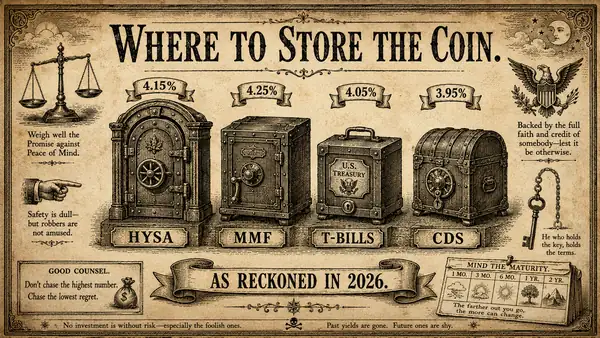
As of Bankrate’s June 2026 savings snapshot, Bankrate listed top high-yield savings rates around 4.10 percent APY, compared with a national savings average of 0.62 percent APY. APYs move, so do not tattoo the number anywhere. The principle is stable: emergency cash should earn something respectable while staying accessible.
Also check insurance. The FDIC says deposit insurance generally covers $250,000 per depositor, per insured bank, per ownership category. Credit unions have their own federal share insurance system. The practical takeaway: use insured institutions and pay attention if your balances get large enough for limits to matter.
Flow diagram in words: Primary checking -> emergency HYSA -> only true emergencies -> back to checking when needed.
This is mental accounting with steel beams. Thaler wrote about how households use accounts to manage self-control. Different banks make the label harder to ignore. That is not weakness. That is design.
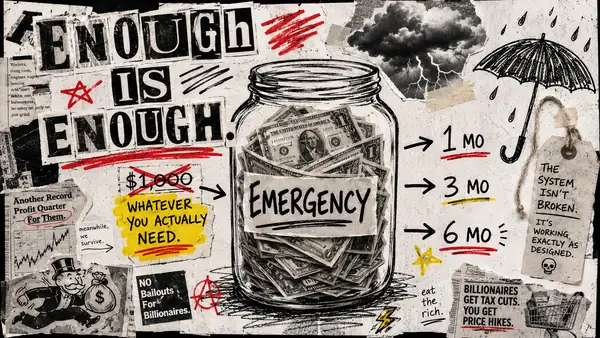
For the sizing question, pair this with Emergency Fund Math: How Much Is Actually Enough in 2026?. Three months, six months, or more depends on your household, job stability, dependents, health needs, and how spicy your income is.
4. Sinking Fund HYSA: The Future Expense Pantry
Sinking funds are for expenses that are not emergencies because you can see them coming.
Car maintenance. Annual insurance premiums. Holiday gifts. Summer travel. Kids’ activities. Vet bills. Home repairs. The wedding you are attending where the hotel costs more than the friendship should legally allow.
The one-bank pitch tells you to keep this in savings and remember what each dollar is for. Adorable. Your brain has 47 tabs open and one of them is playing music. Use labels.
A separate HYSA for sinking funds can be at one institution with multiple buckets or subaccounts. Bankrate notes that some savings accounts let you separate money into categories, which is exactly the point. The balance is not one blob. It is tires, travel, holidays, annual fees, and the inevitable appliance betrayal.
Flow diagram in words: Primary checking -> sinking fund HYSA -> labeled buckets -> planned spending.
This is where the system starts feeling less like budgeting and more like inventory management. You are stocking shelves before life walks in with a clipboard.
If you want the full habit breakdown, Sinking Funds Explained: The One Habit That Makes 'Surprise' Expenses Disappear goes deeper. The short version: when a $600 car repair comes out of the car bucket, it is annoying. When it comes out of checking, it is a crisis with tires.
5. Brokerage: The Medium-Term Engine
Not every goal belongs in savings.
Emergency funds belong in cash. Bills belong in checking. Money you need in the next year usually belongs somewhere boring. But medium-term goals, say three to ten years, may deserve a brokerage account if you can tolerate the market not acting like a customer-service department.
This might include a future home upgrade, a sabbatical fund, a business-launch cushion, or money for a move you know is coming but not soon enough to leave every dollar in cash. The goal has to be flexible. If the market drops 20 percent right when you need the money, you need the option to wait, reduce, or adjust.
Flow diagram in words: Primary checking -> brokerage -> investments matched to timeline -> goal spending later.
This is not bank money. Investor.gov explains that mutual funds can hold stocks, bonds, short-term instruments, and other assets, and that mutual funds are not FDIC-insured or guaranteed by any government agency. Translation: possible growth comes with possible loss. Revolutionary, apparently.
The brokerage account is the part of the system where you stop asking cash to do investment work. Cash is great at being available. It is not great at outrunning a long timeline. Investments are better suited for growth, but only when the goal can absorb volatility without turning your life into a sad spreadsheet.
The Complexity Objection
The obvious objection is fair: isn’t this just complicated?
Yes, if you manage it like it is 2008 and your idea of account tracking is five browser tabs, three passwords, and a notebook named Final Budget v7 FINAL final.
No, if you use aggregation.
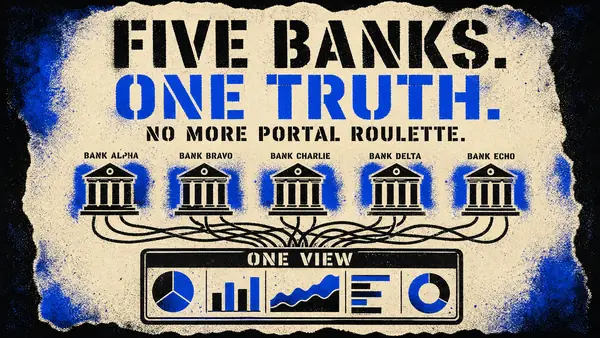
The whole point of a multi-account architecture is separation at the plumbing layer and unity at the visibility layer. Your accounts should be specialized underneath. Your dashboard should be unified on top.
Flow diagram in words: Five accounts -> one aggregated view -> clear decisions.
That is the difference between overhead and anatomy. A heart, lungs, stomach, liver, and nervous system are more complicated than one mysterious beige organ labeled body. Yet here you are, enjoying specialization. Accounts work the same way. Primary checking spends. Bills checking pays. Emergency savings protects. Sinking funds prepare. Brokerage grows. One dashboard lets you see the whole creature without pretending every function belongs in one account.
The regulatory world has been wrestling with this too. The CFPB issued a personal financial data rights rule in 2024 requiring financial providers to make consumer data available to consumers and authorized third parties, though its compliance dates were later stayed according to the CFPB as of January 2026. The legal machinery may be messy, because of course it is. The consumer need is not messy: you should be able to see your own financial life in one place.
This is also why the answer is not always five accounts. If you are just starting out, two accounts may be plenty: primary checking and bills checking. Add the emergency HYSA next. Add sinking fund buckets when planned expenses start bullying your checking account. Add brokerage when your cash foundation is stable and your goals have time.
The forbidden rule is that the rule depends.
One correct setup for everyone is personal-finance theater. A household with two incomes, kids, a mortgage, and annual travel needs different plumbing than a single renter rebuilding after a layoff. A freelancer with lumpy income needs more buffers than someone paid every other Friday by a boring employer with direct deposit precision. Boring is a blessing. Send it a thank-you card.
Build the system that matches your life now. Then update it when life changes.
One bank for everything is one bank too few.
 Forbidden Finance