Most budgets act like you need a forensic accounting team, three spreadsheets, and the emotional stamina of a hostage negotiator just to buy coffee.
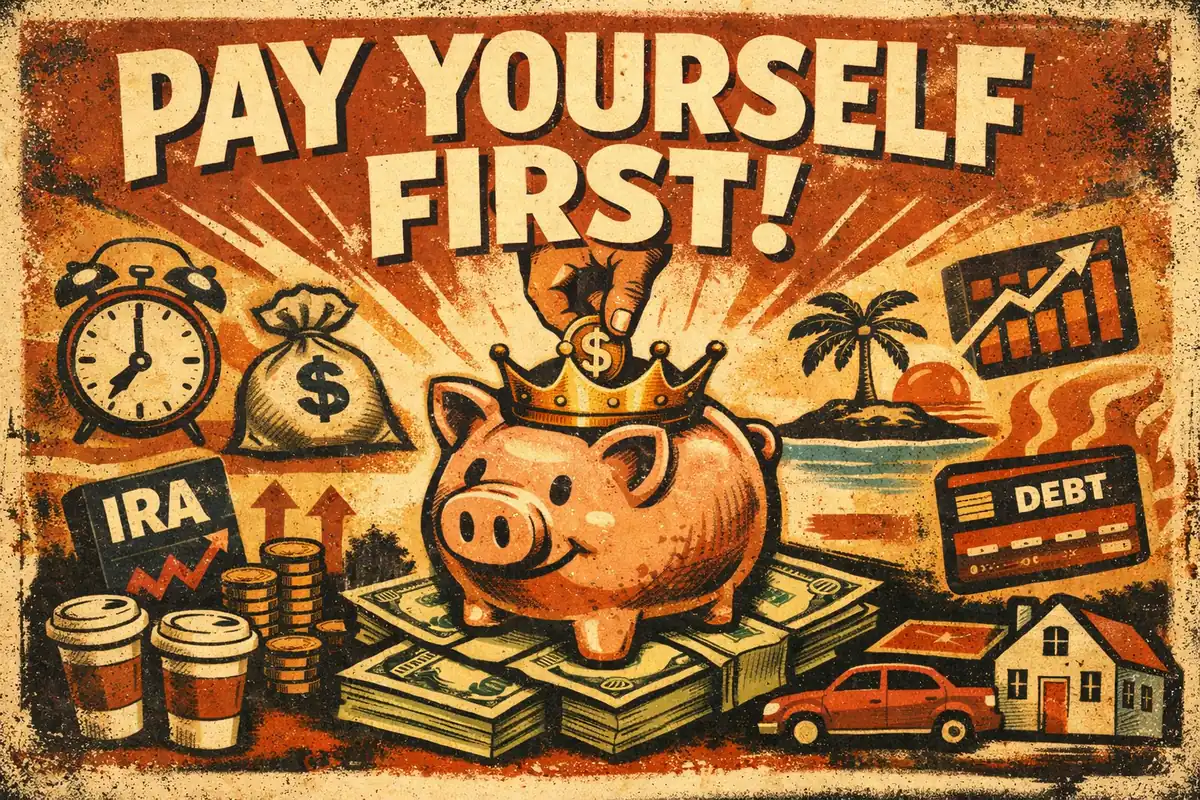
Pay Yourself First is the rebellion against that nonsense. Instead of tracking every category down to the penny, you decide how much you want to save first, move that money out of reach, and then live on the rest. The approach is commonly called reverse budgeting, and modern versions are often framed as an 80/20 split: save 20%, spend the other 80% however real life demands. David Bach helped popularize the no-budget, automated version through The Automatic Millionaire, which centered on making savings automatic instead of relying on heroic self-control.
What “Pay Yourself First” actually means
The idea is almost offensively simple.
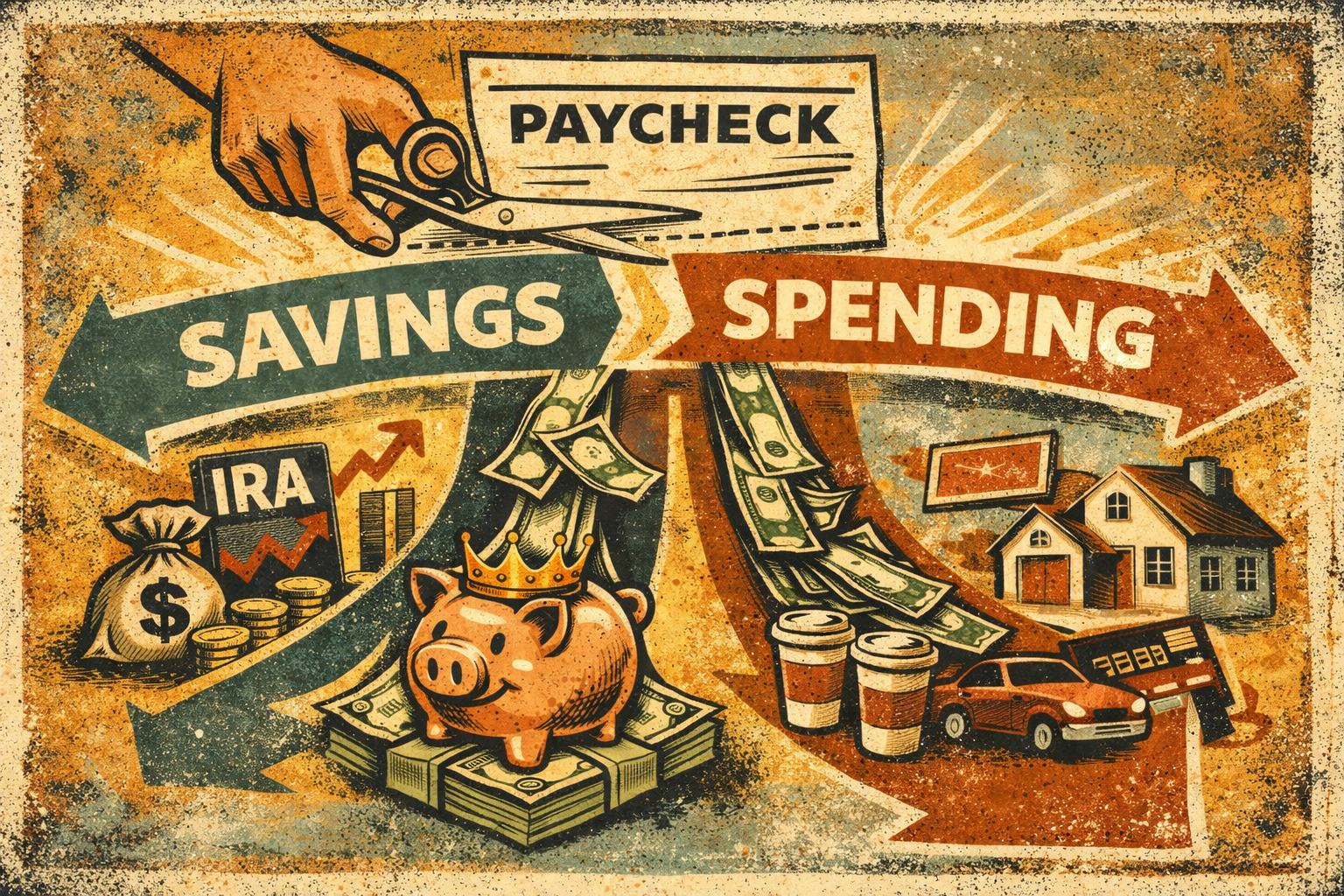
You get paid. Before the money has a chance to disappear into takeout, subscriptions you forgot existed, and “quick little Amazon things” that somehow cost $74, you send a set amount to savings, investing, or debt payoff. What is left becomes your spending money for the rest of the pay period. Consumer Financial Protection Bureau (CFPB) guidance explicitly describes this as putting money into savings before other bills, often through direct deposit or automated transfers.
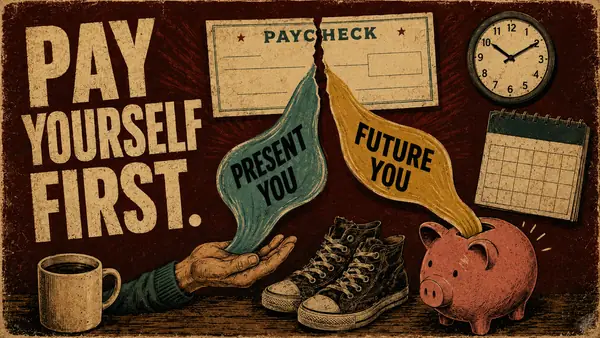
That is why people call it the Anti-Budget. You are not managing twenty categories. You are making one big decision upfront: how much of this paycheck belongs to future-you before present-you starts acting like a raccoon in a convenience store.
Why people love it
Traditional budgets fail for a very boring reason: they require constant attention.
Pay Yourself First works because it reduces friction. CFPB says automatic transfers are one of the easiest and most consistent ways to build savings, and Vanguard’s behavioral research notes that automation and defaults help counter inertia and present bias, which is a fancy way of saying humans are great at promising to save later and weirdly bad at doing it now.
It also gives you something most budgets never manage: breathing room. Once your savings goal is handled, the rest of your spending becomes simpler. You do not need to hold a budget tribunal every time you buy lunch. If the important stuff was funded first, the rest is just life.
The classic 80/20 version
A common version of this method is the 80/20 rule.
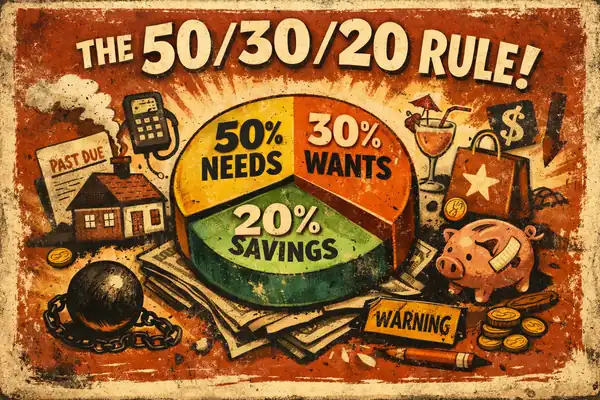
You save 20% first, then use the remaining 80% for everything else. NerdWallet’s reverse-budget example uses that same structure, while Fidelity says saving at least 15% of income annually is a useful retirement guideline and pairs it with age-based milestones like 1x salary by 30, 3x by 40, 6x by 50, 8x by 60, and 10x by 67. In plain English: 20% is a strong default, 15% is still a meaningful benchmark, and anything consistent beats waiting until you “have extra,” which is finance code for NEVER HAPPENING.
That does not mean 20% is mandatory. If 20% would make your rent situation become “character building,” start lower. Five percent done every payday is better than a perfect plan that exists only in your notes app.
Who this method is great for
This is a good fit for people who hate detailed budgeting, get decision fatigue fast, or tend to do better with guardrails than with constant monitoring.
It is also great for people whose biggest problem is not math, but leakage. They earn enough to save something, but the money keeps dissolving into the month because nothing claimed it early enough.
| This sounds like you | Why Pay Yourself First works |
|---|---|
| I hate tracking every purchase | You only manage the savings decision first, not every coffee and supermarket run |
| I’m fine once a system is set up | Automation does the heavy lifting so motivation matters less |
| I want progress without spreadsheet cosplay | You can measure one core number: savings rate |
| I overspend because money sits in checking | Moving savings first reduces the amount available to casually disappear |
Where it can go sideways
This method is simple. Simple is good. Simple is also not magic.
If you have high-interest debt, Pay Yourself First can be the wrong first move if it causes you to under-attack the real fire. NerdWallet notes that reverse budgeting may not be the best choice for people with expensive debt, and that it can leave you short on bills if you do not plan carefully. Even CFPB’s automation guidance warns that scheduled transfers can cause overdrafts if you do not have enough in checking.
It can also hide overspending. Saving first does not automatically mean the rest of your money is being used wisely. You can still torch the remaining 80% with astonishing creativity.
That is the biggest criticism of the Anti-Budget: it is excellent at making saving happen, but weaker at diagnosing messy spending habits. If your finances are chaotic, irregular, or debt-heavy, you may need a more hands-on system for a while before graduating to the simpler version.
A sane way to start
Start with one number, not a full financial identity crisis.
Pick a percentage. Automate it for payday. Decide where it goes first. For most people, the order is boring but effective: emergency fund, retirement, then other goals. NerdWallet also treats retirement and emergency savings as the first priorities inside a reverse budget.
Then watch the one metric that matters most: savings rate. Not vibes. Not guilt. Not whether you “felt responsible” this month. Actual money saved as a percentage of income.
Putting it into practice digitally with Forbidden Finance
This is exactly where tech gets to stop being annoying and start being useful.
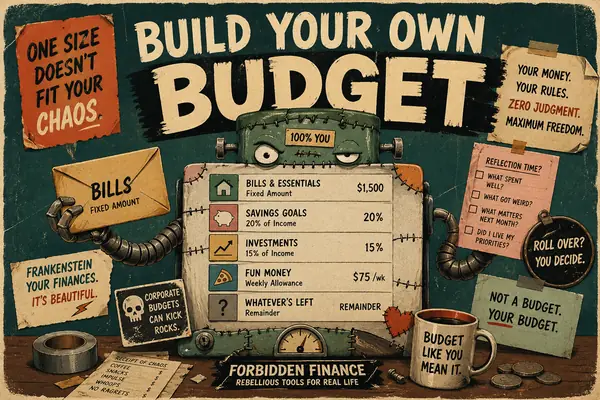
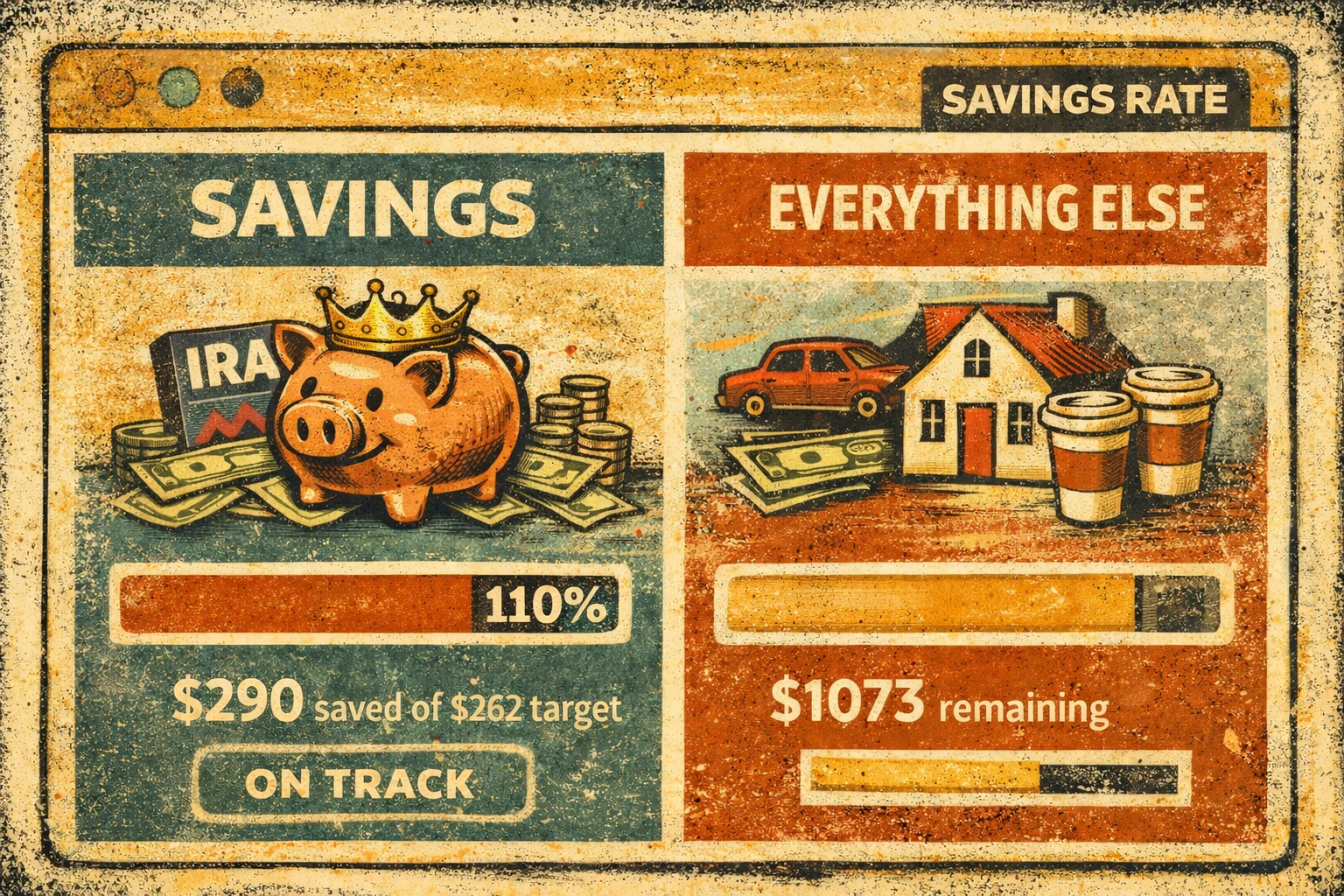
Forbidden Finance turns Pay Yourself First into a two-group system: Savings and Everything Else. The user sets a savings target percentage, with 20% as the default. From there, the math is automatic:
- Savings target = income × savings percentage
- Everything Else = income - savings target
Categories tagged as savings automatically map into the Savings group. Everything else falls into Everything Else. No envelope stuffing. No manual reshuffling. No pretending you enjoy updating a spreadsheet on Sunday night.
The dashboard then shows the stuff that actually matters:
- actual savings rate vs. target savings rate
- on-track or behind status
- amount saved vs. target
- a progress bar so you can see whether future-you is being funded or ghosted
That is the whole philosophy baked into the UX: save first, spend what’s left. It flips the normal script, where people pay everybody else first and then act shocked when their savings account looks like an abandoned parking lot.
And because the method is available on the Free tier, it lowers the usual barrier to entry. This used to require discipline, timing, and a suspiciously organized envelope system. Now it mostly requires setting a percentage once and letting the app stop you from negotiating with yourself every payday.
The real appeal of the Anti-Budget
The beauty of Pay Yourself First is not that it is perfect.
It is that it accepts a humiliatingly accurate fact about human behavior: most people will not track every penny forever, and most people do better when the right move happens automatically. That is not laziness. That is design.
So yes, the Anti-Budget is a little forbidden. It ignores the personal finance scolds who think every purchase needs to be interrogated under fluorescent lighting. It starts with one grown-up move, makes it automatic, and lets the rest of your life happen after that.
Which, honestly, is how more money advice should work.
 Forbidden Finance