The delivery app total says $49.50. Order the same thing straight from the restaurant and it is $31. Same kitchen. Same burritos. Same little tub of salsa that somehow costs $2.75 in the app, because civilization had a meeting and lost.
That $18.50 difference is not a moral failure. It is a convenience tax. Sometimes it is worth paying. Sometimes it is just your tired thumb outsourcing a decision to an app with confetti graphics and a checkout screen full of tiny financial mosquito bites.
The on-demand economy is enormous because it solves real problems. Pew Research Center found that 16% of U.S. adults had earned money through an online gig platform as of 2021, including delivery, grocery shopping, rides, errands, and similar app-based work. Translation: convenience is not a side quest anymore. It is infrastructure with surge pricing.
TL;DR
• Convenience spending gets expensive because each charge feels too small to audit.
• A representative household can leak about $317 a month by defaulting to fast, delivered, subscribed, and done-for-you.
• Keep the shortcuts that save your sanity. Fire the ones doing cosplay.
Is This Buying Back Your Time, or Just Your Inertia?
That is the whole audit: is this convenience buying back your time, or just your inertia?
There is a difference. Paying for childcare so you can work, recover, or breathe? That buys time. Ordering dinner because one adult is sick, one kid is sticky, and the stove is giving haunted appliance energy? Reasonable. Paying $19 extra because the pickup button was two inches lower on the screen? That might be inertia wearing a tiny chauffeur hat.
The time side matters. BLS reported that in 2025, people spent an average of 0.69 hours per day purchasing goods and services, and those who did that activity spent 1.74 hours on it. Household activities averaged about two hours per day. Time is real. Errands are real. So is the part where an app charges you a service fee, delivery fee, small-order fee, maybe a long-distance fee, and then politely asks whether 22% feels emotionally correct.
This is not a sermon against convenience. Forbidden Finance does not hand out gold stars for suffering in fluorescent grocery aisles. If the shortcut fits your life, keep it. But make it pass the test.
Convenience is valuable when it replaces a task you would gladly pay to never do again. It is expensive nonsense when it replaces a pause.
Case Study 1: Delivery vs. Pickup
Food delivery is the cleanest example because the tax shows up in layers. Menu prices are usually higher in the app than at the source. Then the platform adds fees. Then tax hits the larger total. Then tip, because a human still had to bring your sandwich through traffic while your building intercom performed community theater.
DoorDash says orders may include service fees, delivery fees, small-order fees, long-distance fees, express fees, regulatory response fees, taxes, and optional tips. That is not a receipt. That is a nesting doll.
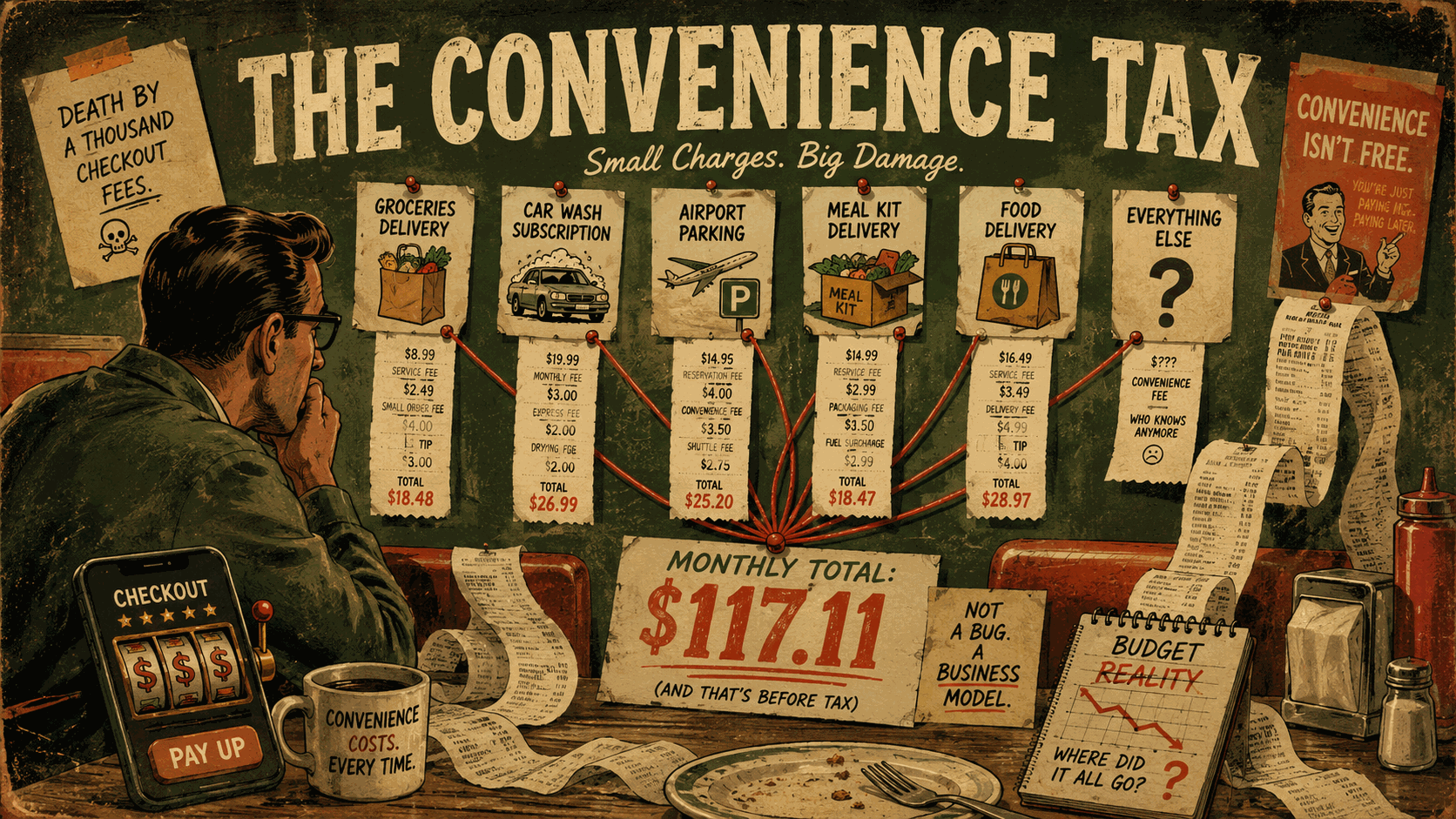
Representative order: two entrees and an appetizer. Order straight from the restaurant and it is $31. The same order through a delivery app is $49.50, after a marked-up menu subtotal, fees, tax, and tip. The convenience tax is $18.50. Four times a month, that is $74.
One nuance worth naming, because it changes the number: the menu itself is the biggest lever. Apps usually pad menu prices above what the restaurant charges you directly, so ordering pickup through the app claws back the delivery fee and the tip but not the markup. To dodge the markup too, you go straight to the source. Treat $18.50 as a theoretical benchmark, not a law of physics. Some apps barely mark up. Some restaurants charge the same everywhere. This is a stylized comparison of ordering direct against the apps, and your real number depends on which app and which restaurant, so run it on your own last three orders before you believe the internet (us included).
If that delivery saved a brutal evening, fine. Pay it and move on with your life. But if it happened because the app icon was next to your weather app and you opened the wrong portal, there is your forbidden little leak.
| Convenience purchase | Convenience cost | Baseline cost | Monthly delta (4x/month) |
|---|---|---|---|
| Delivery app dinner | $49.50 | $31 pickup | $74 |
| Prime Now-style rapid Amazon order | $3.99 speed fee | $0 standard shipping or weekly batch | $15.96 |
| Meal kit dinner for two | $48 | $24 grocery version | $96 |
| On-demand car wash | $35 | $8 self-wash once per quarter | $137 |
| Instant grocery top-up | $78 | $60 planned grocery run | $72 |
| Airport rideshare round trip | $96 | $48 economy parking | $192 |
Case Study 2: Same-Day and Subscription Fog
Same-day everything is where convenience becomes sneaky. The fee is often small enough to feel fake. $3.99 here. $4.99 there. One tiny ransom paid to avoid waiting until Thursday for batteries, deodorant, and the charging cable your household eats like pasta.
The old Prime Now habit has basically evolved into a broader rapid-delivery reflex. The Verge reported on Amazon testing Amazon Now, a 30-minute delivery option with a $3.99 fee for Prime members and $13.99 for non-Prime users in pilot markets, plus a small-order fee under $15. That is not inherently bad. If you need medicine fast, pay the fee. If you need novelty sparkling water fast, maybe let the craving experience character development.
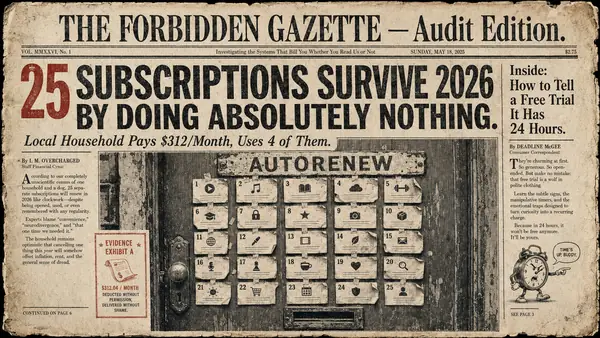
Subscriptions make the fog thicker. A delivery membership. A grocery membership. A premium wash plan. A meal kit subscription you paused, unpaused, forgot, and then received three dinners involving kale stems and guilt.
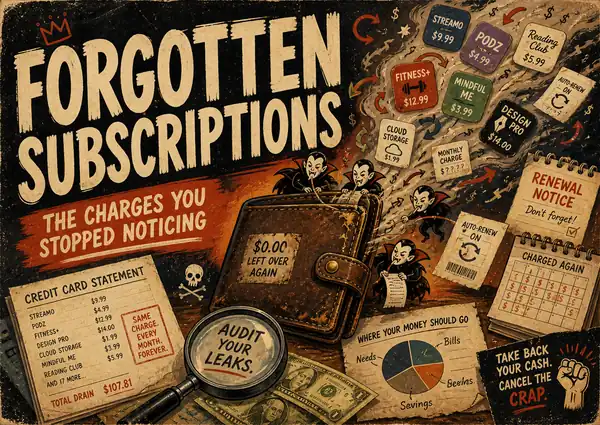
This is why Your Forgotten Subscriptions Are Bleeding You Dry is not just about streaming services. Convenience businesses love recurring billing because your attention is the scarce resource. The charge is not hiding. It is sitting in plain sight, dressed as normal.
Case Study 3: Meal Kits, Groceries, Cars, and Airports
Meal kits are not automatically wasteful. For a busy household, a box with exact ingredients can prevent the classic grocery-store tragedy: buying cilantro, using six leaves, and watching the rest become compost with aspirations.
But the math still deserves a chair at the table. If a meal kit dinner for two costs $48 and you can build the same dinner from groceries for $24, the delta is $24 per meal. Four times a month, $96. The question is whether that $96 replaced meal planning, food waste, and decision fatigue, or whether it replaced opening a notes app and writing “tacos.”
Instant groceries have the same problem with extra theater. Guardian Australia reported that Choice found rapid grocery orders through third-party apps could cost up to 39% more than in-store shopping in its 2025 comparison, with item prices averaging 11% higher and delivery charges adding more. Different country, same species of nonsense: milk should not become a luxury good because it arrived emotionally sooner.
Car washes are smaller but deliciously silly. Two on-demand washes at $35 each is $70 a month. A quarterly self-wash at $8 averages less than $3 a month. If you hate washing the car and the service keeps your weekends cleaner, fine. If your car is mostly pollen, vibes, and one bird incident from April, you may not need concierge foam.
Airport rides are the final boss because they feel responsible. No parking stress. No shuttle. No hunting for Level 4, Row G, Section “Why Did We Do This.” But a $96 rideshare round trip versus $48 economy parking for a three-day trip is a $48 decision. Sometimes that $48 is worth it. Sometimes the airport parking lot is not the villain. It is just a rectangle with a shuttle.
This is the point of Values-Based Budgeting: Spend Money on What Actually Matters (Forbidden Concept, We Know). The problem is not spending on ease. The problem is spending on ease you do not value enough to remember buying.
The Math: A Realistic Month Before and After
Let’s put a representative household on the table: two adults, one kid, busy weekdays, one monthly airport trip, a car, and the standard American collection of “we should cook more” optimism.
Before the audit, convenience is the default. Four delivery dinners. Four instant grocery top-ups. Four meal kit dinners. Two on-demand car washes. Four rapid-shipping fees. One airport rideshare round trip. A small pile of convenience subscriptions.
| Category | Before audit | After audit | Monthly change |
|---|---|---|---|
| Restaurant delivery | $198 | $142.50 | $55.50 saved |
| Instant grocery top-ups | $312 | $258 | $54 saved |
| Meal kits | $192 | $144 | $48 saved |
| Car wash | $70 | $2.67 | $67.33 saved |
| Rapid shipping fees | $15.96 | $0 | $15.96 saved |
| Airport transport | $96 | $48 | $48 saved |
| Convenience subscriptions | $38 | $10 | $28 saved |
| Total | $921.96 | $605.17 | $316.79 saved |
That is about $3,801 a year without becoming a person who makes their own oat milk in a linen apron. Nobody asked for that energy.
The after version still includes convenience. One delivery dinner survives. Two meal kits survive. One grocery order survives. The airport ride gets replaced only when parking makes sense. This is not austerity. This is making the convenience line item prove it has a job.
That also makes it a lifestyle creep audit. The charge did not arrive wearing a top hat and announcing itself as inflation of the soul. It just became normal. For the bigger pattern, see Lifestyle Creep Is Real. Here's How to Catch It Before It Catches You.
The Audit: Keep the Convenience That Earns Its Seat
Run this once a month. Fifteen minutes. No shame spiral. No spreadsheet with 19 tabs unless spreadsheets are your love language.
1. Search the Obvious Words
Pull your transactions and search: delivery, dash, express, plus, premium, wash, kit, ride, grocery, same-day, subscription. Add merchant names you know you use. The point is to catch the family of charges, not argue with one burrito.
2. Sort by Frequency, Not Drama
The dramatic purchase gets attention. The repeat purchase gets your money. Four $18 deltas matter more than one $40 splurge you actually enjoyed.
3. Label Each Charge
Use three labels: buys time, buys energy, buys friction. Time means it freed an hour you needed. Energy means it helped you survive a hard week. Friction means you paid because the default was easier than thinking for eight seconds. We have all been there. The apps know.
4. Replace, Reduce, or Keep
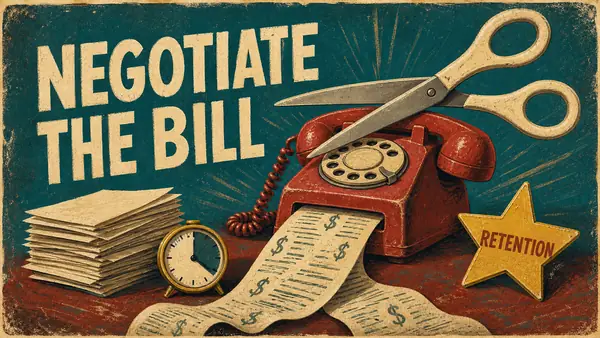
Replace delivery with pickup for the places already on your route. Reduce instant grocery to one planned emergency slot per week. Keep the meal kit if it prevents takeout. Cancel the subscription that exists only because the cancel button is hidden behind a customer-service maze and a dragon named “retention offer.”
5. Build a Convenience Budget
Give convenience a number. Maybe it is $150 a month. Maybe it is $500 because your life is complicated and your income supports it. The forbidden rule is that the right number depends. Not your neighbor’s number. Not an influencer’s number. Yours.
The best personal finance system is the one you will actually run. If you are just starting, a simple cap may be enough. If your spending is sprawling, use categories. If your automation is humming and your savings are handled, maybe you only need a quarterly sweep. Permission granted. Very suspiciously adult of us.
Convenience is not the enemy. Invisible convenience is. The goal is not to make life harder so your budget feels morally pure. The goal is to stop paying premium prices for tiny moments of avoidance.
Pay for the convenience that buys back your hours. Don't pay for the one that buys back your friction.
 Forbidden Finance