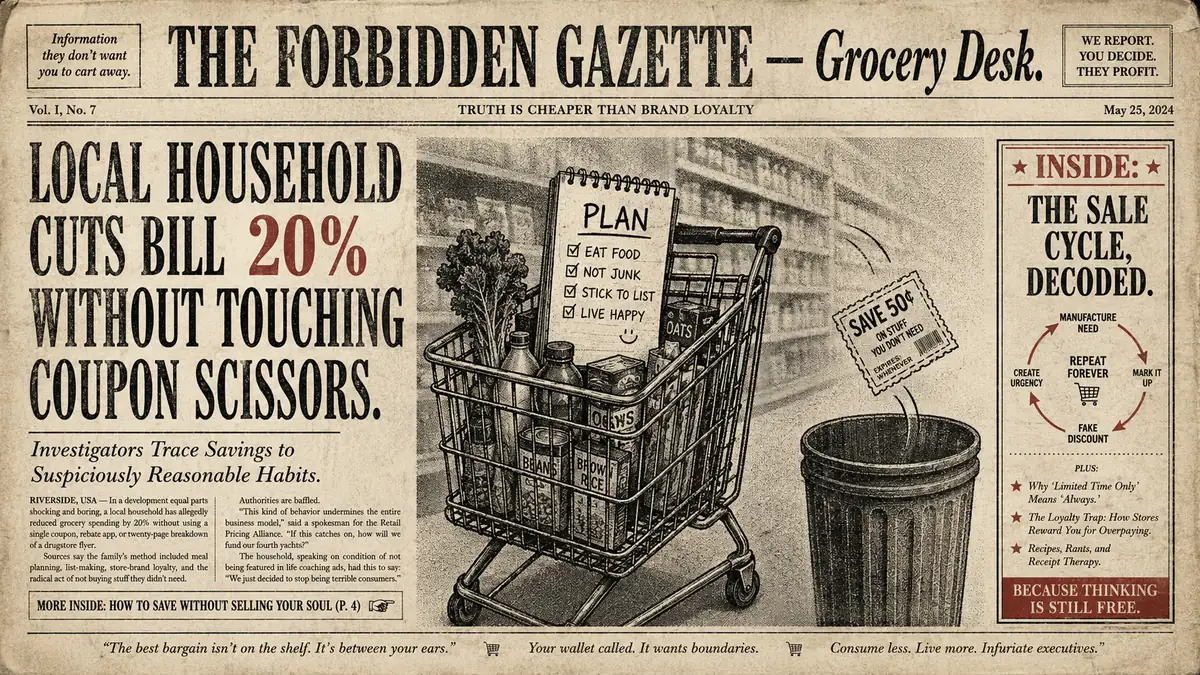
$6,224. That is what the average U.S. consumer unit spent on food at home in 2024, according to the BLS. And because groceries have apparently decided to keep doing cardio, the USDA ERS forecast food-at-home prices to rise another 3.2% in 2026.
So no, your grocery bill is not high because you bought berries once and lacked moral fiber. You need a better system, not a coupon binder thick enough to qualify as furniture. Think of this as food budgeting that fits your actual life, the same spirit as Which Budgeting Method Is Right for You?, but with more carrots and less spreadsheet theater.
TL;DR
• A 20% grocery cut is realistic when you stack small boring wins instead of worshipping coupons.
• Unit prices, store-brand trials, freezer triage, and sale-cycle buying do most of the work.
• The forbidden move is choosing the habits that fit your life and ignoring the rest.
13 Ways to Cut Your Grocery Bill 20% Without Eating Worse
1. Shop the Unit Price, Not the Sticker
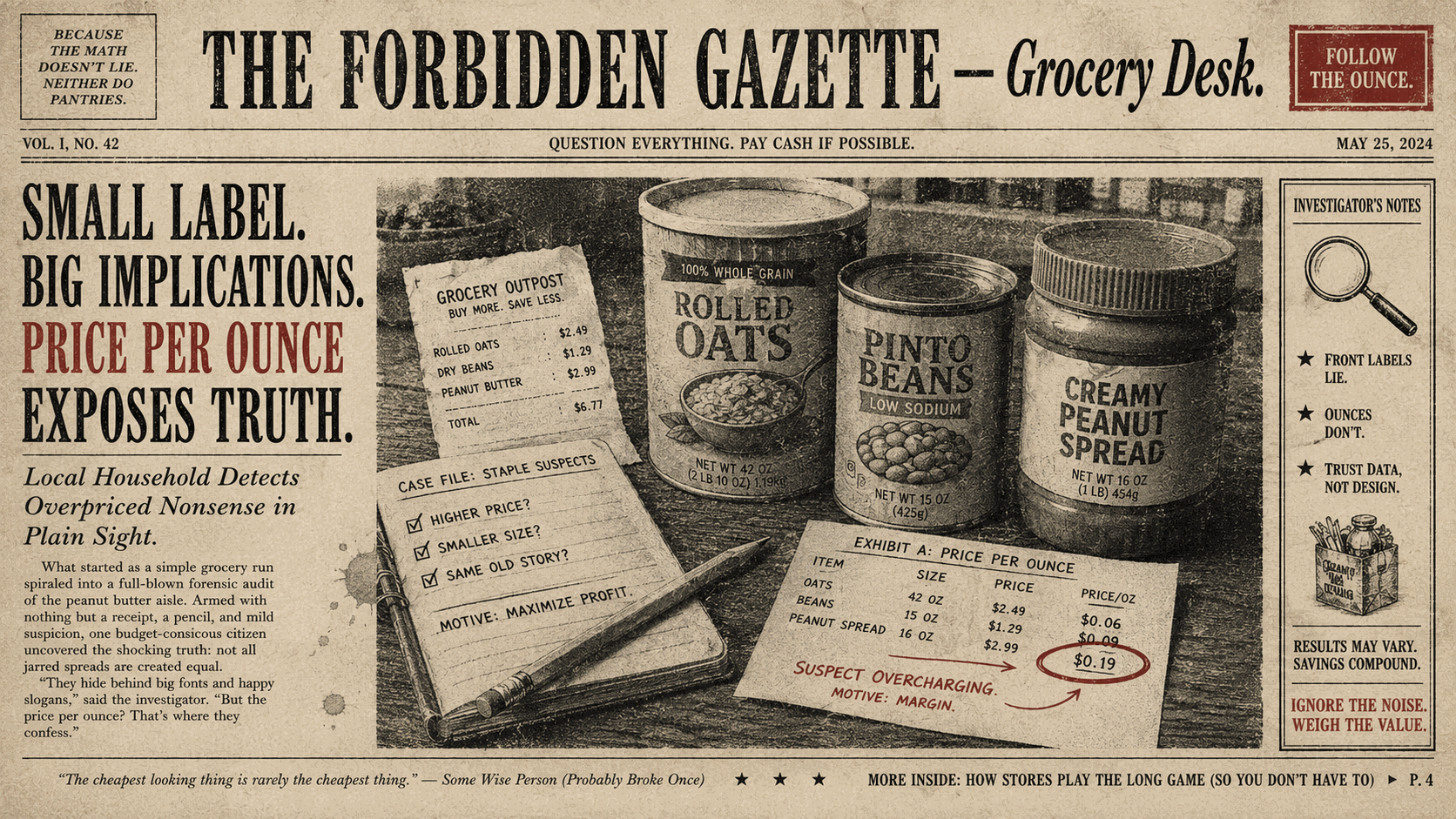
The shelf price tells you what leaves your wallet today. The unit price tells you whether the 28-ounce jar is actually cheaper than the 16-ounce jar wearing a little sale sticker hat. Compare price per ounce, pound, sheet, pod, or serving, because shrinkflation loves shoppers who do vibes-based math.
2. Swap Store Brands Where the Difference Is Mostly Packaging
Start with boring staples: oats, flour, sugar, canned beans, frozen vegetables, pasta, rice, spices, vinegar, shredded cheese, and basic dairy. Be pickier with coffee, chocolate, hot sauce, cereal you are emotionally attached to, and anything where texture is the whole point. The rule is simple: try one store-brand swap per trip, keep the wins, fire the weird ones.
3. Use Warehouse Clubs Only When the Math Survives Your Household
A warehouse membership is not a personality. If the fee is $65 and you save 10% on grocery items, you need about $650 in annual eligible purchases just to break even before gas, storage, and the tragic optimism of a 40-pound rice bag. Bigger households usually clear that hurdle faster; single shoppers and small apartments need to be ruthless.
4. Plan Meal Skeletons, Not Pinterest Recipes
Recipe-by-recipe planning turns Tuesday dinner into a scavenger hunt for one tablespoon of something you will never use again. Meal skeletons are cheaper: grain plus protein plus vegetable, soup plus bread, eggs plus whatever is starting to look tired. You still eat well, just without letting a recipe app become your grocery manager.
5. Run Freezer Triage Before You Shop
Open the freezer first. If there is chicken, frozen peas, bread, berries, or mystery chili in there, those are ingredients, not archaeological artifacts. Put one frozen item into this week’s plan before you buy more, because the cheapest food is the food you already paid for and have not freezer-burned into sadness.
6. Follow the $5 Throwaway Rule
If you throw away $5 of food, write it down. Not as punishment. As evidence. Two slimy herb bunches, a half bag of spinach, and the expensive yogurt nobody liked can tell you more than a month of vague budgeting shame.
7. Stack Cash Back Without Letting It Drive the Cart
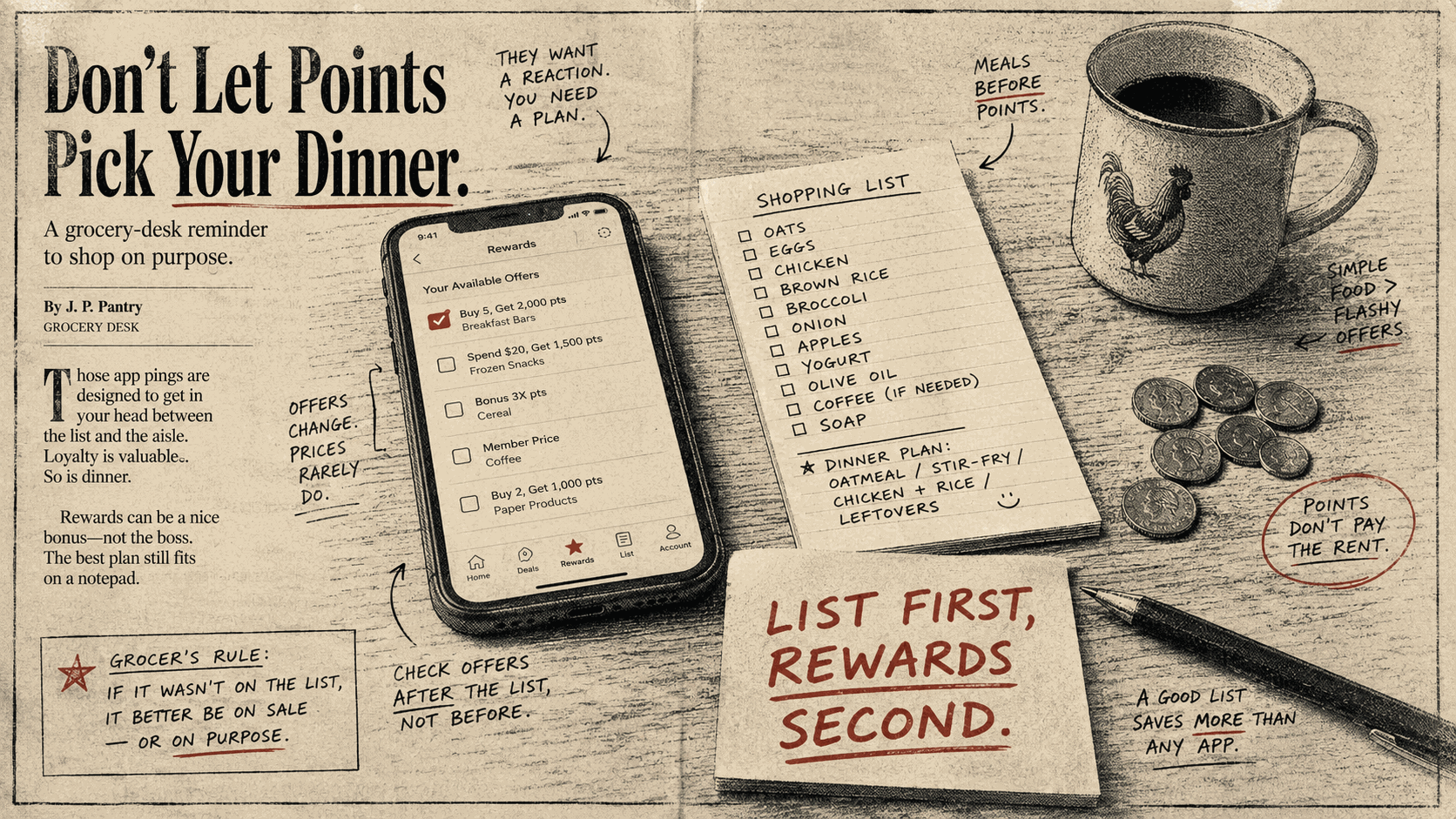
Cash-back apps, store rewards, and card offers can help, but only after your list is already set. A 5% reward on a thing you were not going to buy is just a tiny rebate on a dumb decision. Pair this with a grocery category cap, the less-crinkly cousin of Envelope Budgeting: Your Grandma Was Right (But You Don't Need Actual Envelopes).
8. Build a 6-12 Week Sale-Cycle Calendar
Most pantry staples, freezer items, and household basics go on promotion often enough that you can stop buying them at full price every week. Track your staples for 6 to 12 weeks: coffee, cereal, pasta sauce, frozen vegetables, detergent, broth, canned tomatoes. When a real low price appears, buy enough to bridge to the next likely sale, not enough to open a bunker.
9. Do the Pre-Cut vs. Whole Produce Math
Pre-cut fruit, bagged salad, diced onions, and peeled garlic are convenience products. Sometimes that convenience is worth it, especially if the whole version becomes compost with ambition issues. But compare the per-pound price first: if whole pineapple is $3 and chopped pineapple is $8 per pound, that plastic tub had better be buying you time you actually need.
10. Buy Generic OTC Items Like a Person Who Reads Labels
For common over-the-counter medicines, compare the active ingredient, strength, dosage form, and warnings. FDA says approved generic medicines must work the same way and provide the same clinical benefit and risks as brand-name versions. Tiny caveat, because bodies are annoying: check inactive ingredients if you have allergies or sensitivity.
11. Time Produce Around the Season, Then Use Frozen Without Shame
Seasonal produce usually tastes better and often prices better because supply is friendlier. The USDA SNAP-Ed guide is a quick way to see what tends to be in season, though your region and weather still get a vote. When fresh looks expensive or sad, frozen vegetables and fruit are not a downgrade. They are the freezer doing community service.
12. Never Shop Hungry, Because Your Brain Becomes a Snack Lobbyist
The old advice is annoying because it is useful. Research published as Hunger Promotes Acquisition of Nonfood Objects found hunger can increase acquisitive behavior beyond food, which is a fancy way of saying your empty stomach may start voting yes on nonsense. Eat a snack before shopping. A banana is cheaper than a cart full of emergency crackers.
13. Deep-Restock Monthly, Top Up Weekly
Do one monthly deep restock for pantry, freezer, OTC basics, paper goods, and sale-priced staples. Then use weekly top-ups for produce, milk, bread, eggs, and the specific things your household actually eats. This split keeps you from wandering the aisles four times a week, discovering new ways to spend $37.
Potential Savings by Move
| Tip | Typical % Savings | Effort Level |
|---|---|---|
| Shop the unit price | 5-15% | Low |
| Swap store brands selectively | 10-30% | Low |
| Use warehouse clubs only when math works | 0-15% | Medium |
| Plan meal skeletons | 5-20% | Medium |
| Run freezer triage | 5-10% | Low |
| Use the $5 throwaway rule | 3-10% | Low |
| Stack cash back carefully | 1-5% | Low |
| Track sale cycles | 5-20% | Medium |
| Compare pre-cut and whole produce | 5-25% | Low |
| Buy generic OTC items | 20-80% | Low |
| Buy seasonal or frozen produce | 5-20% | Low |
| Do not shop hungry | 3-10% | Very low |
| Monthly deep restock plus weekly top-up | 5-15% | Medium |
Eating well isn't expensive. Eating without thinking is.

 Forbidden Finance