July Fourth is fireworks, flags, and someone overcooking hot dogs with the confidence of a Founding Father. Fine. But the quieter kind of independence is having fewer people, lenders, subscriptions, emergencies, and future tax bills standing between you and your choices.
The BEA reported the April 2026 personal saving rate at 2.6%, which is not exactly cannon-fire-level household resilience. So the assignment is not austerity cosplay. It is building a balance sheet that gives you more room to say yes, no, or absolutely not.

TL;DR
• Add one percent, capture the match, and let payroll do the heavy lifting.
• Use 2026 tax-advantaged limits where they fit, including $24,500 for 401(k)s and $8,750 for family HSAs.
• Freedom is less fireworks, more fewer people having a claim on Friday.
The 14 Habits
1. Auto-Escalate Your 401(k) 1% a Year
Set your 401(k) contribution to rise by 1% every year, ideally around raise season, before lifestyle creep shows up wearing boat shoes. The IRS raised the 2026 401(k) limit to $24,500, but you do not need to hit the ceiling tomorrow to make progress.
This is the boring automation move that works because it does not ask you to become a new person every January. Fidelity found that 18% of 401(k) participants increased their savings rate in Q1 2026, largely due to auto increases, and Vanguard shows auto features are now baked into many plan designs. Let the machinery help.
2. Capture the Full Employer Match
If your employer matches contributions, your first job is to get the whole match. Not because you are morally superior, but because declining compensation is a weird hobby.
Fidelity reported an average employer contribution rate of 4.8% for 401(k) savers in Q1 2026. That is money attached to your paycheck ecosystem, not a prize buried under a couch cushion. If automation helps you get there, pair this with The Reverse Budget: Pay Yourself First, Then Spend the Rest Guilt-Free.
3. Max the HSA if You Can
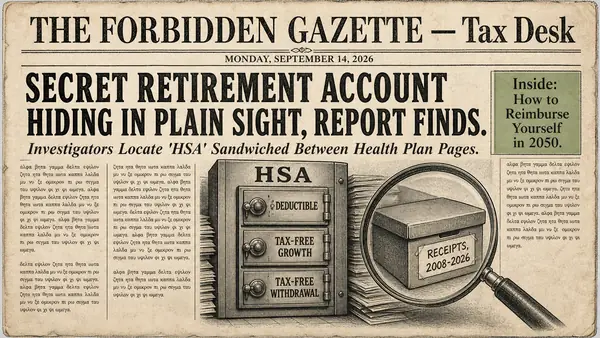
If you are HSA-eligible, the HSA deserves a serious look. It can give you tax-deductible contributions, tax-free growth, and tax-free withdrawals for qualified medical expenses, which is the rare tax sentence that does not immediately ruin the room.
For 2026, IRS Revenue Procedure 2025-19 sets HSA contribution limits at $4,400 for self-only HDHP coverage and $8,750 for family coverage. If cash flow is tight, start smaller. If cash flow is strong, this is one of the cleanest freedom accounts on the menu.
4. Use a Roth as a Stealth Savings Vehicle
A Roth IRA is not your emergency fund, but it can sit behind your emergency fund like a stern backup singer. The IRS says Roth IRA distributions that are a return of regular contributions are not included in gross income, though earnings have their own rules.
Translation: contributions may be more flexible than people think, while the best use is still long-term investing. If you qualify under the 2026 income rules, a Roth can help you build future tax flexibility without turning every dollar into a locked cabinet.
5. Refinance When Rates Actually Allow
Refinancing is not a personality trait. It is math with closing costs, a break-even date, and the emotional thrill of reading lender paperwork in a font chosen by a committee.
FRED showed the 30-year fixed mortgage average at 6.53% on May 28, 2026, so rate context still matters. If your current rate is meaningfully higher, run the numbers. If the savings are tiny and you plan to move soon, keep the pen capped.
6. Set a No New Debt Line
Pick the line before the temptation arrives. No new credit-card balances. No new buy-now-pay-later plans. No new personal loans unless they pass a rule you wrote while calm.
This is not anti-debt theater. It is border control for your future income. The point is to stop adding claims on next month before next month even exists.
7. Automate Emergency-Fund Top-Ups
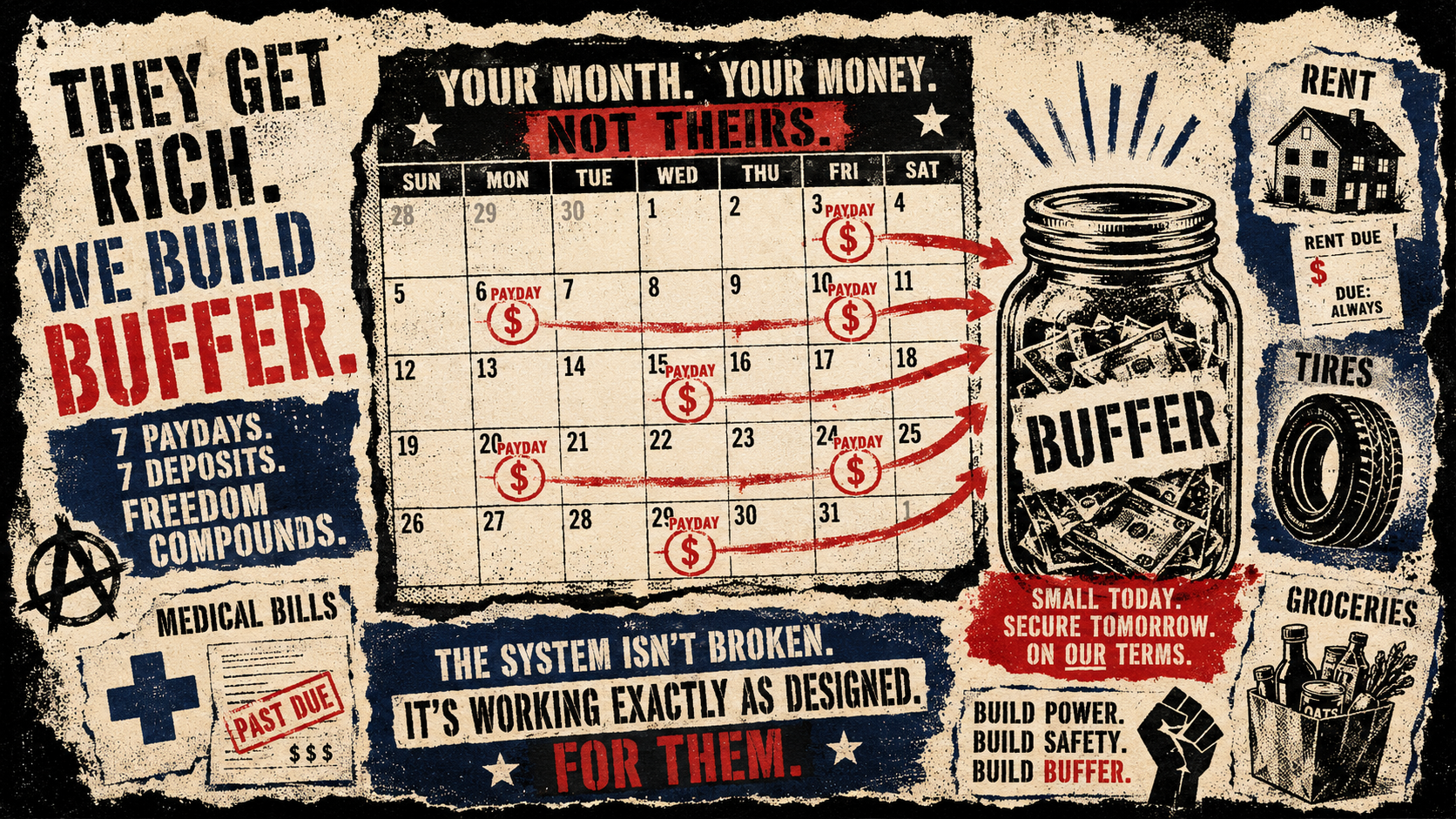
Your emergency fund should refill itself after you use it. Set an automatic transfer after every payday until the balance is back at target, then redirect that transfer to another goal.
If you are unsure what the target should be, start with one month of bare-bones expenses, then build toward three to six as your life demands. For the full math, see Emergency Fund Math: How Much Is Actually Enough in 2026?. The best emergency fund is not dramatic. It is quietly rude to chaos.
8. Audit Subscriptions Quarterly
Every quarter, pull up recurring charges and ask whether each one still earns its place. The subscription industrial complex is built on you being too tired to cancel a $9.99 thing you forgot existed.
Do it while your coffee is hot. Cancel the dead weight, downgrade the maybe pile, and keep the stuff you actually use. For a sharper pass, use Sub-Hunting: How to Find $50-$200/Month Hiding in Your Recurring Charges.
9. Run an Annual Insurance Review
Once a year, review auto, home, renters, life, disability, and umbrella coverage. You are checking for two things: overpaying for stale coverage and underinsuring the risks that could body-check your balance sheet.
Major life changes count too: new house, baby, marriage, divorce, teen driver, business income, or a pet with the medical spending habits of a luxury sedan. Insurance is not exciting. Neither is a smoke detector, and that is the point.
10. Run an Annual Investment-Fee Audit
Open your accounts and look at expense ratios, advisory fees, plan fees, transaction costs, and anything that sounds tiny because it is expressed as a percentage. Tiny can still bite.
The SEC shows how fees reduce the money left in your portfolio to earn returns, including a 20-year example where higher annual fees cut a hypothetical $100,000 portfolio by tens of thousands of dollars. Fees are not automatically evil. Hidden fees are the problem. Know what you pay.
11. Build a 3-Month Skills Resume
Every three months, write down what you learned, shipped, fixed, sold, led, automated, negotiated, or improved. This is not LinkedIn cosplay. This is evidence.
Your income is an asset, and skills are maintenance. When raises, layoffs, promotions, or client conversations happen, you want receipts, not a frantic attempt to remember March while staring at a blinking cursor.
12. Define Enough
The forbidden move: decide what enough looks like before every ad, algorithm, and neighbor with a new SUV gets a vote. Enough might be a paid-off card, a boring rental, one vacation, part-time work, or a net worth number that makes your shoulders drop.
This is values-based money without the scented candle lecture. You can still want nice things. You just stop letting random nice things draft legislation for your life.
13. Set a No-Checking-the-Portfolio Rule
Pick a schedule for checking investments, maybe monthly or quarterly, then stop opening the app like it owes you affection. Markets move. Your thumb does not need to supervise every candle.
Fidelity found that only 5.7% of 401(k) participants changed asset allocation in Q1 2026 despite uncertainty. That is the spirit. Build the plan, rebalance on schedule, and let the noise shout into a pillow.
14. Write Your Financial Independence Number on a Sticky Note
Your FI number is the amount of invested assets that could support your life without a paycheck, based on your spending, risk tolerance, taxes, and time horizon. It will change. That is allowed.
Write it down anyway. A visible number turns vague anxiety into a target, and targets beat vibes. If you are tracking FIRE progress mid-year, pair this with The Mid-Year FIRE Check-In: Are You On Track for the Number?.
Quick Reference
| Habit | Category | Impact |
|---|---|---|
| Auto-escalate your 401(k) 1% a year | Investing | Raises savings without a yearly negotiation |
| Capture the full employer match | Retirement | Turns compensation into invested assets |
| Max the HSA if eligible | Taxes | Adds tax-advantaged medical flexibility |
| Use a Roth as stealth savings | Investing | Builds tax flexibility and backup optionality |
| Refinance when rates allow | Debt | Reduces interest drag when the math works |
| Set a no new debt line | Debt | Stops future income from getting pre-spent |
| Automate emergency-fund top-ups | Saving | Rebuilds resilience after real life happens |
| Audit subscriptions quarterly | Saving | Cuts recurring waste before it becomes furniture |
| Run an annual insurance review | Risk | Finds gaps and stale coverage |
| Run an annual investment-fee audit | Investing | Keeps costs from quietly compounding against you |
| Build a 3-month skills resume | Income | Strengthens raises, job moves, and client pricing |
| Define enough | Mindset | Protects goals from lifestyle drift |
| Set a no-checking-the-portfolio rule | Mindset | Reduces panic edits to long-term investments |
| Write your FI number on a sticky note | Financial Independence | Turns a dream into a measurable target |
You do not need to do all 14 this weekend between fireworks and potato salad. Pick two. Automate one. Put one on the calendar.
Independence isn't a date. It's a balance sheet.

 Forbidden Finance