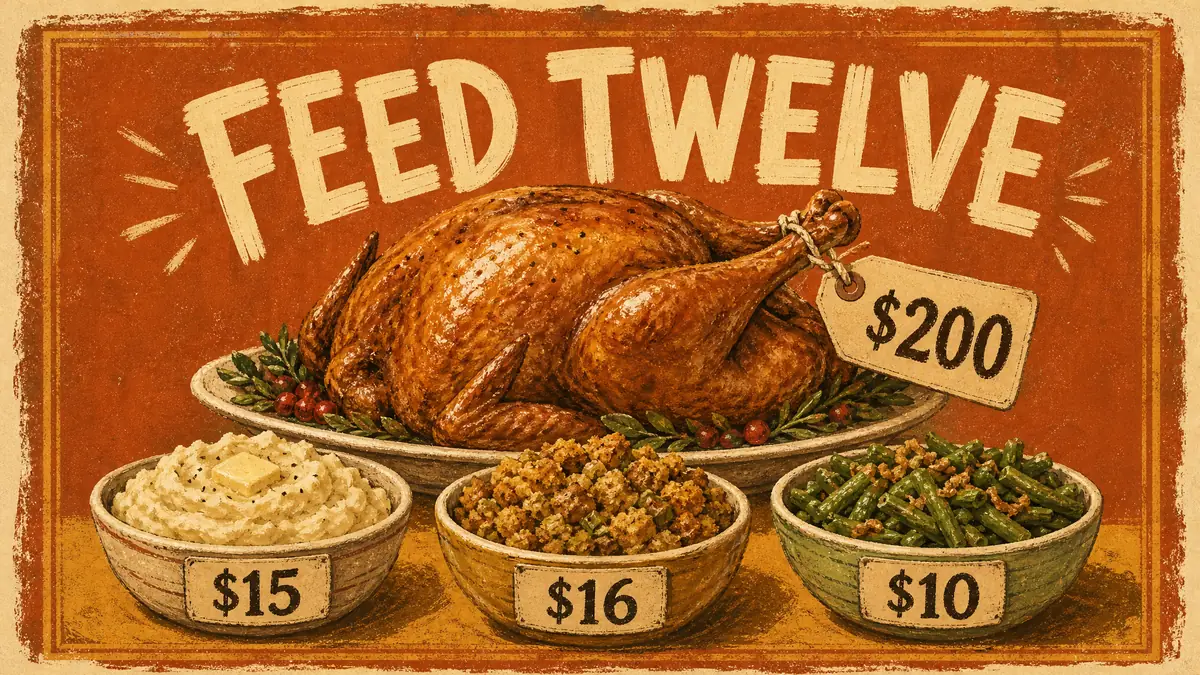
Twelve people are coming. Your biggest roasting pan looks suddenly decorative. You have $200.
You can host a generous Thanksgiving with that. For context, the American Farm Bureau Federation priced its classic 2025 dinner for 10 at $55.18, about $5.52 per person. The 2026 survey lands later in November. So $200 for 12 isn’t unusually tight against that food basket; it’s a workable ceiling for a broader hosting plan, including drinks, cleanup, and future meals.

Four rules keep the shopping cart under control:
- Buy your turkey by November 15.
- Give potluck guests actual assignments.
- Choose one disposable category.
- Give leftovers four or five meals’ worth of jobs.
Buy the turkey by November 15
Make November 15 your personal buying deadline. It locks in what you pay once you buy; it isn’t a prediction that turkey prices rise afterward. Later sales might beat your deal. Peace also has value.
Set a $40 ceiling for a 20-pound frozen turkey: $2 per pound. Check freezer space before checkout. Otherwise you’ve purchased a very cold roommate.
If your grocer offers a loyalty bonus turkey, read the qualifying-spend requirement, redemption window, and weight limit. Count only groceries you’d buy anyway. Spending an extra $90 to get a “free” bird deserves quotation marks.
Keep it frozen until thawing time. The CDC allows roughly 24 hours per four to five pounds in the refrigerator, so budget four to five days for this bird. Set a November 21 reminder for Thanksgiving cooking on November 26. Keep the fridge at 40°F or below.
Borrow a meat thermometer if needed. Check for 165°F in the thickest breast and innermost thigh and wing, avoiding bone.
Your sample Thanksgiving menu: $199, including breathing room
These are planning caps, not verified local shelf prices or advertised 2026 deals. Price your basket before committing. The USDA Economic Research Service forecast grocery prices to rise 2.4% in 2026 in its September outlook; your particular cart will have its own opinions.
The plan assumes you already have cookware, dishes, reusable storage, and basic kitchen equipment. Utilities aren’t included. The shared-ingredient allowance covers milk, broth, and pantry top-ups. If you’re stocking every staple from zero, check full-package costs against the reserve.
| Item | Source | Cost |
|---|---|---|
| 20-pound frozen turkey | Supermarket; target $2 per pound | $40 |
| Mashed potatoes: 10 pounds potatoes, butter | Produce aisle and store-brand dairy | $15 |
| Bread stuffing: 2 loaves, onions, celery | Store-brand bread and produce | $16 |
| Garlic green beans: 4 pounds, garlic | Frozen aisle and produce | $10 |
| Gravy and cranberry sauce | Store-brand jars or packets and cans | $10 |
| 24 dinner rolls | Store-brand bakery packs | $6 |
| Shared milk, broth, oil, salt, pepper, herbs | Pantry check, then store brands | $12 |
| Homemade apple crisp: apples, oats, flour, sugar, cinnamon, butter | Produce, baking aisle, dairy | $15 |
| Store-bought pumpkin pie | Supermarket bakery or freezer | $9 |
| Whipped topping | Store-brand refrigerated or frozen tub | $5 |
| Tea, coffee, 4 liters sparkling water | Store brands; tap water alongside | $15 |
| Paper napkins | Plain multipack | $4 |
| Decorations | Reuse what you own; small craft allowance | $3 |
| Leftover meal add-ins: bread, rice, pasta, beans, mixed vegetables | Store-brand pantry and freezer items | $14 |
| Sales tax and price buffer | Reserved cash | $25 |
| Total ceiling | $1 below $200 | $199 |
That’s $174 allocated plus a $25 reserve. Keep that reserve available until checkout, including any applicable sales tax. A centerpiece doesn’t get first dibs.
Check the pantry before shopping and write down package sizes. Share butter and seasonings across recipes; don’t buy a fresh container for each dish. Compare the final cart total with the allowances, because a recipe’s spoonful cost doesn’t pay for the whole bottle.
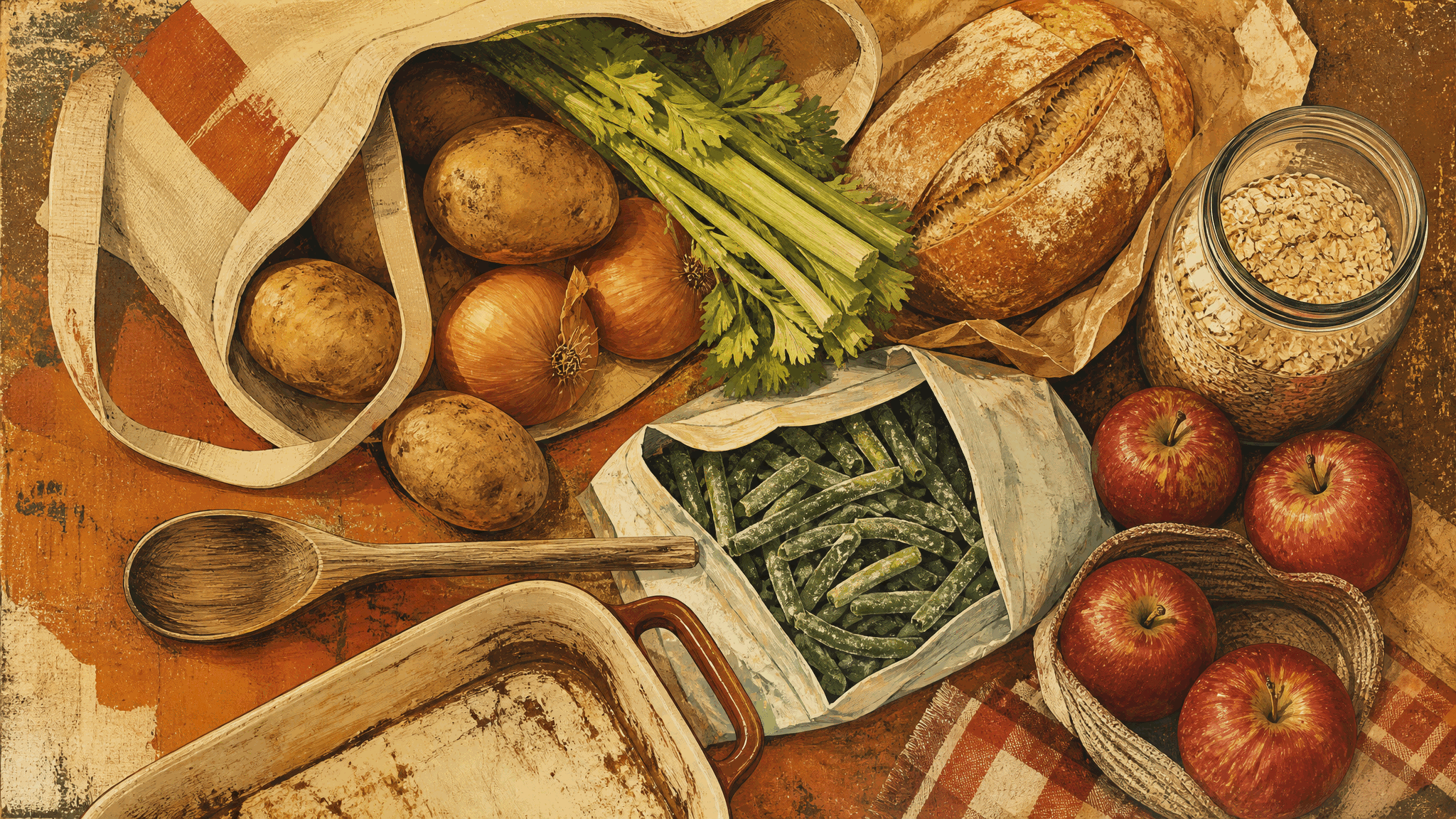
Your three sides share ingredients: mash the potatoes with milk and butter; bake bread cubes with softened onions, celery, broth, and herbs; toss hot green beans with garlic and oil. Pantry staples, three different textures, no specialty ingredient with one tablespoon missing forever.
Bake a 9-by-13-inch apple crisp the day before. Add the bought pumpkin pie and whipped topping. Homemade and store-bought can share a table without requesting mediation.
Serve tea, coffee, sparkling water, and tap water. Alcohol isn’t funded here; make it optional BYOB if that suits your group. For decorations, use an existing tablecloth and a bowl of apples from the crisp shopping. Stop before buying seasonal typography.
If local prices outrun the buffer, swap ingredients, assign a dish, or trim extras before paying. Fit hosting into the wider season with How to Set a Holiday Budget That Survives First Contact With Black Friday.
Give potluck guests actual assignments
“Bring whatever!” is how you get six desserts and one increasingly nervous turkey.
Try: “I’m covering turkey and sides. Could you bring a pumpkin pie for 12? Store-bought is perfect.” Or assign sparkling water, rolls, or the green beans, with quantities and any dietary needs.
The table funds everything even if nobody contributes. If someone takes a category, remove its cost from your shopping list. Don’t keep the purchase and call their contribution savings.
Ask about allergies and dietary needs before buying. If a guest needs a different main or side, agree who will make it and move money within the plan. A meal people can eat beats a beautifully balanced spreadsheet.
Offer a no-spend assignment too: playlist, furniture rearranging, or washing dishes. Some guests have money; some have Tuesday evening free. Both count.
Borrow the boundary-setting spirit of Loud Budgeting: Why Saying ‘I Can’t Afford It’ Out Loud Is the Most Underrated Money Hack. Hosting doesn’t require pretending you have unlimited cash and an industrial kitchen.
Choose one disposable category
This version buys paper napkins. Use your own plates, glasses, cutlery, baking dishes, and storage containers. Borrow missing pieces. Matching china is optional; gravy has never checked the pattern.
Compare the actual tradeoff. Dishes mean washing up, detergent, and water. Cloth napkins add laundry. Disposables cost cash and spare some work.
If your energy budget is smaller than your grocery budget, switch the disposable allowance to plates and borrow cloth napkins. Check the new total first. Accessibility and exhaustion are allowed into this calculation.
The ‘Forbidden’ Frugality Habits That Actually Work (and the Performative Ones That Don’t) applies here: pick the saving you can live with. Recruit two cleanup volunteers before dessert makes everyone mysteriously unavailable.
Give leftovers four or five meals’ worth of jobs
Aim for five eating occasions: Thanksgiving, sandwich lunch, and three later dinners. Those later meals are for your smaller household, roughly two to four people, depending on leftovers. This isn’t five more banquets for 12.
Use the $14 add-ins for:
- Turkey sandwiches with cranberry sauce.
- Turkey, bean, and vegetable soup with pasta.
- Turkey and vegetable rice bowls.
- A casserole topped with leftover mashed potatoes.
Before guests pack take-home portions, agree what stays. If little turkey remains, let beans carry the soup and rice bowls. No poultry multiplication required.
Follow the CDC: refrigerate leftovers within two hours at 40°F or below, portion the meat so it cools quickly, and eat refrigerated turkey within three to four days. Freeze portions for later meals promptly. Reheat leftovers to 165°F.
Your future dinner should be labeled, findable, and something you’ll actually want. A mysterious foil parcel is just another chore.
$200. 12 people. Three meals out of the leftovers. The good kind of forbidden.

 Forbidden Finance