August Starts Now
The school supply list arrives like a tiny invoice with crayons.
One minute it is July. The next, you are standing in a fluorescent aisle comparing glue sticks like a procurement officer, wondering why a backpack now costs dinner-for-two money. Back-to-school spending is not a surprise, exactly. It happens every year. It just has the manners of a surprise.
If you have three weeks before school starts, you still have room to build a plan. Not a perfect plan. Not a spreadsheet with tabs named after your personality flaws. A practical one: decide what must be funded now, what can wait, what deserves a tax-free weekend, and what needs to become next year’s problem in a savings account instead of this year’s credit-card adventure.
This is where the Forbidden Finance rule applies: the right budget is the one your actual life will run. If you need envelopes, use envelopes. If you need one automatic transfer, do that. If you need a sticky note on the fridge that says “NO, THE CART IS NOT A PLAN,” respected.

What NRF Says Back-to-School Costs in 2026
According to the National Retail Federation, families with K-12 students expect to spend an average of $863.86 on back-to-school items in 2026. That is up slightly from $858.07 in 2025, and total K-12 spending is expected to hit a record $43.3 billion.
That average breaks down into real-cart categories: $293.11 for electronics, $250.29 for clothing and accessories, $174.01 for shoes, and $146.45 for school supplies, per the National Retail Federation. Translation: the notebooks are not the whole problem. The device, the shoes, and the “they grew again?” clothing pile are doing heavy lifting.
Deloitte lands on a different view because it reports expected spending per child: $557 per K-12 student, with a projected market of $30.4 billion. It also found planned clothing and accessories spending up 22%, while tech spending is expected to drop 16% as families defer upgrades.
That last part matters. A back-to-school budget is not one number. It is a mix of mandatory purchases, replace-if-broken purchases, and emotional purchases wearing a first-day outfit.
The goal is not to spend nothing. Children generally object to arriving at school barefoot and holding one ceremonial pencil.
The 3-Week Funding Plan
Week 1: Build the Real List
Start with the official school list, then add the unofficial list. The unofficial list is where budgets go to be mugged.
Include:
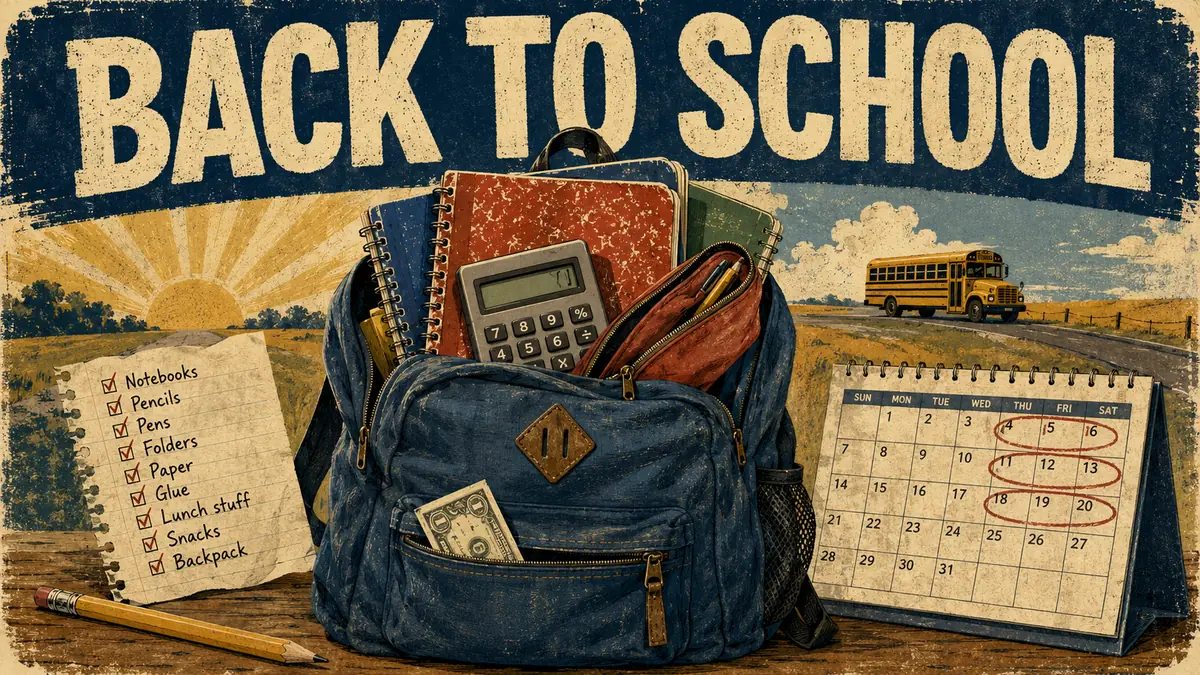
- school supplies
- clothes and shoes that actually fit
- backpack or lunch gear
- activity fees
- tech needs
- haircut or grooming costs
- first-week lunch money
- transportation changes
- classroom donations, if you choose to give
Now mark each item as buy now, buy later, or maybe. This is the boring part, which is usually where the money gets saved. The cart does not get to make decisions just because it has a red checkout button.
If your cash is tight, fund the start-of-school essentials first and plan a refill round in September. The National Retail Federation found 47% of shoppers plan to buy only what is needed for the start of school and replenish supplies later. That is not failure. That is inventory management, but with more snack crumbs.
Week 2: Split the Bill Across Paychecks
Take the total “buy now” number and divide it by the paychecks left before school starts.
If the number is $600 and you have two paychecks, your target is $300 per paycheck. If that is not happening without financial parkour, reduce the buy-now list. Push the maybe pile. Delay extras. Borrow before buying. Use last year’s scissors unless they have entered witness protection.
This is also a good week to move money into a separate holding spot. A sinking fund works because it removes the cash from the general checking-account soup. For the full setup, read Sinking Funds Explained: The One Habit That Makes ‘Surprise’ Expenses Disappear.
Week 3: Shop With Rules
Do the big shop after you know your state tax-free dates, store sales, and real needs.
Use three rules:
- Buy fixed items first.
- Put floating items on a second list.
- Stop when the funded amount is gone.
Very forbidden, apparently: your budget is allowed to say “not today” without making you a bad person.
Fixed vs. Floating Spending Breakdown
Fixed costs are the items most likely to create a problem if skipped. Floating costs are real too, but they have more timing flexibility.
| Category | Fixed Spending | Floating Spending | How to Handle It |
|---|---|---|---|
| Supplies | Required classroom list, notebooks, pencils, folders | Extras, locker decor, duplicate supplies | Buy the required list now. Refill later if prices drop. |
| Clothing | Uniforms, shoes that fit, weather-appropriate basics | Trendy outfits, extra accessories, brand upgrades | Cover fit and function first. Let style live inside a cap. |
| Electronics | Required calculator, charger, replacement device if needed for school | Nice-to-have tablet, headphones upgrade, gaming-adjacent “school” tech | Replace broken school-critical tech. Delay upgrades. |
| Food and routines | Lunch account, lunchbox, water bottle, transit changes | Fancy containers, themed bottles, snack experiments | Fund the routine before the accessories. |
| Activities | Registration fees, required gear, medical forms | Spirit wear, team merch, optional clubs | Ask for fee calendars early. Activities love surprise invoices. |
This split is also useful if you budget with another adult. The fight is rarely “Do we buy pencils?” The fight is usually “How did pencils become $300 and include sneakers?” If that conversation gets spicy, The Forbidden Conversation: How to Talk About Money Without Starting a Fight is the adult supervision your group chat deserves.
Tax-Free Weekends to Plan Around
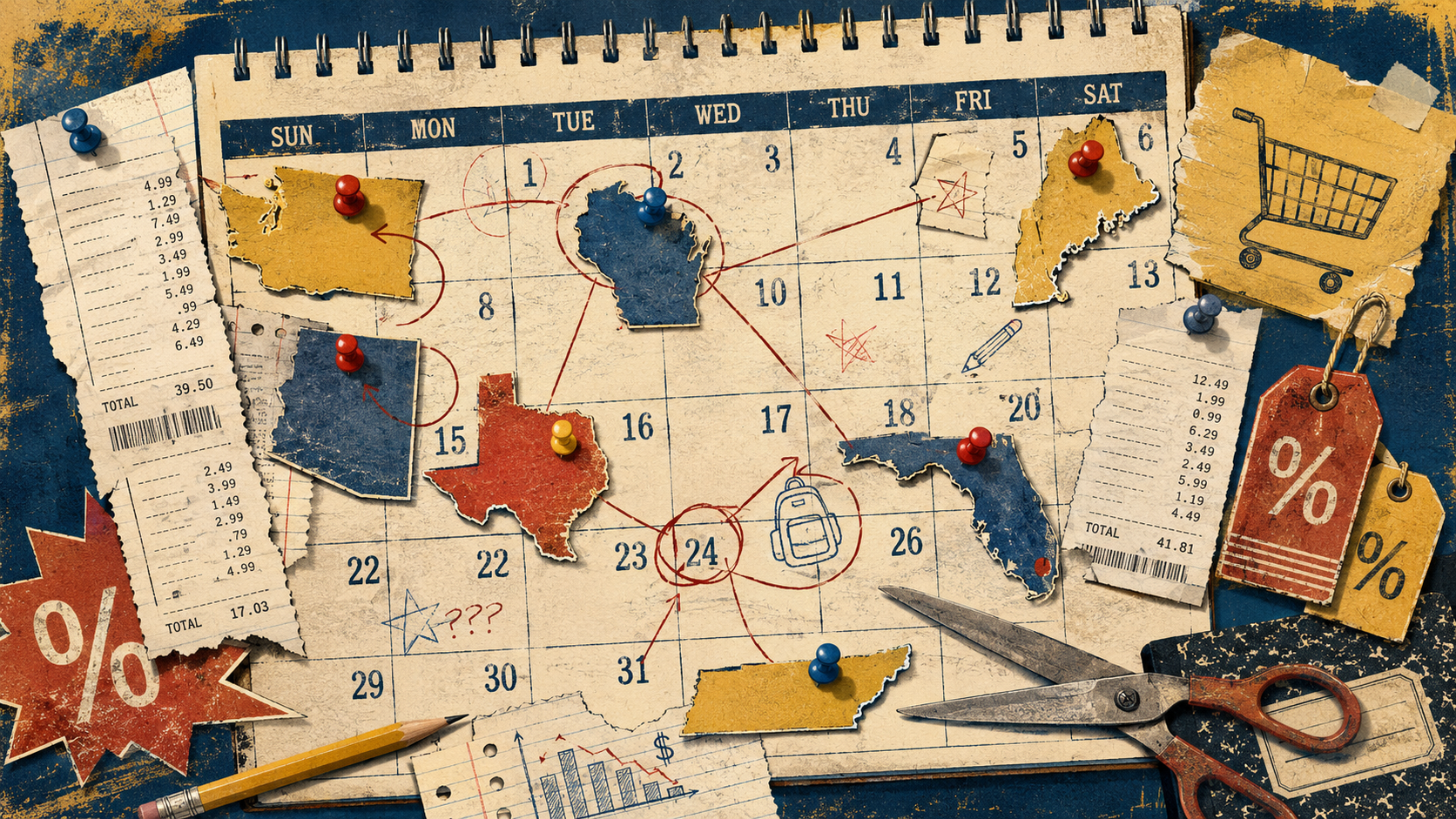
Tax-free weekends are not magic. They will not make a $1,200 laptop free, which is rude but legal. They can, however, save real money if your state participates and your purchases fit the caps.
The Federation of Tax Administrators tracks 2026 state sales tax holidays, including the back-to-school windows below. Always check your state revenue department before shopping because item caps, local participation, and online rules vary. Bureaucracy: the confetti cannon of fine print.
| State | 2026 Back-to-School Tax-Free Dates | Major Eligible Items / Caps |
|---|---|---|
| Alabama | July 17-19 | Clothing up to $156; computers up to $1,173; school supplies up to $78; books up to $47 |
| Arkansas | August 1-2 | Clothing under $100; accessories under $50; school/art supplies and electronic devices |
| Connecticut | August 16-22 | Clothing and footwear under $300 |
| Florida | July 20-August 20 | School supplies up to $50; clothing up to $100; learning aids up to $30; computers up to $1,500 |
| Illinois | August 7-16 | Reduced state sales tax on qualifying clothing, footwear, and school supplies |
| Iowa | August 7-8 | Clothing and footwear under $100 |
| Maryland | August 9-15 | Clothing and footwear $100 or less; first $40 of a backpack/bookbag |
| Massachusetts | August 8-9 | Most tangible personal property for personal use, $2,500 or less |
| Missouri | August 7-9 | Clothing up to $100; supplies up to $50; computers and peripherals up to $1,500 |
| New Mexico | July 31-August 2 | School supplies up to $30; clothing/shoes under $100; computers up to $1,000 |
| Ohio | August 7-9 | Clothing up to $75; school supplies and instructional materials up to $20 |
| Oklahoma | August 7-9 | Clothing and footwear under $100 |
| South Carolina | August 7-9 | Clothing, accessories, footwear, supplies, computers, printers, software |
| Tennessee | July 31-August 2 | Clothing and supplies up to $100; computers up to $1,500 |
| Texas | August 7-9 | School supplies, clothing, shoes, and backpacks under $100 |
| Virginia | August 7-9 | School supplies up to $20; clothing/footwear up to $100; select hurricane and Energy Star items |
| West Virginia | July 31-August 3 | Clothing up to $125; computers up to $500; supplies up to $50; sports equipment up to $150 |
The trick is to avoid buying junk to “save tax.” Saving 7% on something you did not need is still paying 93% for clutter. Forbidden math, but math nonetheless.
Set Up the 2027 Sinking Fund Now
After the last receipt limps home, do not close the case. Use the total to build August 2027.
Take what you spent this year and divide by 12. If 2026 costs you $864, next year’s monthly target is $72. If you want padding for growth spurts, device drama, or the sacred mystery of school fees, round up to $80.
Set the transfer for payday. Name the account something obvious: “Back-to-School 2027.” Not “Savings 2.” Not “Misc.” Miscellaneous is where money goes to become folklore.
If automation fits your brain, pair this with Pay Yourself First: The Forbidden Art of Not Tracking Every Latte: move the back-to-school amount before the rest of the paycheck starts auditioning for takeout, gas, and one tiny online order that arrives in four boxes.
If you prefer detailed categories, make it an envelope. If you prefer a hybrid, keep one annual-school fund and split it when July hits. If your income is irregular, fund it heavier in good months and lighter in thin ones. The rule depends. That is the whole point.
Next August does not need to be a financial jump scare. It can be a line item. A deeply annoying line item, sure. But funded.
The school year doesn’t surprise you. The price tag shouldn’t either.

 Forbidden Finance