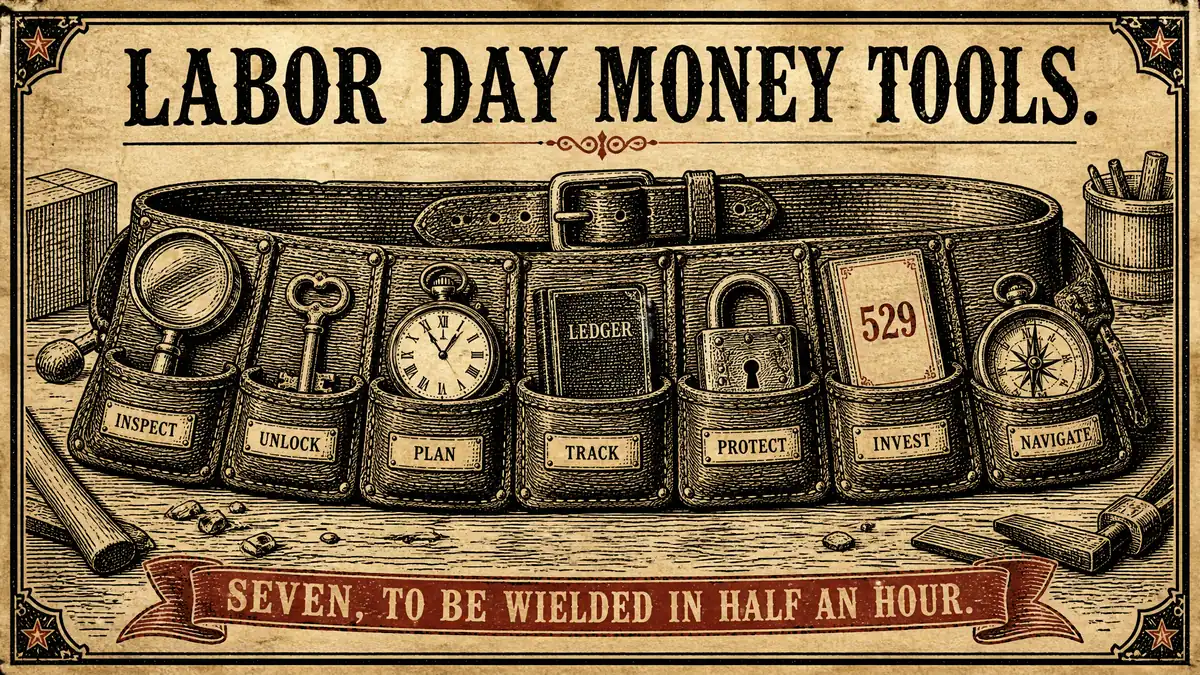
Labor Day Saturday morning has a specific energy: coffee, one quiet tab open, and the faint threat of someone asking if you want to go to a store that sells decorative gourds. Give your money 30 minutes before the weekend eats the calendar. Seven moves. About four minutes each. No shame spiral required.

1. HSA Contribution Check
Open your HSA and payroll portal, then compare your year-to-date contributions with the 2026 max. For calendar year 2026, the IRS sets HSA contribution limits at $4,400 for self-only HDHP coverage and $8,750 for family HDHP coverage, before any eligible catch-up math.
If you are behind, do not announce a new era of perfect adulthood. Just nudge the payroll amount for the remaining checks, or set a direct contribution reminder if your plan allows it. Forbidden move: making the boring account do more work than your willpower.
2. IRA YTD Funding
September is the polite shoulder tap before December starts shouting. For 2026, the IRS lists the IRA contribution limit at $7,500, or $8,600 if you are 50 or older, capped by taxable compensation and subject to the usual Roth income rules.
You may have until tax time to finish 2026 IRA contributions, but Labor Day is a useful reality check. Divide the remaining gap by the paydays left in the year. If the answer is rude, lower it. A smaller automatic transfer beats an imaginary heroic one.
3. Beneficiary Review On Every Account
Check retirement accounts, HSAs, brokerage accounts, bank accounts with payable-on-death settings, and life insurance. This is not romantic. It is clicking through forms so your money does not star in a probate-themed escape room.
Look for old partners, missing kids, outdated names, or accounts where the beneficiary field is blank because Future You was apparently “busy.” If your family situation changed this year, this four-minute task deserves the front of the line.
4. FSA Balance Check
Your FSA is not a savings account wearing a tiny medical badge. The IRS says health FSAs are generally use-it-or-lose-it, though some plans allow a grace period or carryover, and your employer’s plan rules decide the details.
Log in and check the balance, deadline, eligible expense list, and claim-submission cutoff. For 2026 plan years, IRS Publication 15-B says the health FSA salary-reduction cap is $3,400, which is useful context before open enrollment tries to make you estimate next year’s dental chaos with a straight face.

5. Credit-Report Freeze Refresh
If your credit is frozen, make sure you can still log in at Equifax, Experian, and TransUnion. The FTC says freezes are free, last until you lift them, and require contacting all three bureaus.
This is also a good time to save the login method somewhere sane, not in a notes app titled “important stuff lol.” If you want the bigger credit picture later, Your Credit Score Is Built on Six Things — Here’s How to Move Each One covers the gears without pretending a three-point swing is a personality test.
6. Password Rotation On Financial Accounts
Do not rotate perfectly good unique passwords just because a calendar got bossy. NIST says password changes should not be required periodically, but compromised passwords should be changed.
So make this targeted: banking, brokerage, credit cards, payroll, tax software, and any account reusing an old password from your “I was young and every login was PizzaDog7” era. Replace weak or reused passwords with unique ones from a password manager, then confirm multifactor authentication is on.
7. October-Spending Sinking-Fund Top-Up
October is where innocent little expenses form a committee: costumes, travel, fall sports, insurance renewals, school extras, early holiday deposits, and groceries that somehow now include seventeen kinds of cinnamon. Pick the categories you know are coming and move money into them now.
This is the whole point of a sinking fund: boring in advance, glorious later. For the full system, read Sinking Funds Explained: The One Habit That Makes ‘Surprise’ Expenses Disappear, then top up one bucket before your weekend plans get persuasive.
Long weekend. Short list. Big leverage.

 Forbidden Finance