The Halloween candy gets marked down, and suddenly you’re back in the store buying a bag large enough to insulate an attic. You came for toothpaste.
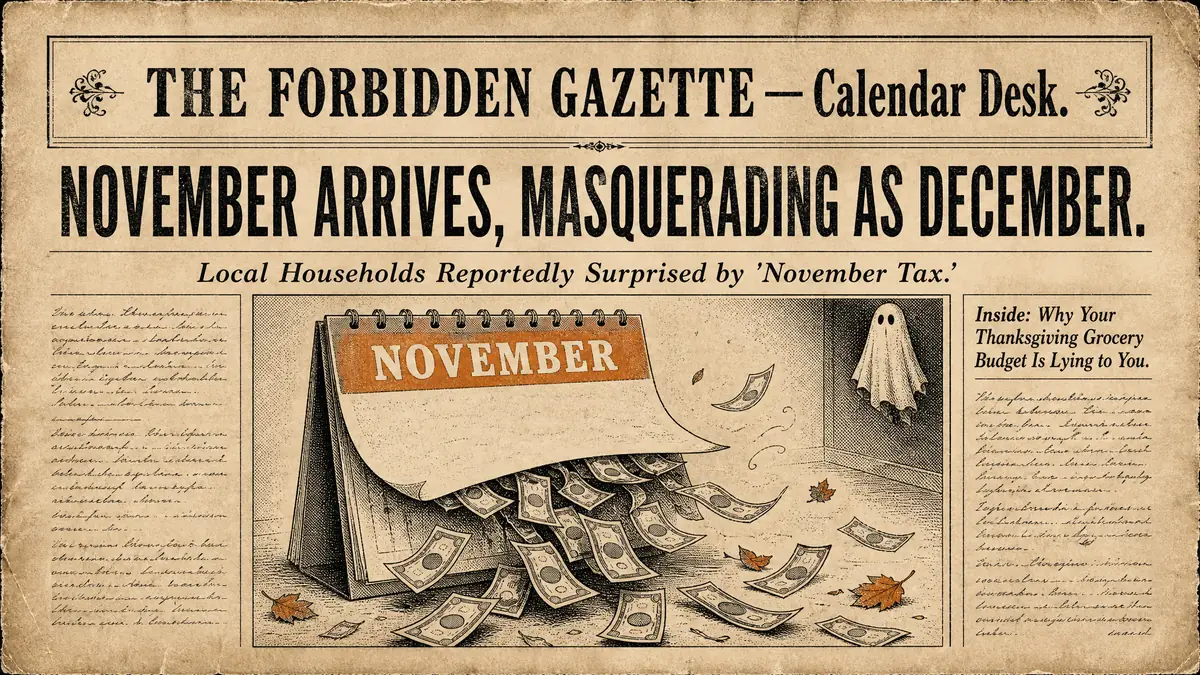
November has excellent camouflage. December looks expensive. November looks like errands: a roasting pan, airport parking, something festive that smells like a cinnamon stick filed a noise complaint.
The National Retail Federation forecasts November and December 2026 retail sales will rise 4.2% over 2025. That’s a two-month forecast, but your mental holiday budget might still start in December.
Time to give November its own line. Three small check-ins can help.
1. Check your November sinking fund tonight
Open the actual balance. The number you vaguely remember saving is unavailable for comment.
A sinking fund is a named, separate pot for a known expense: gifts, travel, hosting. It has a different job from your cash cushion or emergency fund. If you’ve been meaning to start one, Sinking Funds Explained: The One Habit That Makes ‘Surprise’ Expenses Disappear covers the setup.
Tonight, compare what’s there with what’s coming. Include Thanksgiving groceries, travel still unpaid, baggage fees, pet care, and the airport sandwich you’ll buy after confidently announcing you packed snacks.
Then count the spending that calls itself preparation. Wrapping supplies. Replacement lights. A storage bin for the decorations you haven’t bought yet. “I just need to set up” is a surprisingly expensive sentence.
For example, if your pot holds $300 and the remaining plans cost $450, you have a $150 decision to make. Change the plans, redirect available spending money, or split costs with willing guests. The gap won’t become smaller because you rename it festive.
No fund this year? Start with what you can cover from November’s income after ordinary bills. A short phone note works. So does a detailed spreadsheet if that’s your thing.
If your income varies, count only money already available and pay you can reasonably rely on. A holiday plan built around a hopeful extra shift is still waiting for funding.
You can keep the candy. Just let it appear in the total.
2. Lock the Thanksgiving grocery budget by November 15
Before you price the bird, count the mouths. “A few people” is how you end up peeling potatoes for a small municipality.
The Bureau of Labor Statistics reports food-at-home prices rose 1.8% between September 2025 and September 2026. Its “other uncooked poultry including turkey” category rose 8.4%. That’s broader than turkey alone, and neither figure is a forecast for your Thanksgiving cart.
Meanwhile, the American Farm Bureau Federation priced its classic dinner for ten at $55.18 in its 2025 survey, down 5% from 2024. That’s last year’s benchmark, not a quote for your kitchen. Your guest list may involve wine, appetizers, dietary substitutions, and someone whose definition of a serving is spiritually generous.
By November 15, write down your guest count, menu, and spending cap. Check the pantry first. Three opened jars of cinnamon do not require a fourth understudy.
Price your list at the store you’ll actually use. Include drinks, breakfast for overnight guests, foil, and the butter every recipe assumes materializes from the walls. Leave some room within the cap for substitutions.
Lock the total; keep the menu flexible. If the family pie matters, keep it and simplify another dish. Ask guests to bring something specific if that suits your gathering.
Travel gets its own total, including parking, fuel, and meals. “We’re driving” is a transportation choice, not a price.
3. Declare a buy-nothing week in the second half of November
Pick seven days that fit your calendar. November 16 through 22 could work if your Thanksgiving shopping falls later. Put the dates somewhere you’ll see them.
Define “nothing” before you begin. Rent, medicine, ordinary groceries, and necessary transport continue. You’re pausing optional purchases, not auditioning to survive on mustard.
That pause catches the little permissions: it’s the holidays, you’ve had a long week, the candle is seasonal, the shipping would be free if you added socks. Each explanation sounds reasonable on its own. Together, they’ve furnished a guest bathroom.
Move tempting purchases onto a list. Close the tab. At week’s end, decide which still deserve money from your existing plan. No victory lap through checkout, please. Buying everything afterward would make this a shipping delay.
If you’re planning sale purchases, How to Set a Holiday Budget That Survives First Contact With Black Friday helps give them a place before the emails arrive.
A full week might be awkward with shift work, caregiving, or changing plans. Choose a narrower pause, like no decorations or browsing purchases. A useful rule should fit your life.
You don’t need to cancel the season. Give the spending a deliberate start and stop.
November is December’s pre-game. Don’t let it become the whole game.
 Forbidden Finance