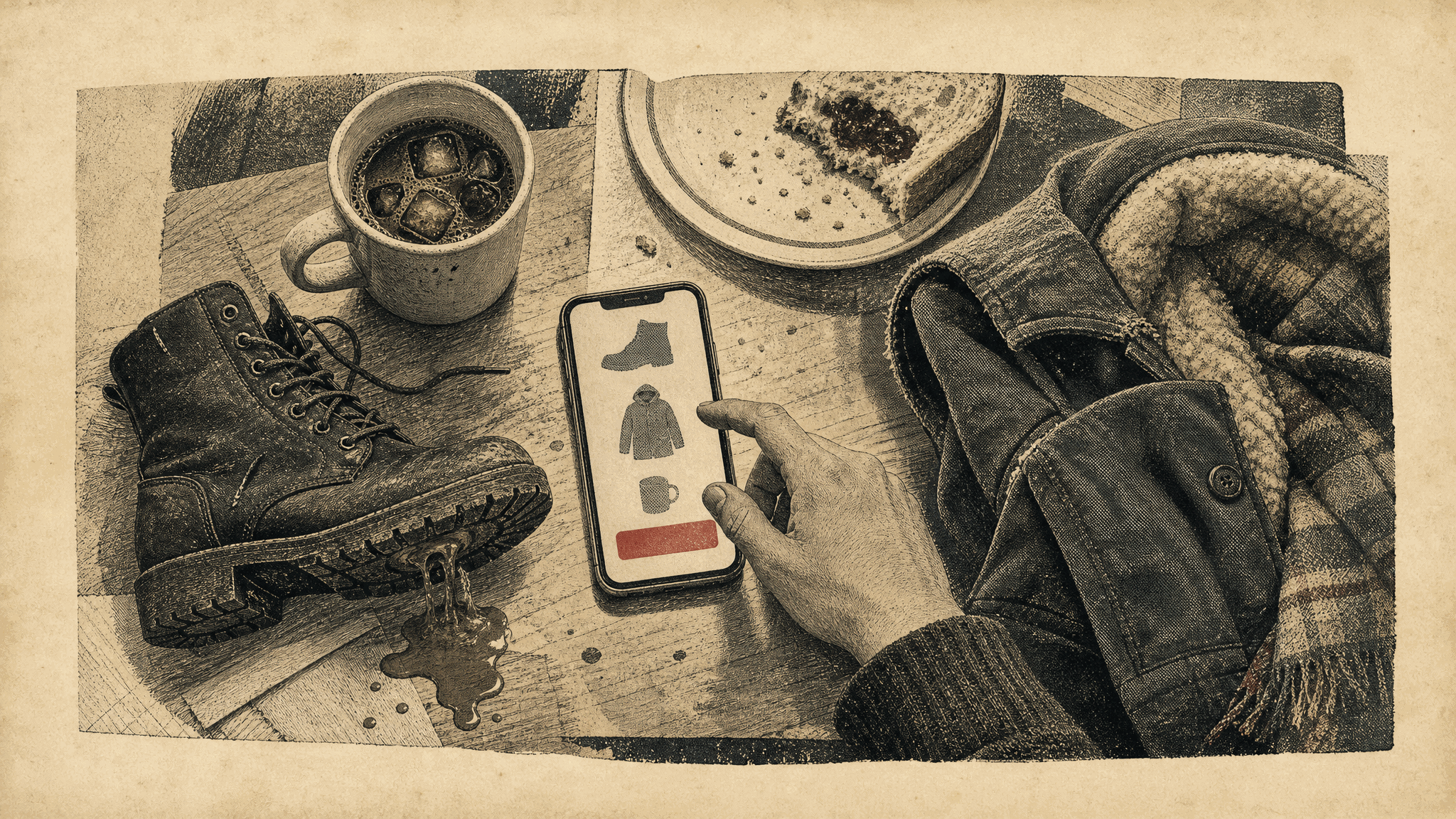
Your thumb is hovering over “buy now,” the coffee has gone cold, and somehow a countertop ice maker has become urgent.
The National Retail Federation counted a record 202.9 million shoppers over the five-day Thanksgiving weekend in 2025; Black Friday was the biggest shopping day both online and in stores. Participation remains optional.
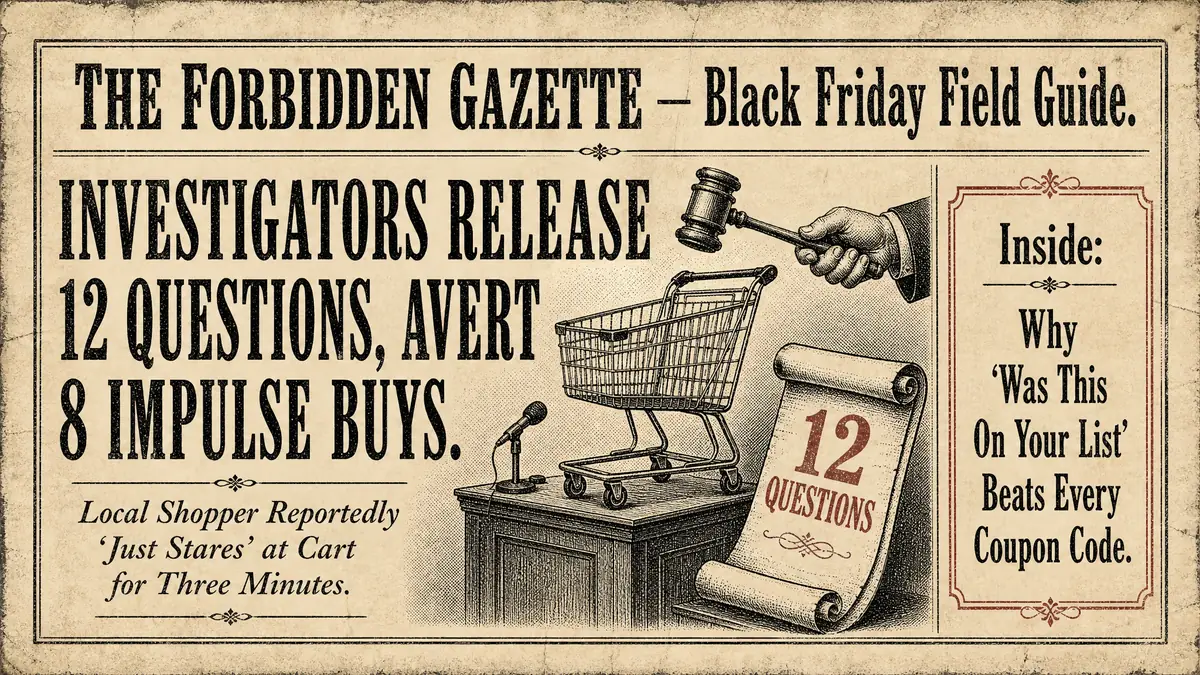
This Black Friday survival checklist is for the moment a product is already in your cart: twelve quiet questions, no spreadsheet ceremony, no demand that every purchase justify your existence. Run through them before each click, including the small purchases and gifts, and use the table below when you want the quick version.
The twelve questions
1. Was this on my pre-November list?
Check the list you made before the sale emails arrived, whether it lives in a notebook, a phone note, or a message to yourself about the boots with the leaking sole, including gifts whose recipients have already named a preference. A new need can still qualify, because life refuses to respect editorial calendars; just name what changed besides the appearance of a red discount badge and a strangely persuasive countdown.
2. Have I checked the price history?
Look at the exact model’s usual selling price across several months, matching its size, storage, accessories, and condition so you’re comparing the same thing rather than two televisions sharing a surname, and include delivery charges in today’s comparison. If you need the research steps, Black Friday and Cyber Monday: A Buyer’s Strategy, Not Just a Sales List has them; here, the checkpoint is simply whether you’ve checked, or are accepting the banner’s autobiography.
3. Am I buying it because I want it, or because the discount triggers feel-good?
Hide the percentage and ask what still appeals: the comfortable headphones, the coat you’ll wear after the decorations come down, or the brief pleasure of apparently outsmarting a department store’s marketing team. Wanting something is enough of a reason when it fits your spending money; if the only attractive feature is how much you supposedly saved, close the tab and let the coupon enjoy some privacy.
4. What’s the return window?
Find the final return date, when the clock starts, and whether this exact item has exclusions, shipping charges, restocking fees, or a final-sale label lurking beside the festive confetti, especially if the gift won’t be opened until late December. Save the terms before paying and imagine doing the return on a wet Tuesday after work, because “I can always send it back” is a much more ambitious sentence with packing tape in your teeth.
5. Am I using my one designated holiday card?
A large 2026 replication study in the Journal of Consumer Research found that cash payments felt more psychologically painful than card payments, with differences depending partly on payment habits; using one holiday card is a practical way to keep your purchases visible together, not a spending limit by itself. Use your chosen payment method and check what’s already committed against the plan from How to Set a Holiday Budget That Survives First Contact With Black Friday; debit works too, and another available card doesn’t mean the holiday pot has magically refilled.
6. Is this the lowest meaningful tier of this product I’d actually be happy with?
Choose the version that meets your actual requirements, including comfort and accessibility, and don’t treat the first, pricier option you see as the default: in initial staff findings from its surveillance pricing study, the Federal Trade Commission reported that the intermediaries it examined can show higher-priced products based on shoppers’ search and purchase activity. Your useful feature might deserve the upgrade; a premium badge and six attachments you’ll store in a drawer do not automatically earn it.
7. What’s the cost per use over its expected lifetime?
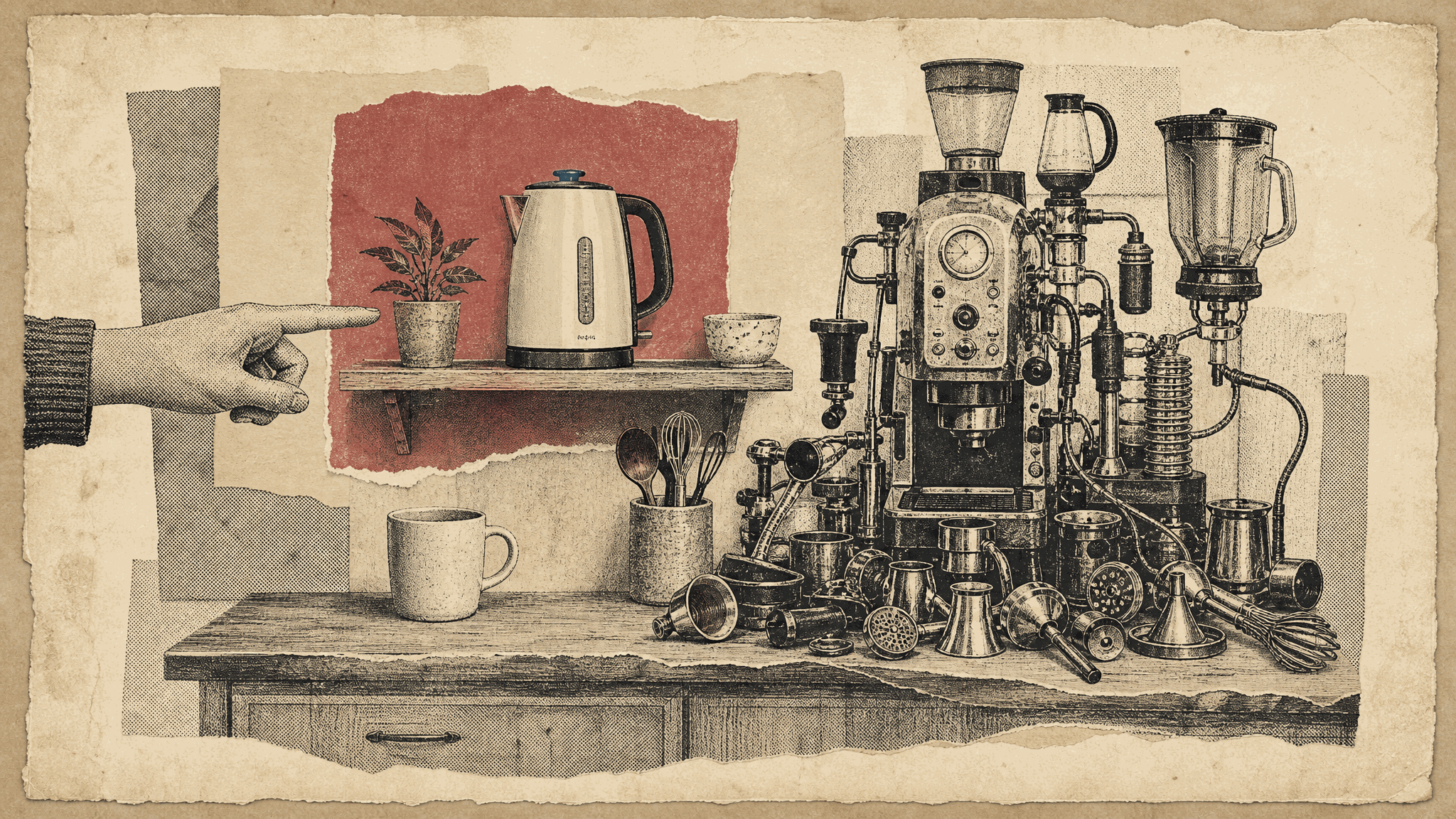
Divide the total cost, including required extras and upkeep, by a realistic number of uses: a hypothetical $120 pair of boots worn 120 times costs $1 a wear, while a $60 gadget used twice costs $30 a go. Estimate for the life you currently lead, allowing for durability and repairability, rather than the future personality who apparently makes fresh pasta every Thursday; a special-occasion purchase can still be worth it even with a higher cost per use.
8. Is the deal real, or did the price get raised in October?
Inspect the advertised “was” price separately from the price history: the Federal Trade Commission describes an artificially inflated former price created to advertise a later reduction as a false bargain. An October increase alone doesn’t establish deception, but if the impressive discount simply returns the product to its familiar price, judge that price on its merits instead of applauding the retailer’s costume change.
9. Would I pay full price for this in March?
Imagine an ordinary March afternoon, no holiday deadline, no free-gift banner, and no crowd of imaginary shoppers reaching for the same last toaster. You can honestly answer no and still buy a useful thing at a price you can afford; the question separates wanting the product from wanting this sale, without making full-price willingness an entrance exam for owning nice towels.
10. Where will this physically live in my house?
Name the shelf, cupboard, corner, or hook, then check that the thing actually fits there with enough room to use it, open it, charge it, or put it away, including space for the box if returns require it. “Somewhere” is how a bargain bread maker gets a permanent address on the kitchen floor; if its arrival requires another storage purchase, include that expense before deciding you’ve found a deal.
11. Does this replace something, or add to it?
If it’s a replacement, identify the worn-out item and decide whether you’ll repair, sell, donate, recycle, or otherwise move it along instead of keeping both indefinitely “just in case.” If it’s an addition, own that choice and count any extra cleaning, supplies, charging, or subscription it needs, along with who in your household will handle that work; your third set of headphones can be welcome without pretending the first two died heroically.
12. Am I solving a problem, or buying a feeling?
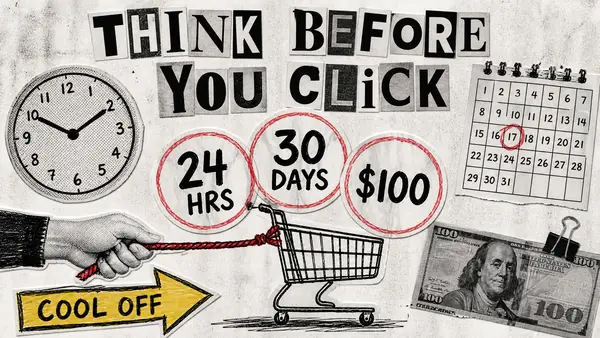
Name the job you’re hiring this purchase to do, whether that’s keeping your feet dry, delighting your sister, enjoying beautiful pottery, or briefly feeling like someone whose laundry is under control. Pleasure belongs in your finances, but if you’re unsure the item can deliver what you’re asking of it, borrow a pause from The 24-Hour Rule, the 30-Day List, and the $100 Test: Three Anti-Impulse-Buy Frameworks, then decide with the actual product in mind, rather than the life its glossy photographs seem to promise.
The cheat sheet
Screenshot this one. It fits on a phone, which is where the checkout button lives anyway.
| Before the cart | At checkout | After the sale |
|---|---|---|
| Was this on my pre-November list? | Am I using my one designated holiday card? | Would I pay full price for this in March? |
| Have I checked the price history? | Is this the lowest meaningful tier of this product I’d actually be happy with? | Where will this physically live in my house? |
| Am I buying it because I want it, or because the discount triggers feel-good? | What’s the cost per use over its expected lifetime? | Does this replace something, or add to it? |
| What’s the return window? | Is the deal real, or did the price get raised in October? | Am I solving a problem, or buying a feeling? |
You don’t have to answer ‘yes’ to all twelve. You have to answer them.
 Forbidden Finance