Most budgeting apps act like you need a finance degree, six dashboards, and the emotional resilience of a tax attorney just to stop buying nonsense on a Tuesday.
Kakeibo goes the other direction.
It is old-school, reflective, and almost annoyingly simple. And that is exactly why it still works.
What Kakeibo actually is
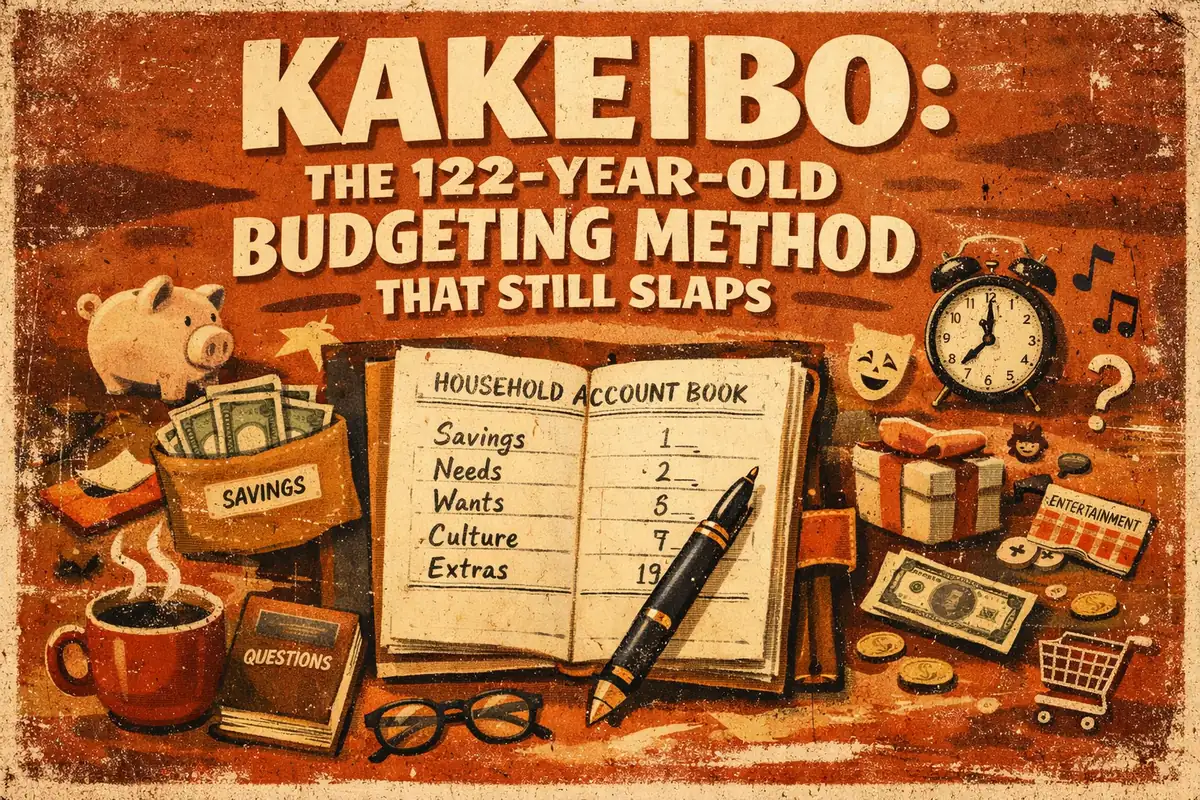
Kakeibo, usually pronounced kah-keh-boh, is a Japanese household budgeting method created in 1904 by Hani Motoko, who is widely recognized as Japan’s first female journalist. The term is commonly translated as “household financial ledger” or “household money ledger,” which sounds less sexy than “budgeting revolution,” but is honestly more accurate.
The point of Kakeibo is not just tracking numbers. It is paying attention. You write down what comes in, what goes out, what you want to save, and then you reflect on your choices instead of pretending your card statement is a jump scare you had no part in creating.
That reflective piece is not some optional wellness garnish sprinkled on top for vibes. It is the method. Traditional Kakeibo is built around planning, spending, and reflecting, with the review process helping you see what your spending says about your priorities and where you want to improve next.
Why Kakeibo feels different from Western budgeting
A lot of Western budgeting systems focus on control first.
Cut this. Cap that. Reduce your fun until your soul leaves your body.
Kakeibo is more interested in awareness than punishment. Yes, it still asks you to categorize spending and set savings goals. But it also asks why you are spending the way you do, which is a very different energy from “you went $14 over restaurants, please report to the budgeting tribunal.”
It is less “optimize every variable” and more “be honest with yourself.” That makes it feel slower, warmer, and more human.
And frankly, that is refreshing in a category full of apps that treat your grocery bill like a personal moral failure.
The core Kakeibo questions
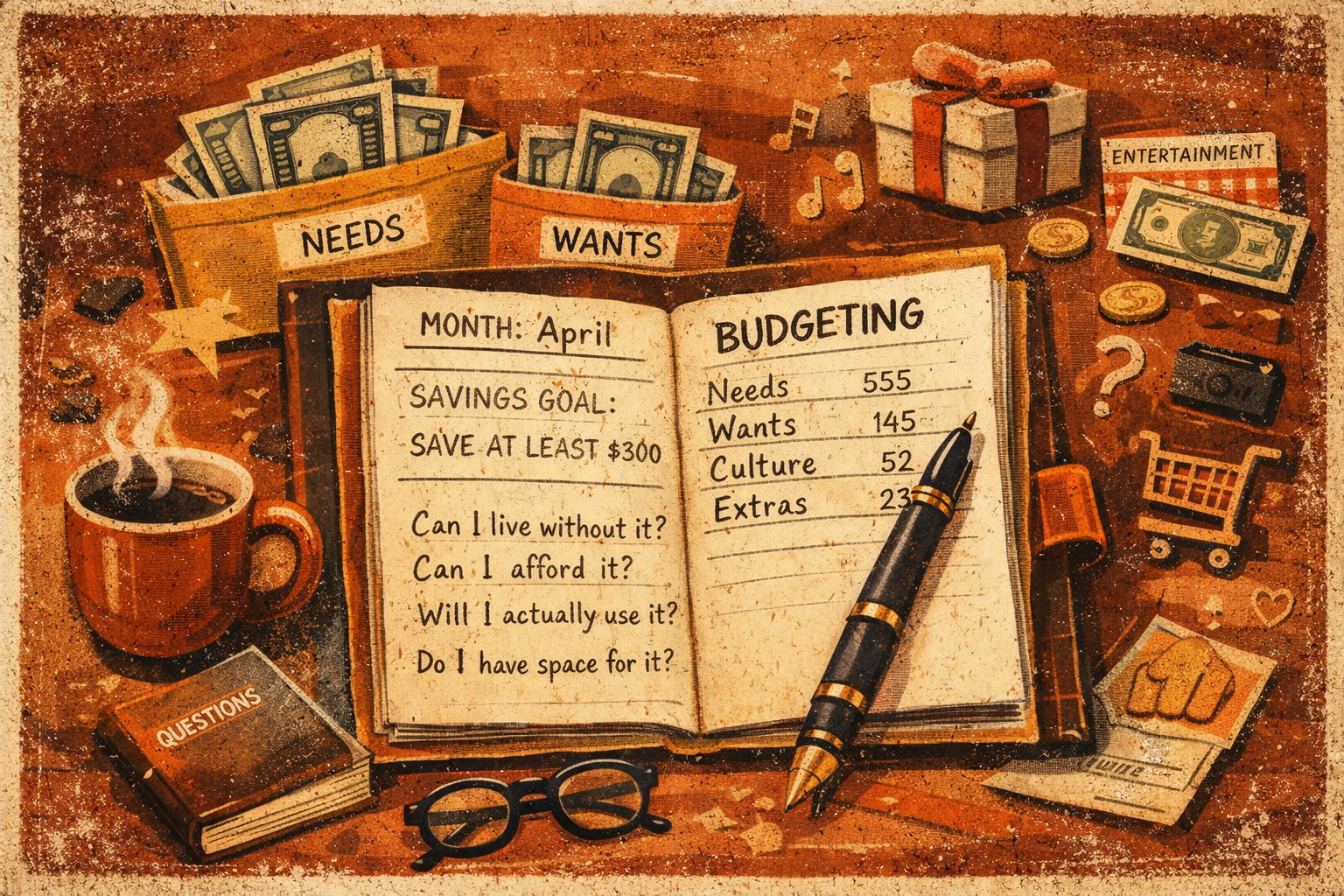
Classic Kakeibo starts with four simple monthly questions:
- How much money do you have?
- How much would you like to save?
- How much are you spending?
- How can you improve?
That last one matters most.
Not because it is dramatic. Because it forces reflection. You are not just recording damage after the fact. You are learning from it.
Then, before impulse buys or non-essential purchases, Kakeibo pushes you to pause and ask:
- Can I live without it?
- Can I afford it?
- Will I actually use it?
- Do I have space for it?
That is the part modern finance culture loves to skip. The spreadsheet is easy. The self-awareness is the work.
The traditional Kakeibo categories
Kakeibo usually organizes variable spending into four buckets:
- Needs
- Wants
- Culture
- Unexpected or extra expenses
That “Culture” category is one of the reasons Kakeibo feels so human. It makes room for books, learning, museums, classes, and experiences that enrich your life instead of pretending every non-essential dollar is reckless chaos.
Imagine that: a budgeting system that acknowledges you are a person, not a coupon-powered robot.
Why reflection is the whole point
If you strip out reflection, you do not really have Kakeibo anymore. You just have expense tracking with better branding.
The method is meant to help you notice patterns, connect spending to emotion and habit, and make small improvements over time. That is why many explanations of Kakeibo treat the review step as central, not optional.
This is also why Kakeibo has survived for more than a century. It is not built on novelty. It is built on behavior.
Money problems are often math problems, sure. But they are also attention problems, habit problems, stress problems, and “why did I buy this at 11:47 p.m.” problems.
Kakeibo gets that.
How Forbidden Finance handles Kakeibo
We did not want to take Kakeibo and turn it into another sterile dashboard that screams at you with pie charts.
The goal was to preserve the reflective spirit of the method while making the process easier to actually keep up with in real life.
Here is how Forbidden Finance translates it into the app:
| Traditional Kakeibo | How Forbidden Finance handles it |
|---|---|
| Start with a savings goal | Savings is a fixed amount deducted first, before the rest of the monthly spending pool is divided up. |
| Track spending in four categories | We keep the four classic groups: Needs, Wants, Culture, and Extra. |
| Work from available money after essentials | Income minus fixed expenses creates the remaining pool for the month. |
| Review spending regularly | Built-in reflection prompts help users look back on what they spent, what felt unnecessary, and what they want to change. |
| Use weekly awareness to stay on track | A weekly allowance system breaks the month into manageable chunks instead of one giant blob of “please be responsible” and "hope you remembered everything." |
Premium users will get AI-powered reflection insights based on their Kakeibo check-ins, helping surface patterns and trends over time. Individual transactions are never sent to the AI, only budget outputs and category-level context where appropriate. Your data is never sold. Ever.
The five groups in Forbidden Finance’s Kakeibo setup
Our version uses five fixed groups.
First comes Savings, which is set as a fixed amount and deducted before anything else. That keeps the method aligned with intention instead of leaving savings to whatever loose change survives the month.
Then the remaining spending is organized into the four traditional Kakeibo-style groups:
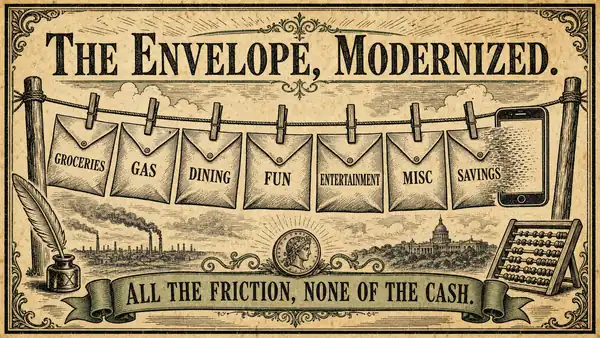
- Needs for survival essentials
- Wants for optional purchases
- Culture for books, education, and cultural activities
- Extra for unexpected expenses
That structure keeps the original spirit intact while making it easier to use in a modern app.
The weekly allowance system
This is where the app becomes especially helpful without ruining the philosophy.
Once income and fixed expenses are accounted for, the remaining pool is divided into manageable weekly chunks. The app calculates how many weeks fall in the month and tracks your discretionary spending against a weekly allowance, so you do not have to white-knuckle your way through the month hoping the math magically works out.
That matters because “I have money left this month” and “I should spend all of it by Wednesday” are, sadly, not the same thing.
The reflection prompts are built in on purpose
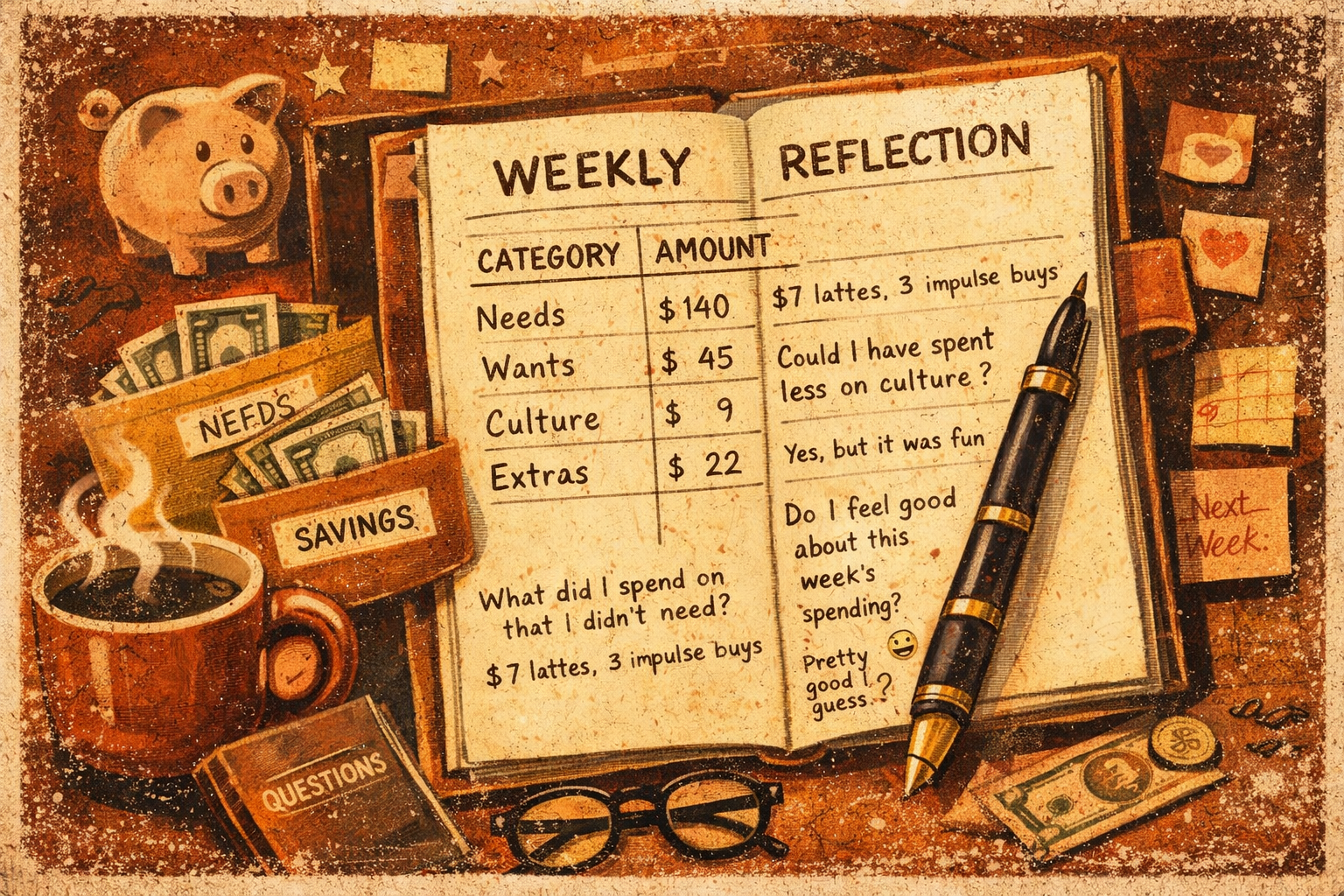
On a configurable reflection day, defaulting to Sunday, Forbidden Finance prompts you with questions like:
- What did I spend on that I did not need?
- What would I change about this month’s spending?
That is not filler. That is the Kakeibo part.
Optional reflections are available across every budget style in Forbidden Finance. Kakeibo makes them required, because stripping out the reflection part would basically be missing the entire plot.
A lot of finance apps are good at recording what happened and terrible at helping you learn from it. We wanted the opposite. The app should help you pause, notice patterns, and make better decisions next week or next month, not just shame you with a red badge and move on.
What the dashboard focuses on
Instead of drowning you in noise, the Kakeibo dashboard focuses on the stuff that actually matters:
- Weekly spend versus weekly allowance
- Remaining amount for the current week
- Monthly overview with weekly breakdown
- Savings achieved this month
In other words: enough visibility to stay intentional, not so much clutter that your budget starts looking like flight control.
Who this method is best for
Kakeibo is a great fit for people who do not just want to know where their money went. They want to understand why.
It is especially useful if you:
- spend emotionally or impulsively
- feel overwhelmed by rigid budgeting systems
- want a savings method that still leaves room for real life
- like the idea of money management being thoughtful instead of purely mechanical
If you want your budget to feel like a calm conversation instead of a performance review, Kakeibo has a lot going for it.
Why we think it belongs in a modern app
Yes, traditional Kakeibo was written by hand. Yes, there is real value in pen and paper.
But the heart of the method is not the notebook. It is the attention.
So the goal with Forbidden Finance was never to “disrupt” Kakeibo like some overcaffeinated startup pitch deck. It was to preserve what makes it powerful: intentional savings, mindful spending, simple categories, and regular reflection.
The math matters, which is why we take care of that. But the mindset is what changes behavior.
And if your budgeting app cannot help with that, it is basically just a calculator wearing a blazer.
Pricing
Forbidden Finance includes Kakeibo starting at the Starter tier for $4.99/month.
That pricing is mostly a boring real-world consequence of bank connections being expensive, which is deeply on-brand for modern finance: even mindfulness has infrastructure costs.
Still, the point is that Kakeibo in the app is not just a digital ledger. It is a guided system built to keep the reflective spirit alive.
Final thought
Kakeibo has lasted this long because it respects something a lot of modern finance products forget:
People are not bad at money because they are lazy or broken. Most people just need a system that helps them slow down, notice patterns, and make decisions with more intention.
That was true in 1904. It is still true now.
And honestly, a budgeting method with over a century of staying power deserves a little more attention than whatever fintech app just rebranded guilt as “insights.”
 Forbidden Finance