TL;DR: Most budgets do not fail because you bought coffee like a tiny villain. They fail because they were built from fantasy numbers, ignored boring-but-real expenses, treated normal overspending as a felony, had no review rhythm, and left no room for being a person with friends, tires, feelings, and parking signs.
Week 10 is where the spreadsheet starts looking at you funny.
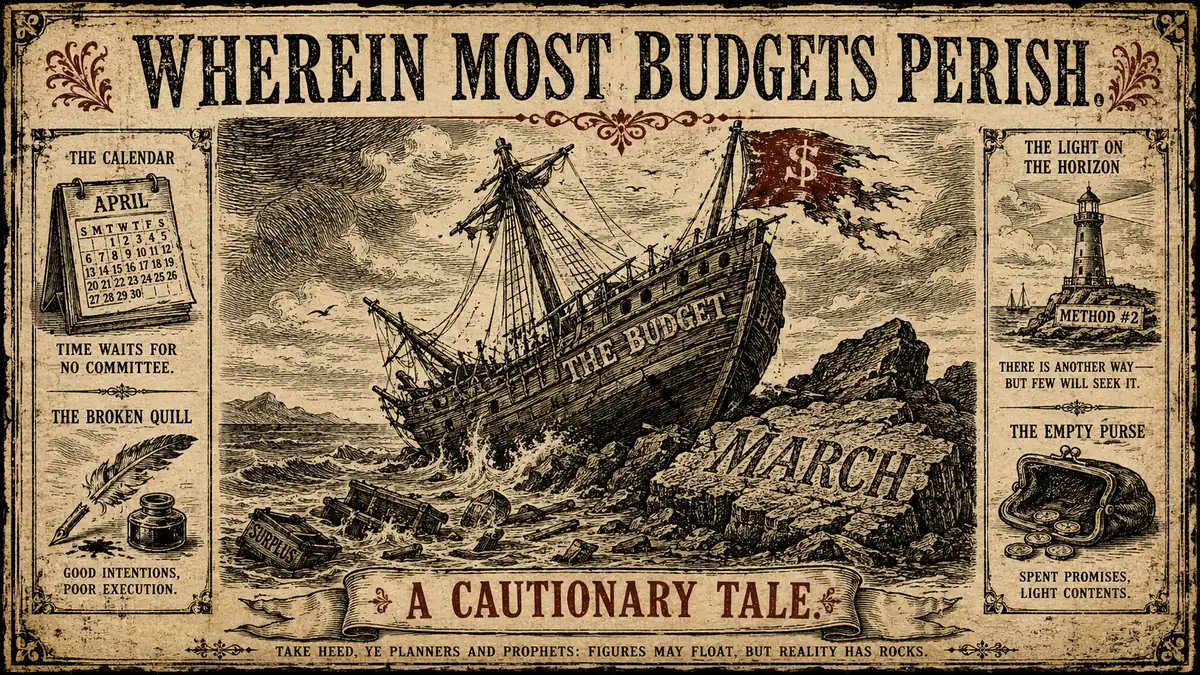
January was clean. New file. Fresh categories. A grocery number that implied you would become a soup monk. By March, the car registration shows up, three grocery trips blow past the limit, someone invites you to a birthday dinner, and the budget turns from useful plan into shame dashboard.
This is not rare. A December 2025 national survey found that 38% of people abandoned financial resolutions within the first three months. And YouGov's 2026 budgeting data says just over half of U.S. adults had a budget for 2026, which means the budget is popular enough to be common and fragile enough to deserve a coroner.
So let's do the autopsy. No chanting. No one-true-budget-method gospel. Just the five boring reasons budgets collapse around week 10 to 12, and the fixes that keep yours alive long enough to be useful.
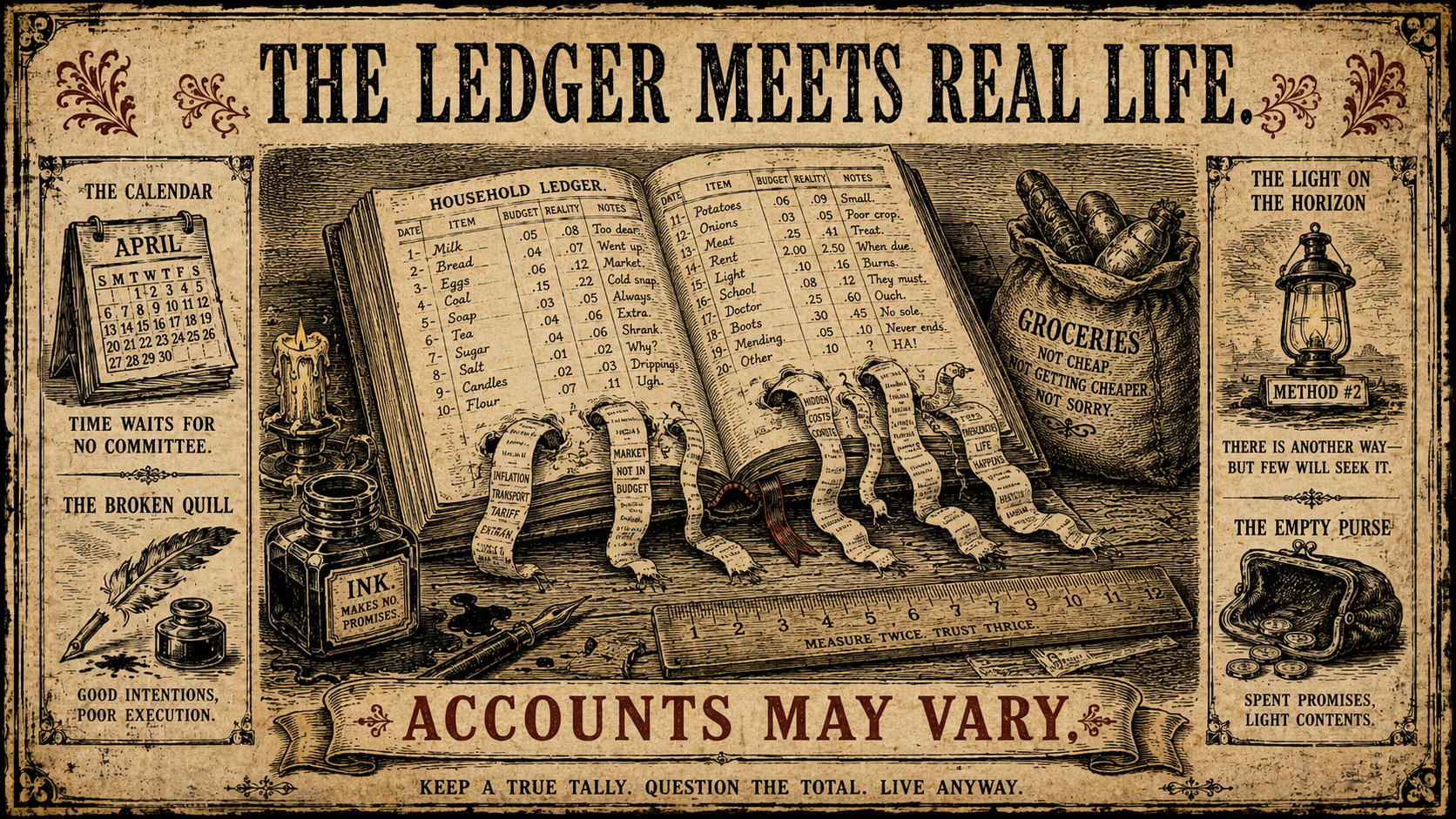
Built on aspiration, not data
The first budget-killer is optimism with a calculator.
You do not start with what you spend. You start with what a better, calmer, batch-cooking version of you would spend. This fictional person meal-preps lentils, never buys a replacement phone charger at an airport, and apparently has no friends with birthdays.
The problem is not ambition. Ambition is fine. The problem is using ambition as the baseline. The Federal Reserve's 2025 SHED report found that only 41% of adults always or often had money left over at the end of the month. Translation: a lot of people are not budgeting from a huge margin. If your plan starts $400 cleaner than your real life, it will not age gracefully.
The fix: build from evidence first, improvement second.
- Pull the last six months of actual spending from your bank and card statements.
- Average the big flexible categories: groceries, restaurants, gas, household supplies, kids, pets, gifts, personal care.
- Use the median month for categories with one weird spike. Use the high month for categories that keep "surprising" you. The third Target run is not a weather event.
- Set your first budget at 90% reality, not 60% fantasy. If groceries averaged $780, do not write $400 because you discovered beans.
- Pick one category to reduce this month. One. The Forbidden Finance doctrine: you are allowed to improve without cosplaying as a monk.
Start where you are. Then move the number. Reality first. Reform second.
Irregular expenses were treated like surprises
Some expenses are not monthly, so your budget pretends they do not exist. Then they arrive wearing a trench coat and carrying a brick.
Car insurance every six months. Annual subscriptions. Vet visits. Holiday gifts. School fees. Wedding travel. Home repairs. Back-to-school everything. None of this is mystical. It is just badly timed.
The same Fed SHED report found that 59% of adults had at least one major unexpected expense in the prior 12 months, with vehicle repairs or replacement being the most common. Some expenses are genuinely unexpected. Plenty are not. They are predictable-but-non-monthly, which is personal finance's most annoying genre.
The fix: build sinking funds before the bill arrives.
- List every non-monthly expense you can predict in the next 12 months: insurance, registration, holidays, gifts, travel, annual fees, medical copays, car maintenance.
- Estimate the annual total for each one. If you do not know, use last year plus 10%.
- Divide by 12 and make that a monthly budget line.
- Keep the money separate enough that you do not accidentally spend the Christmas fund on tacos in August.
- Review the list quarterly. Life adds categories without asking. Rude, but consistent.
This is why sinking funds exist. A 2025 NerdWallet savings survey found that 21% of Americans have multiple savings accounts or buckets for different goals, and yes, that is the point. Buckets are not cute. Buckets prevent your car registration from mugging your grocery budget.
For the full boring-but-powerful version, read Sinking Funds Explained: The One Habit That Makes 'Surprise' Expenses Disappear.
The categories were too rigid
Rigid categories feel responsible on January 2. By March, they feel like a courtroom.
You overspend groceries once. Fine. Twice. Suspicious. Three times, and now the budget is glaring at you like you have dishonored the family name. The doom-loop starts: overspend, feel bad, stop checking, spend blind, discover damage later, declare budgeting impossible. Very ceremonial. Completely useless.
A NerdWallet budgeting survey found that 84% of Americans with a monthly budget had gone over budget at some point. That is not a fringe failure. That is the main event. A budget that cannot absorb a normal overage is not disciplined. It is brittle.
The fix: make categories adjustable on purpose.
- Use category ranges for variable spending. Groceries might be $650 to $800, not one sacred number carved into stone tablets.
- Create a "flex" category for small overages. Not emergency savings. Not rent money. Flex.
- Roll with overspending in the same month. If groceries run hot, move money from restaurants, clothes, or miscellaneous before the month ends.
- Track patterns, not single sins. One expensive grocery trip is noise. Three months of overspending is data.
- Rename hostile categories. "Fun money" works better than "irresponsible nonsense fund," even if the second one feels emotionally accurate after a concert ticket purchase.
A budget is not a permission slip from a tiny accountant in your phone. It is a steering wheel. Steering wheels move.
This is where method matters. Some brains love strict envelopes. Some need broad buckets. Some need automation and a monthly glance. If your friend's perfect setup made you want to fake your own death and move to a cash-only cabin, try a different setup.
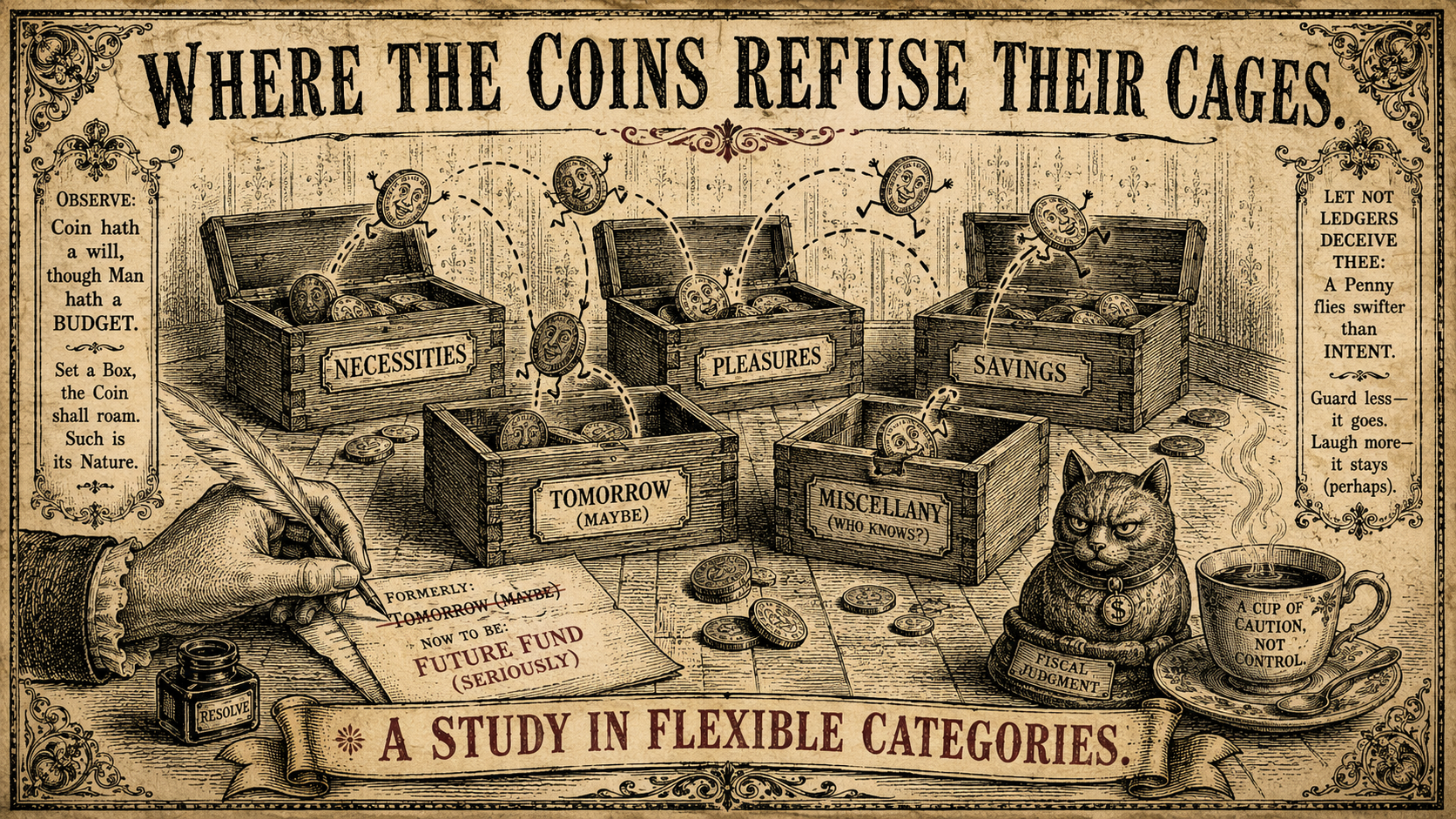
Nobody scheduled the budget meeting
A budget you never review is not a budget. It is a New Year's decoration.
The January 2 version will be wrong by January 17. Someone's paycheck changes. A bill increases. You host dinner. Gas jumps. Your cousin announces a destination wedding with the emotional confidence of someone who has never priced airfare.
This is where habits matter more than motivation. Wendy Wood and David Neal's habit research emphasizes that lasting behavior depends on repeated cues and routines, not just good intentions. Lally and colleagues' real-world habit formation study found that automaticity builds through repetition over time. Translation: "I will be better with money" is vapor. "Sunday at 6:30, I check the next seven days" is a system.
The fix: give the budget a review cadence.
- Do a 10-minute weekly check-in. Look at the next seven days, not your entire financial soul.
- Do a 30-minute monthly reset before the next month starts.
- Ask three questions: What changed? What category lied? What bill is coming?
- Move money while the month is still alive. April 3 is too late to rescue March.
- Keep the meeting boring. Tea, laptop, ten minutes. Not a candlelit interrogation with your bank account.
The goal is not to become a budgeting influencer with color-coded tabs. The goal is to catch drift early, while it is still a nudge instead of a financial jump scare.
There was no buffer for being human
Most budgets make room for bills and goals, then forget the human operating the machine.
You will have a random Tuesday happy hour. You will pay $40 for parking because the sign was written by a cursed committee. You will buy medicine, a last-minute gift, a replacement umbrella, or the emotionally necessary takeout after a 12-hour day. The latte is not your problem. Pretending life will never ask for $27 at 8:43 p.m. is your problem.
The Fed's 2025 SHED report found that 63% of adults could cover a hypothetical $400 emergency with cash or its equivalent. That also means a large share could not. If the budget has no small buffer, every little wobble becomes an emergency rehearsal.
The fix: budget a human buffer before life spends it for you.
- Add a monthly "life happens" line. Start with $50 if money is tight. Use $150 to $300 if your income supports it.
- Keep it separate from emergency savings. A parking ticket is annoying. A job loss is an emergency. Different beasts.
- Use it without shame. That is the category's job. Money doing its job is not failure.
- If the buffer gets drained every month by the same thing, promote that thing to a real category.
- If you do not use it, roll it into sinking funds or savings at month-end. Tiny victory. No parade required.
Budgets fail when they require you to stop being human. Build the human into the math.
The meta-fix: choose the method your brain will run
Here is the forbidden little truth: there is no universal right budgeting method.
There is the method that fits your income, attention span, family structure, debt load, stress level, and current season of life. A brand-new budgeter may need the simplest possible setup. Someone three years in may want detailed categories. Someone ten years in may barely budget because automation handles the boring parts. This is not moral hierarchy. It is tool fit.
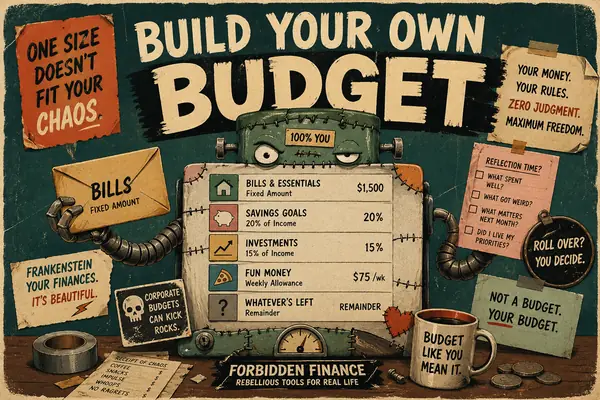
That is why the eight different budget methods exist. If one method were correct for everyone, personal finance would be one pamphlet and a smug bookmark. Instead, you have zero-based systems, envelope systems, percentage rules, pay-yourself-first setups, values-based plans, anti-budgets, custom hybrids, and people who run their whole financial life from one spreadsheet named "money_final_FINAL2."
If you want a map of the options, start with Which Budgeting Method Is Right for You?. If strict tracking makes you itchy, Pay Yourself First: The Forbidden Art of Not Tracking Every Latte may fit better. If you have read all the methods and want to steal the useful pieces, go straight to Custom Budgeting: For People Who Read All 7 Methods and Said Nah.
The broader lesson matches what that financial resolutions survey accidentally proves: people do not need louder goals. They need goals that survive contact with Tuesday.
| Failure Mode | One-Sentence Fix |
|---|---|
| Built on aspiration, not data | Use six months of actual spending as the baseline before trying to cut anything. |
| Ignored irregular expenses | Create sinking funds for predictable costs that do not bill monthly. |
| Categories too rigid | Use flexible ranges, a flex category, and monthly money moves instead of shame. |
| No review cadence | Schedule a weekly 10-minute check-in and a monthly reset before the next month starts. |
| No buffer for being human | Add a small life-happens category so normal randomness does not break the plan. |
The budget that survives month three is usually not the strictest one. It is the one that tells the truth, updates often, and leaves room for both car insurance and the occasional "fine, I'll come to happy hour" Tuesday.
If your budget broke in March, the budget broke. Not you. Pick a different method.
 Forbidden Finance